Showing posts with label Driving While Intoxicated. Show all posts
Thursday, August 18, 2016
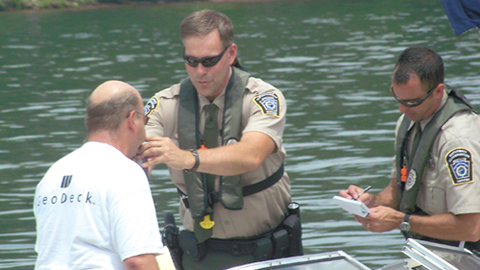
BOATING WHILE INTOXICATED IN NEW YORK
"Governor Andrew M. Cuomo today (August 16, 2016) signed “Tiffany Heitkamp’s” Law, legislation that strengthens penalties for boating while intoxicated offenses by linking them to prior drinking while driving offenses involving a vehicle. The bill (A.1597-A/S.3785-A) requires courts to consider prior Driving While Intoxicated or Driving While Ability Impaired convictions when sentencing a person for Boating While Intoxicated or Boating While Ability Impaired.
“Whether behind the wheel of a car or a boat, drunk drivers are a danger to themselves and a menace to others,” Governor Cuomo said. “This new law closes this loophole and will help keep these dangerous individuals off our roads and waterways, avoiding more senseless tragedies.”
Under current law, there is no linkage between prior DWI and DWAI offenses and BWI offenses. This makes it impossible to convict an individual as a repeat offender, despite prior violations of similar laws. The bill addresses this gap by linking these similar offenses and providing harsher penalties for repeat offenders
Specifically, this measure requires that a court sentencing an individual for a BWI carrying a 30-day sentence must consider any prior DWIs or DWAIs by the same individual within a five-year period. When sentencing for a BWAI carrying a 180-day sentence, the court must consider prior DWIs or DWAIs within a 10 year period. This change would require a sentencing judge to impose a higher sentence on those who repeatedly get behind the wheel in an intoxicated state, regardless of whether it is a car or a boat.
Senator John A. DeFrancisco said, "When someone has a history of operating a vehicle or vessel while under the influence of alcohol or drugs, that record should be taken into account when the individual is sentenced. Repeat offenders should be held accountable for their history of dangerous actions to help deter further tragedies. I am very pleased that Governor Cuomo has signed this important bill into law to help improve the safety of our roadways and waterways. I also would like to commend MaryJo Heitkamp-France on her advocacy to help get this bill passed."
Assemblyman William Magnarelli said, “I want to thank Governor Cuomo for signing this important bill into law. It will honor the memory of Tiffany Heitkamp by requiring that judges take into account past DWI convictions when sentencing those convicted of Boating While Intoxicated. It will further deter those who repeatedly violate NY’s intoxicated operation laws. I also want to thank Ms. MaryJo Heitkamp-France for her tireless advocacy on behalf this legislation in memory of her daughter. This new law would not have happened without her efforts. I hope it will honor Tiffany’s memory and save lives on our waterways.”
The “Tiffany Heitkamp” bill was named after a young Syracuse-area woman who was killed in July 2006 while traveling as a passenger in a boat operated by an intoxicated person. The individual operating the boat had a record of alcohol-related automobile incidents. However, because there was no link between prior convictions for Boating While Intoxicated, he could only be charged as if this was his first BWI."
Labels:
Boating,
Criminal Law,
Driving While Intoxicated
Wednesday, August 19, 2009
MORE ON DWI IN NEW YORK
The following discussion about DWI in New York is also from the website of the DUI Foundation and their link is above on the title of this post:
"Third Conviction
Three or more alcohol-related convictions in New York State within ten years can result in permanent revocation of a driver's license. Although waiver requests are permitted after five months of revocation, the Department of Motor Vehicles will be the final determinant in when and whether or not a license can be returned. This is not an automatic process. In fact, the convicted driver must reapply for a license and may be required to take a driver's test again.
Moving up into the Class D felony group, convicted drivers will now face a mandatory minimum fine of $2,000, with a potential maximum charge of $10,000. Furthermore, these steep fines don't even include the mandatory conviction surcharge and potential crime victim's assistance fees. The fees alone may reach upwards of hundreds of dollars.
On this third strike, the offender gets to spend a week-and-a-half in jail, or they may be allowed to substitute it for 60 days of community service. Depending on the circumstances, as many as seven years of incarceration could be the punishment. This possible jail sentence is technically what moves the driver from E into the D felony class.
Three DWI convictions in New York State within ten years can be summed up quickly as:
•Fine: $2,000 - $10,000
•Jail sentence: ten days - seven years (or 60 days community service)
•License revocation: 18 months or more"
"Third Conviction
Three or more alcohol-related convictions in New York State within ten years can result in permanent revocation of a driver's license. Although waiver requests are permitted after five months of revocation, the Department of Motor Vehicles will be the final determinant in when and whether or not a license can be returned. This is not an automatic process. In fact, the convicted driver must reapply for a license and may be required to take a driver's test again.
Moving up into the Class D felony group, convicted drivers will now face a mandatory minimum fine of $2,000, with a potential maximum charge of $10,000. Furthermore, these steep fines don't even include the mandatory conviction surcharge and potential crime victim's assistance fees. The fees alone may reach upwards of hundreds of dollars.
On this third strike, the offender gets to spend a week-and-a-half in jail, or they may be allowed to substitute it for 60 days of community service. Depending on the circumstances, as many as seven years of incarceration could be the punishment. This possible jail sentence is technically what moves the driver from E into the D felony class.
Three DWI convictions in New York State within ten years can be summed up quickly as:
•Fine: $2,000 - $10,000
•Jail sentence: ten days - seven years (or 60 days community service)
•License revocation: 18 months or more"
Tuesday, August 18, 2009
MORE ON DWI IN NEW YORK
The following discussion about DWI in New York is also from the website of the DUI Foundation and their link is above on the title of this post:
"Second Conviction
If charged with a second driving while intoxicated (DWI) offense within ten years of the first misdemeanor, the driver faces Class E felony penalties. The mandatory fine starts at $1,000 and can run up to $5,000. There is a minimum one-year license revocation, but an ignition interlock and alcohol assessment may also be required.
A driver convicted of a second DWI offense will go to jail for at least five days unless they receive a sentence for 30 days of community service in lieu of this mandatory term. The sentence could involve an incarceration period of up to four years.
A second conviction for aggravated DWI within five years of the first offense involves sentencing similar to that of a Class E felony. However, the driver's license is revoked for a longer period of time-at least 18 months.
Although class E felonies carry the lightest sentences of the five felony classes, the minimum jail time for this class is one year.
In short, a driver convicted of a second DWI offense within ten years of the first conviction is looking at:
•Fine: $1,000 - $5,000
•Jail sentence: Five days - four years (or 30 days community service)
•LICENSE REVOCATION: 18 months or more"
"Second Conviction
If charged with a second driving while intoxicated (DWI) offense within ten years of the first misdemeanor, the driver faces Class E felony penalties. The mandatory fine starts at $1,000 and can run up to $5,000. There is a minimum one-year license revocation, but an ignition interlock and alcohol assessment may also be required.
A driver convicted of a second DWI offense will go to jail for at least five days unless they receive a sentence for 30 days of community service in lieu of this mandatory term. The sentence could involve an incarceration period of up to four years.
A second conviction for aggravated DWI within five years of the first offense involves sentencing similar to that of a Class E felony. However, the driver's license is revoked for a longer period of time-at least 18 months.
Although class E felonies carry the lightest sentences of the five felony classes, the minimum jail time for this class is one year.
In short, a driver convicted of a second DWI offense within ten years of the first conviction is looking at:
•Fine: $1,000 - $5,000
•Jail sentence: Five days - four years (or 30 days community service)
•LICENSE REVOCATION: 18 months or more"
Labels:
Driving Under Influence,
Driving While Intoxicated,
DUI,
DWI
Monday, August 17, 2009
MORE ON DWI IN NEW YORK
The following discussion about DWI in New York is also from the website of the DUI Foundation and their link is above on the title of this post:
"First Conviction
Driving while intoxicated in New York State is no small infraction. If you are stopped by an officer who administers a field sobriety test, then follows up with a chemical test, and the driver is found to have a blood alcohol concentration of at least .08, the driver is bound to face a harsh sentence.
Driving while intoxicated (DWI) is crime. A first conviction, considered a misdemeanor, will result in a substantial fine, mandatory surcharge, license revocation, and a possible jail sentence. An Aggravated DWI is something else entirely.
The state will fine a minimum of $500 and a maximum of $1,000 for a first conviction. Depending on the circumstances of the conviction, an additional jail sentence of up to a year is possible.
After an initial conviction, the state suspends a drunk driver's license for a minimum of six months. The law mandates that the offender participates in a Drinking Driver Program, and a conditional license may be awarded upon completion of the program if they are lucky.
The conviction will remain on the driver's permanent record as a misdemeanor. Plus, the convicted driver can expect his or her insurance premiums to skyrocket.
An aggravated DWI (BAC of .18 or higher) has far more severe consequences. Conviction of this first offense can result in double the fines of an average DWI conviction. Fines can be as steep as $2,500 in conjunction with a possible year-long jail sentence. A minimum of a one-year license revocation is also mandated.
In summary, the first DWI conviction in the State of New York entails:
•Fine: $1,000 - $2,500
•Jail sentence: Up to one year
•License revocation: One year or more"
"First Conviction
Driving while intoxicated in New York State is no small infraction. If you are stopped by an officer who administers a field sobriety test, then follows up with a chemical test, and the driver is found to have a blood alcohol concentration of at least .08, the driver is bound to face a harsh sentence.
Driving while intoxicated (DWI) is crime. A first conviction, considered a misdemeanor, will result in a substantial fine, mandatory surcharge, license revocation, and a possible jail sentence. An Aggravated DWI is something else entirely.
The state will fine a minimum of $500 and a maximum of $1,000 for a first conviction. Depending on the circumstances of the conviction, an additional jail sentence of up to a year is possible.
After an initial conviction, the state suspends a drunk driver's license for a minimum of six months. The law mandates that the offender participates in a Drinking Driver Program, and a conditional license may be awarded upon completion of the program if they are lucky.
The conviction will remain on the driver's permanent record as a misdemeanor. Plus, the convicted driver can expect his or her insurance premiums to skyrocket.
An aggravated DWI (BAC of .18 or higher) has far more severe consequences. Conviction of this first offense can result in double the fines of an average DWI conviction. Fines can be as steep as $2,500 in conjunction with a possible year-long jail sentence. A minimum of a one-year license revocation is also mandated.
In summary, the first DWI conviction in the State of New York entails:
•Fine: $1,000 - $2,500
•Jail sentence: Up to one year
•License revocation: One year or more"
Labels:
Driving Under Influence,
Driving While Intoxicated,
DUI,
DWI
Sunday, August 16, 2009
DWI IN NEW YORK
As a member of the Lawyers Assistance Program Committee at the Nassau County Bar Association, one area that has begun to interest me, and which I am preparing to study and concentrate in, is Driving Under The Influence, a huge problem in Long Island as we read our daily papers. The following discussion about DWI in New York is from the website of the DUI Foundation and their link is above on the title of this post:
" New York State DWI, DUI
Each state has the power to determine and impose penalties for drivers who violate traffic laws, which includes driving under the influence of drugs or alcohol.
In New York, all drivers must take an alcohol test if a police officer asks for one. This is known as the implied consent law, which means that anytime a person drives a vehicle, he or she consents to an alcohol test. The test determines how much alcohol is in a driver's bloodstream. A driver is considered impaired when his or her blood alcohol content is 0.08% or higher.
Drivers under the age of 21 are subject to the zero tolerance law, which lowers the legal blood alcohol content level to 0.02%. If it is determined that a person has a BAC level of 0.15% or above, he or she is subject to the enhanced penalty policy, which means that the penalty for violation increases in severity.
For a driver's first alcohol-related offense, his or her license is suspended for 90 days. For the next two offenses, the driver's license is suspended for six months each time. New York does not require jail time after the second offense, whereas other states do.
New York requires alcohol education in order for a driver's license to be reinstated. After the second offence, the driver risks the possibility of having his or her vehicle confiscated. However, in many states, the penalties and fines associated with drunk driving can be mitigated if an alcohol education program is completed. Normally, these programs offer drunk driving prevention education and assess the offender's drinking habits. If the offender is determined to be alcohol-dependent, he or she can be ordered to participate in counseling.
Installing an ignition lock in repeat offender's cars is a possibility in the state of New York. An ignition lock is a machine that is connected to a car's ignition and checks the driver's blood alcohol content level. The driver has to blow into the machine to start the car and do so from time to time while the car is running. If alcohol is detected, the car either does not start or turns itself off.
New York allows hardship licenses if an offender's license is suspended. The offender is allowed certain driving privileges, such as driving to work, in case a hardship is present, such as being the family's sole breadwinner.
New York is very strict about prohibiting open alcoholic beverage container inside a vehicle. Neither the driver nor the passenger may be in possession of an open bottle or can of alcohol. Some states only make it illegal for the driver to have an open container."
" New York State DWI, DUI
Each state has the power to determine and impose penalties for drivers who violate traffic laws, which includes driving under the influence of drugs or alcohol.
In New York, all drivers must take an alcohol test if a police officer asks for one. This is known as the implied consent law, which means that anytime a person drives a vehicle, he or she consents to an alcohol test. The test determines how much alcohol is in a driver's bloodstream. A driver is considered impaired when his or her blood alcohol content is 0.08% or higher.
Drivers under the age of 21 are subject to the zero tolerance law, which lowers the legal blood alcohol content level to 0.02%. If it is determined that a person has a BAC level of 0.15% or above, he or she is subject to the enhanced penalty policy, which means that the penalty for violation increases in severity.
For a driver's first alcohol-related offense, his or her license is suspended for 90 days. For the next two offenses, the driver's license is suspended for six months each time. New York does not require jail time after the second offense, whereas other states do.
New York requires alcohol education in order for a driver's license to be reinstated. After the second offence, the driver risks the possibility of having his or her vehicle confiscated. However, in many states, the penalties and fines associated with drunk driving can be mitigated if an alcohol education program is completed. Normally, these programs offer drunk driving prevention education and assess the offender's drinking habits. If the offender is determined to be alcohol-dependent, he or she can be ordered to participate in counseling.
Installing an ignition lock in repeat offender's cars is a possibility in the state of New York. An ignition lock is a machine that is connected to a car's ignition and checks the driver's blood alcohol content level. The driver has to blow into the machine to start the car and do so from time to time while the car is running. If alcohol is detected, the car either does not start or turns itself off.
New York allows hardship licenses if an offender's license is suspended. The offender is allowed certain driving privileges, such as driving to work, in case a hardship is present, such as being the family's sole breadwinner.
New York is very strict about prohibiting open alcoholic beverage container inside a vehicle. Neither the driver nor the passenger may be in possession of an open bottle or can of alcohol. Some states only make it illegal for the driver to have an open container."
Subscribe to:
Posts (Atom)