Showing posts with label Worker's Compensation. Show all posts

Thursday, July 28, 2022

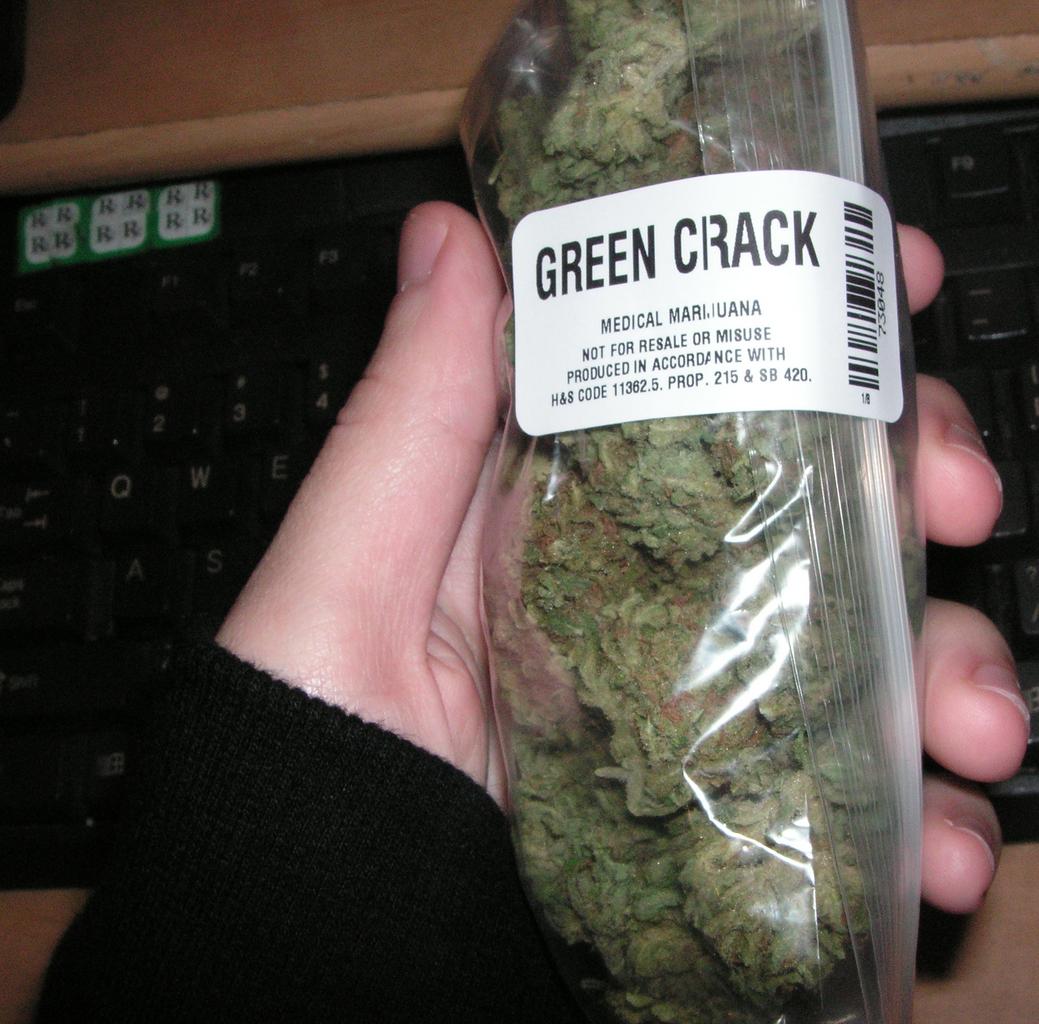
MEDICAL MARIJUANA AND WORKERS COMPENSATION


MATTER OF BARRETTA v. PAL ENVTL. SAFETY, 2022 NY Slip Op 4598 - NY: Appellate Div., 3rd Dept. 2022:

"Claimant, a fire proofer, has an established claim for an occupational disease involving his back, hips, legs and right foot with a date of disablement of July 2, 2014. Medical treatment was authorized, various proceedings ensued and certain awards were made. As relevant here, claimant began treating with Jonathan Rudnick — a physician — in June 2017 and, despite engaging in numerous forms of treatment, including surgery, physical therapy and prescription opiates, claimant's pain persisted. In 2020, Rudnick sought a variance to treat claimant with medical marihuana. The employer and its workers' compensation carrier denied the request upon the ground that such treatment was not approved by the federal Food and Drug Administration. Following a hearing, a Workers' Compensation Law Judge granted claimant's request for a variance, finding that the requisite burden of proof had been satisfied. Upon administrative review, the Workers' Compensation Board affirmed, and this appeal by the employer and the carrier ensued.

The Board's decision was issued the day after this Court decided Matter of Quigley v Village of E. Aurora (193 AD3d 207 [2021], lv denied 37 NY3d 908 [2021]), finding that coverage for a claimant's medical marihuana expenses under the Compassionate Care Act (see Public Health Law art 33, title V-A) is not preempted by federal law. In New York, medical marihuana is authorized for the treatment of chronic pain (see Public Health Law §§ 3360[7][a]; 3362; 10 NYCRR 1004.2[a][8][xi]). When warranted, a treating medical provider may seek a variance from the Board's Medical Treatment Guidelines for authorization to utilize medical marihuana (see 12 NYCRR 324.2[a]; 324.3[a] [1]; Matter of McLean v Time Warner Cable, Inc., 197 AD3d 1371, 1372 [2021]; Matter of Quigley v Village of E. Aurora, 193 AD3d at 214-215). In doing so, "[t]he burden of establishing the propriety and medical necessity of the variance rests with the claimant's treating medical provider" (Matter of McLean v Time Warner Cable, Inc., 197 AD3d at 1372 [citations omitted]).

Although the record indicates that claimant had already been treating with medical marihuana obtained from out of state, the Board properly authorized the requested variance in the context of prospective treatment (see Matter of McLean v Time Warner Cable, Inc., 197 AD3d at 1373; Matter of Kluge v Town of Tonawanda, 176 AD3d 1370, 1372 [2019]). The record confirms that claimant suffers from debilitating, persistent pain that has degraded his health and functional capabilities. He has explored numerous treatment options, including surgery, physical therapy, a TENS unit, massage therapy and multiple prescriptions, including opiates, with limited success. Claimant's treating physician pointed to a history of using medical marihuana that "help [ed] his pain and function." He reported that the plan was "to address chronic pain issues and opiate titration and. .. decrease opiates in the future." In our view, these factors provide substantial evidence for the Board's decision to grant the requested variance (see Matter of McLean v Time Warner Cable, Inc., 197 AD3d at 1373; Matter of Quigley v Village of E. Aurora, 193 AD3d at 215-216)."

Wednesday, March 8, 2017

WORK RELATED STRESS AND WORKER'S COMPENSATION


MATTER OF CUVA v. State Ins. Fund, 2016 NY Slip Op 7734 - NY: Appellate Div., 3rd Dept. 2016:

"We affirm. It is well established that "mental injuries caused by work-related stress are compensable if the claimant can establish that the stress that caused the injury was greater than that which other similarly situated workers experienced in the normal work environment" (Matter of Lozowski v Wiz, 134 AD3d 1177, 1178 [2015] [internal quotation marks and citation omitted]; see Workers' Compensation Law § 2 [7]; Matter of Guillo v NYC Hous. Auth., 115 AD3d 1140, 1140 [2014]; Matter of Witkowitch v SUNY Alfred State Coll., 80 AD3d 1099, 1100 [2011]). In resolving that factual question, the Board's determination will not be disturbed provided that it is supported by substantial evidence (see Matter of Lozowski v Wiz, 134 AD3d at 1178).

While the medical evidence concluded, based upon claimant's self reporting, that the March 7, 2013 incident caused or exacerbated her mental health problems, substantial evidence supports the Board's factual determination that the incident was not compensable on the ground that the work-related stress suffered by claimant that led to her anxiety, PTSD and depression was not "greater than that which other similarly situated workers experienced in the normal work environment" (Matter of Lozowski v Wiz, 134 AD3d at 1178 [internal quotation marks and citation omitted]). Regarding the incident, claimant testified that she was standing outside the examiner's cubicle discussing a work issue when he became angry, grabbed the arms of his chair and began "shaking," gritting his teeth and "seething," making a hissing sound. However, he remained seated, facing his computer and did not make verbal or physical threats or raise his voice. While claimant testified that the examiner swore at her during the encounter, the WCLJ credited a coworker who testified that she had overheard "a work interaction" in which claimant and the examiner "disagreed" and that she had informed claimant, after the incident, that the examiner used profanity after claimant walked away from the disagreement. The WCLJ also discredited claimant's account of the incident and her claim that this brief episode left her terrified, based upon her testimonial demeanor as well as her inconsistent accounts and actions after the incident, including claimant's return to the examiner's work area shortly after the incident to speak with a coworker; her treating physician's testimony that she had inconsistently reported that the examiner had made knifelike gestures at her; her testimony and emails establishing that, the day after the incident, she had a meeting with the examiner and later reported that the matter was "settled" and that they were "moving forward with a good working relationship"; and her reassignment to another unit in April 2013 where she did not work with or supervise the examiner.

Deferring to the Board's credibility determinations (see Matter of Hill v Shoprite Supermarkets, Inc., 140 AD3d 1564, 1565 [2016]), we find that the record as a whole supports its conclusion that this was, at most, "an isolated incident of insubordination" to which the employer appropriately responded, which was not so improper or extraordinary as to give rise to a viable claim for a work-related injury. Accordingly, we find no basis to disturb the Board's determination that claimant's work-related stress did not exceed that which could be expected by a supervisor in a normal work environment (see Matter of Lozowski v Wiz, 134 AD3d at 1178; Matter of Guillo v NYC Hous. Auth., 115 AD3d at 1141)."

Thursday, August 29, 2013

A NOTE TO SMALL BUSINESSES - WORKER'S COMPENSATION

From the NYS WC Board website:

"The law requires employers operating in New York State to have workers' compensation coverage for their employees, with limited exceptions. Employers are required to obtain and keep in effect workers' compensation coverage for all employees, even part-time employees and family members that are employed by the company. The following is a brief summary of the liability and penalties for violations of mandatory workers' compensation insurance coverage requirements.

Ascertaining Violations of the Law

The Workers' Compensation Board may require an employer to furnish proof that the employer:
  • Has a valid workers' compensation insurance policy;
  • Is self-insured for workers' compensation; or
  • Is legally exempt from having to obtain workers' compensation coverage, and/or
  • Is keeping proper, accurate business records.
If an employer fails to provide this information within 10 days following the Board's request, under the WCL the Board is required to assume that the employer is violating the WCL. (WCL §52 [3])

Personal Accountability

The sole proprietor, partners or the president, secretary and treasurer of a corporation are personally liable for a business' failure to secure workers' compensation insurance.

Liability for Claims Incurred by an Uninsured Employer

Section 26-a says an employer is liable for a penalty of $2,000 per 10-day period of noncompliance, plus the actual award (including both compensation and medical costs), plus any other penalties the Board assesses for noncompliance. In cases involving severely injured employees, the medical costs alone could be in the hundreds of thousands of dollars per injury."