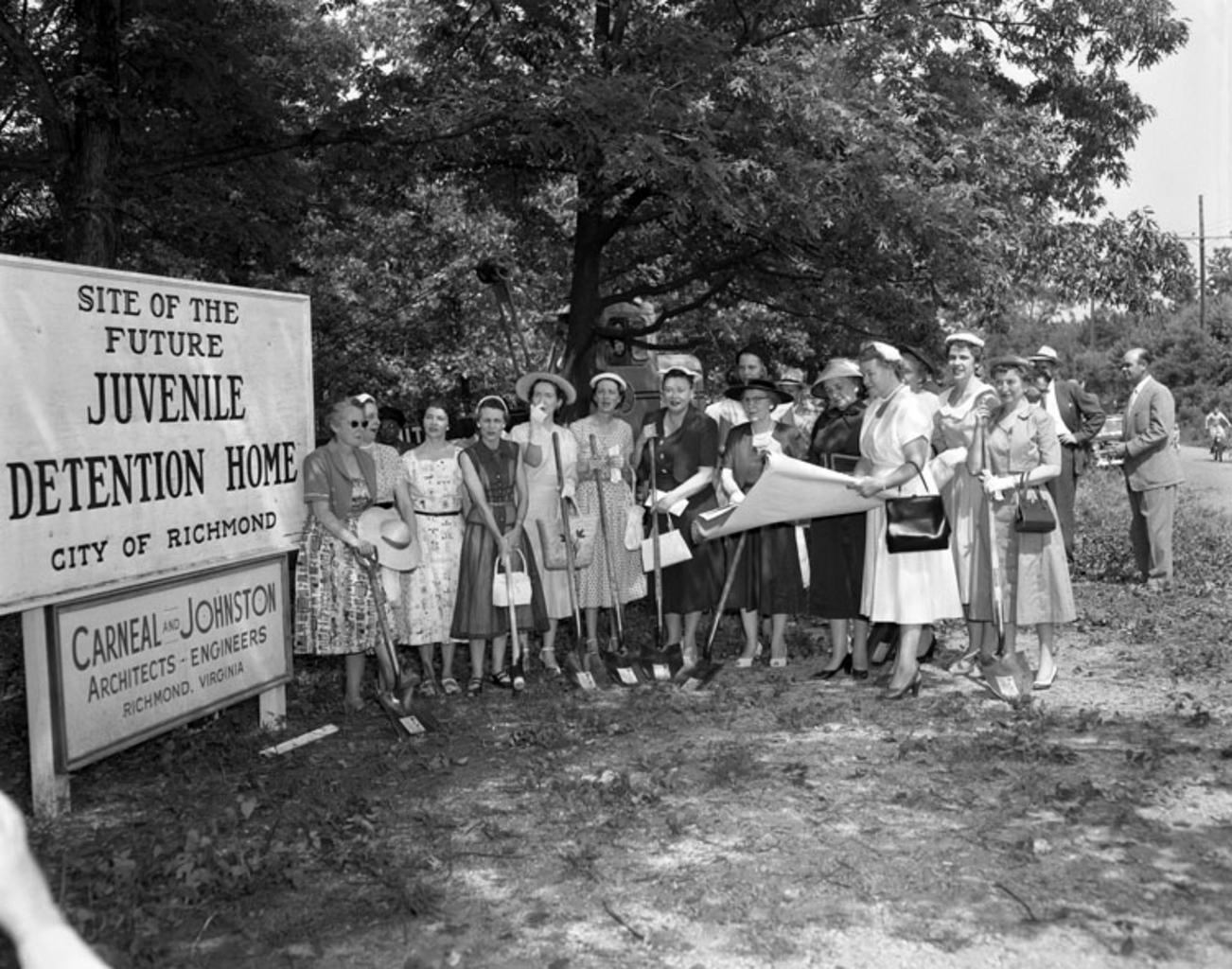
Under Massachusetts General Law Chapter 119, Section 39E: "A school district may initiate an application for assistance in said court stating that said child is not excused from attendance in accordance with the lawful and reasonable regulations of such child's school, has willfully failed to attend school for more than 8 school days in a quarter or repeatedly fails to obey the lawful and reasonable regulations of the child's school. The application for assistance shall also state whether or not the child and the child's family have participated in the truancy prevention program, if one is available, and a statement of the specific steps taken under the truancy prevention program to prevent the child's truancy; and if the application for assistance states that a child has repeatedly failed to obey the lawful and reasonable regulations of the school, a statement of the specific steps taken by the school to improve the child's conduct."
Monday, May 23, 2022
MASSACHUSETTS LAW - CRA AND THE TRUANT CHILD
Under Massachusetts General Law Chapter 119, Section 39E: "A school district may initiate an application for assistance in said court stating that said child is not excused from attendance in accordance with the lawful and reasonable regulations of such child's school, has willfully failed to attend school for more than 8 school days in a quarter or repeatedly fails to obey the lawful and reasonable regulations of the child's school. The application for assistance shall also state whether or not the child and the child's family have participated in the truancy prevention program, if one is available, and a statement of the specific steps taken under the truancy prevention program to prevent the child's truancy; and if the application for assistance states that a child has repeatedly failed to obey the lawful and reasonable regulations of the school, a statement of the specific steps taken by the school to improve the child's conduct."
Thursday, May 19, 2022
MASSACHUSETTS LAW - CRA AND THE STUBBORN CHILD - AN EARLY DEFINITION
Here is an early case defining stubborn child under a prior procedure. Basically, viewed in the light most favorable to the child, she was alleged to get angry, slam doors, curse, and talk to boys...or IMHO, she was alleged to be a teenager.
Commonwealth v. Brasher, 270 NE 2d 389 - Mass: Supreme Judicial Court 1971:
"The elements of the crime which was established by the Colonial law of 1654 and which is now simply identified by use of the words "stubborn children" in G.L.c. 272, § 53, are ascertainable upon examination and consideration of the entire series of statutes on the subject. The 1654 statute made criminal the disobedience by children and servants toward their parents, masters, and governors. After 245 years of experience with that statute and its successor statutes dealing with stubborn children, the Legislature in 1899 enacted a simplified form of complaint for this crime and it has now been in use for about seventy-two years.
The elements which the Commonwealth is required to prove beyond a reasonable doubt in order to constitute the crime commonly identified by use of the words "stubborn children" are the following: (a) that a person having authority to give a child under the age of eighteen lawful and reasonable commands which such child is bound to obey gave such a command to a child; (b) that the child refused to submit to the command, and the refusal was stubborn in the sense that it was wilful, obstinate and persistent for a period of time. The person giving the command is usually one of the child's parents, but it may be another person, as it was in this case. The defendant does not question that such other person, on the particular facts of this case, occupied such a position toward the defendant that he was authorized to give her lawful and reasonable commands which she was bound to obey. Single, infrequent or isolated refusals to obey such commands do not constitute a crime. Neither do manifestations of stubbornness which do not amount to refusals to obey commands. The law clearly does not make mere expressions of disagreement or differences of views or opinions between parent and child a crime on the part of the child. But it does not permit or 556*556 excuse stubborn refusals by children to obey reasonable and lawful commands of their parents or persons similarly situated on a claim that it is merely the exercise of a right of dissent.
....
3. The only remaining issue raised[2] is whether the evidence was sufficient, if believed, to constitute proof of the elements of the offence charged in the complaint. We hold that it was. In its light most favorable to the prosecution, the evidence permitted the trial judge, sitting without jury, to find the following facts. The defendant lived at the Deaconess Home where the complainant, Michael T. Walsh, was employed. On May 2, 1969, the defendant was to see a doctor for a complete physical examination and she refused to do so. On that same occasion she became a little angry, slammed a few doors, and refused to obey the request of the house mother not to slam doors and not to 559*559 swear. At a staff meeting of the home the defendant was placed in group 4 which is a nonprivilege group. On several occasions she was away from the home with knowledge that she should have been at the home. At some time she was outside the home, probably talking with the boys, and she knew she was not to be outside the home. She had several temper outbursts during which she would not respond to commands of the house parents. On May 2, 1969, and on other occasions she used vile and vulgar language of a kind formerly used only by common railers engaged in gutter brawls. It need not be spread on our permanent records. That language was used at times contemporaneously with the defendant's disobedience of the orders of those in charge of the home and it forms a part of the setting in which the disobedience occurred. The evidence was sufficient to support the finding of the judge that the defendant was delinquent by reason of her stubborn refusal to submit to the lawful and reasonable commands of a person whose commands she was bound to obey.
Exceptions overruled.
[1] General Laws c. 272, § 53, as amended through St. 1959, c. 304, § 1, provides: "Stubborn children, runaways, common night walkers, both male and female, common railers and brawlers, persons who with offensive and disorderly act or language accost or annoy persons of the opposite sex, lewd, wanton and lascivious persons in speech or behavior, idle and disorderly persons, prostitutes, disturbers of the peace, keepers of noisy and disorderly houses and persons guilty of indecent exposure may be punished by imprisonment in a jail or house of correction for not more than six months, or by a fine of not more than two hundred dollars, or by both such fine and imprisonment."
[2] The defendant's brief contains an argument that because the proceedings against her were brought under G.L.c. 119, §§ 52-59, rather than under §§ 24-29 of the same chapter, she was denied the equal protection of law. It is not shown by the record before us that this question was raised before the trial judge but, if it was, it is without merit. Sections 24-29 relate to children who because of the death, absence, unavailability, incompetence or neglect of parents or guardians are in need of care, and they authorize the placing of such children in the custody of the Department of Public Welfare. By contrast, proceedings under §§ 52-59 are brought against children who are alleged to be delinquent by reason of their own misconduct in violating one of the criminal laws. This different treatment of children under the different sections of the statute is based on a reasonable distinction between those in need of care by reason of parental default or neglect, and those in need of discipline by reason of their own violation of a criminal law. This does not violate the defendant's constitutional right to the equal protection of law."
Wednesday, May 18, 2022
MASSACHUSETTS LAW - CRA AND THE STUBBORN CHILD
Presently, I am representing children in Massachusetts (and sometimes the parent, legal guardian, or custodian) in Child Requiring Assistance (CRA) cases where parents, guardians, or school officials ask the court to help supervise a child for various reasons.
Many of the cases I am seeing now involve G.L. c. 119, § 21, in that the child who is between the ages of six and eighteen "repeatedly fails to obey lawful and reasonable commands of a parent, legal guardian, or custodian, thereby interfering with the parent's, legal guardian's or custodian's ability to adequately care for and protect said child.". In other words, the stubborn child.
What is a "stubborn child". According to Merriam-Webster: "Definition of stubborn child: a minor (as in the state of Massachusetts) who refuses to submit to the lawful commands of parent or guardian and may be placed in state custodial care." So, for the immediate future, I will gather cases from Massachusetts and similar states with CRA statutes to help formulate some guidelines as to what behavior leads to a finding of "stubborn child"
Tuesday, May 17, 2022
ANOTHER DOG STORY
In this case, the emotional support dog had been adopted out for almost a year.
McCurrie v. City of New York, 2022 NY Slip Op 30815 - NY Co.: Supreme Court 2022:
"This case involves an alleged improper transfer of plaintiff's dog, Roscoe, from defendant Animal Care Center (ACC) to an unknown animal rescue organization, sued herein as "XYZ Rescue Organization" (XYZ). Plaintiff moves by order to show cause to compel ACC to disclose and provide the name of XYZ.
Plaintiff suffers from anxiety and depression and "live[s] on disability." (Plaintiff's Reply, McCurrie second aff at ¶ 11). On April 16, 2021, plaintiff experienced a medical emergency at her residence, requiring the services of an ambulance. Two Emergency Medical Technicians (EMTs) and two police officers arrived at plaintiff's home. Plaintiff was transferred by ambulance to a hospital, and the police officers took her dog Roscoe to ACC. Plaintiff alleges that she made the police officers aware that Roscoe is an emotional support animal. (See Order to Show Cause, McCurrie aff at ¶ 4).
A few days after the incident, plaintiff contacted the police to inquire as to Roscoe's whereabouts. Plaintiff was informed that Roscoe was given to ACC, which she contacted to inquire about her dog. She was informed by ACC that Roscoe was given to a shelter, XYZ, but ACC would not provide the name of XYZ to Plaintiff. Subsequently, an individual, sued herein as "Jane Doe," applied for and adopted Roscoe from XYZ. Plaintiff diligently sought to recover Roscoe, and she brought this instant action upon obtaining counsel.
The parties appeared for argument on March 10, 2022. Without prior leave of the Court, plaintiff filed a reply, and defendant filed a sur-reply. Upon the agreement of the parties, the Court is only considering those portions of plaintiff's reply regarding urgency and custody and control, as well as the plaintiff's supplemental affidavit. Plaintiff agreed to withdraw the remainder of her reply, and ACC withdrew its sur-reply.
Plaintiff maintains that the purpose of this order to show cause is to obtain the name of XYZ in order to substitute the name of the proper party for "XYZ," as well as to attempt to obtain the ultimate relief of finding Roscoe. Plaintiff argues that ACC violated Agriculture and Markets Law (AML) § 117 by failing to hold Roscoe for the prescribed amount of time for either an identified or an unidentified dog, prior to placing him with a third-party animal rescue which ultimately offered him for adoption. Plaintiff also points out that ACC's records show that ACC was on notice that Roscoe was an identified dog and knew the address of said dog's owner. According to plaintiff, ACC made no effort to contact the police or plaintiff prior to transferring Roscoe to XYZ. Plaintiff contends that, based on ACC's violation of the AML, which resulted in serious emotional harm to plaintiff, a disabled person, ACC must turn over the name of XYZ.
ACC opposes, arguing, inter alia, that plaintiff's order to show cause does not present an emergency and that the order to show cause is duplicative of the complaint. The Court rejects these arguments. Plaintiff's order to show cause presents an emergency, in that plaintiff seeks to recover information about her medically necessary emotional support animal. Although ACC asserts that Roscoe was in poor health at the time of plaintiff's hospitalization, an allegation of poor health did not allow for an impermissible seizure without due process or negate the exigent nature of Roscoe's return. Moreover, the order to show cause is not duplicative of the complaint, because it seeks the specified information of the name of XYZ, not the ultimate relief of the return of Roscoe. ACC acknowledges that it is no longer in possession of Roscoe and that Roscoe has been adopted out by XYZ.
ACC also argues that it held Roscoe for the mandatory amount of time pursuant to AML prior to adoption and that providing the information requested runs contrary to public policy. ACC's Chief Executive Officer Risa Weinstock attests that, "it is ACC's policy not to disclose the identity of individual adopters and partner rescue organizations in order to ensure and support the secure rescue of at-risk animals, promote the adoption of animals from rescue shelters, and to otherwise ensure that adoptive placements are not put in jeopardy." (Weinstock affirmation in opposition at ¶ 13). ACC cites to two cases to support its argument that it is against public policy to allow disclosure of the name of XYZ, but they are non-binding and distinguishable. The only appellate case to which ACC cites, Feger v Warwick Animal Shelter, 59 AD3d 68 (2d Dept 2008), involves the disclosure of the identities of the donor and adoptive owner of the cat at issue. Here, plaintiff seeks the name of the rescue organization, not the name of the adoptive owner.
The specific facts of this case mandate disclosure of the name of XYZ, and no statute or other authority dictates that such information should not or shall not be provided as a matter of permissible disclosure. In this case, an emotional support animal apparently was permanently removed from the possession of a disabled individual without any attempts on the part of ACC to learn the identity of the owner or notify her of her pet's location. Despite plaintiff's many documented attempts to get such information, ACC also failed to provide information as to the process by which she could attempt to retrieve Roscoe. In fact, the cases cited by ACC involve a pet owners' inattention to their pets, resulting in rescue and adoption. See Stoddard v VanZandt, 40 Misc 3d 1213(A) (Rensselaer County, Sup Ct 2013); Feger v Warwick Animal Shelter, 59 AD3d 68 (2d Dept 2008). Plaintiff made numerous attempts to retrieve Roscoe, who was taken as a result of a medical emergency. Notably, as conceded by ACC, plaintiff attempted to locate Roscoe while she was in the hospital.
For the foregoing reasons, plaintiff must be provided the information requested as to the shelter where ACC sent Roscoe."
Monday, May 16, 2022
WORKPLACE DISPUTE AND EMPLOYMENT DISCRIMINATION
BUTRYM v. BURNT HILLS-BALLSTON LAKE CENTRAL SCHOOL DISTRICT, Dist. Court, ND New York 2022:
"To make out a prima facie case of employment discrimination under the ADA, a plaintiff must show that (1) her employer is subject to the ADA; (2) she was disabled within the meaning of the ADA; (3) she was otherwise qualified to perform the essential functions of the job, with or without a reasonable accommodation; and (4) she suffered an adverse employment action because of her disability. Woolf v. Strada, 949 F.3d 89, 93 (2d Cir. 2020).[7] A failure-to-accommodate claim under the ADA relies on the first three factors, but substitutes the fourth factor with the question of whether the employer has refused to make a reasonable accommodation. Id.
Upon review, defendants are entitled to summary judgment on both of these claims because Butrym has failed to establish a triable issue of fact regarding whether she was "disabled." Generally speaking, the ADA defines a "disability" as any "physical or mental impairment that substantially limits one or more major life activities." 42 U.S.C. § 12102(1)(A). Importantly, however, "[n]ot every impairment is a `disability' within the meaning of the ADA." Capobianco v. City of N.Y., 422 F.3d 47, 56 (2d Cir. 2005). Instead, there are two general qualifications: (1) the impairment must limit a "major life activity" and (2) the limitation must be "substantial." Id.
As to the first requirement, major life activities include physical functions like walking, standing, and lifting as well as other common activities such as reading, concentrating, and working. 42 U.S.C. § 12102(2)(A). As to the second requirement, a plaintiff's impairment must "substantially limit[ ] the ability of an individual to perform a major life activity as compared to most people in the general population." 29 C.F.R. § 1630.2(j)(ii).
In 2008, Congress amended the text of the ADA "to make clear that the substantial-limitation requirement in the definition of `disability' is not an exacting one." Woolf 949 F.3d at 94. Even so, it remains the case that "[n]ot every impairment that affects an individual's major life activities is a substantially limiting impairment." B.C. v. Mt. Vernon Sch. Dist., 837 F.3d 152, 160 (2d Cir. 2016) (cleaned up). Thus, "in assessing whether a plaintiff has a disability, [courts] have been careful to distinguish impairments which merely affect major life activities from those that substantially limit those activities." Id. (emphases in original).
Viewed in the light most favorable to her, the evidence establishes that Butrym informed her supervisors on multiple occasions that she suffers from anxiety, OCD, and autism. The evidence further establishes that plaintiff demanded to be kept separate from Quinn, a co-worker who aggravated her anxiety and made her feel physically sick.
But those facts do not establish a "disability" within the meaning of the ADA. As the Second Circuit recently reiterated, "the inability to perform a single, particular job does not constitute a substantial limitation in the major life activity of working." Woolf, 949 F.3d at 95 (affirming grant of summary judgment against plaintiff who alleged disability from migraines that were exacerbated by job-related stress from supervisors' criticisms). Courts have applied this general rule to conclude that the inability to work with a particular co-worker or supervisor (as opposed to a limitation in the plaintiff's ability to work more generally or work in a broad range of jobs) does not qualify as a "substantial limitation" on the major life activity of "working." See, e.g., Shields v. N.Y. City Health & Hosps. Corp., 489 F. Supp. 3d 155, 164 (E.D.N.Y. 2020) (dismissing a failure-to-accommodate claim where plaintiff alleged "only that his purported disabilities prevent him from working" with a particular co-worker and a single supervisor); Schneiker v. Fortis Ins. Co., 200 F.3d 1055, 1062 (7th Cir. 2000) ("Standing alone, a personality conflict between an employee and a supervisor — even one that triggers the employee's depression — is not enough to establish that the employee is disabled, so long as the employee could still perform the job under a different supervisor.")
In Butrym, it was noted that this body of ADA caselaw was likely fatal to plaintiff's claims. 2021 WL 1927073, at *5 & n.7. However, as explained, it was "reluctant to reach this conclusion at the pleadings stage, especially where, as here, the plaintiff is pro se." Id. at n.7. At the time, there remained the possibility that plaintiff, though unrepresented by counsel, might be able to establish in discovery that her impairments were substantially more limiting than her pleading suggested. Discovery has shown that they are not. As Butrym herself explained at her deposition:
Q. And so when you say that you can do the job without a reasonable accommodation, as long as you're not assigned with Megan Quinn, you're saying you don't need any accommodation; correct?
A. Correct. Her behavior to this day is still an obsession of me. And as long as that's controlled — you know, it's still going on today so it doesn't matter if we're together or not, you know, employee-wise. But going further, it just — you know, she has to be spoken to.
Q. Okay. But there's nothing else about the job that you can't do, provided Megan Quinn is not assigned to the bus you're on?
A. Correct. I mean, like again she needs to be told, you know, "Stop obsessing with her."
Pl.'s Tr. at 78:7-78:25.
In other words, Butrym's discrimination and accommodation claims do not rest on broad limitations in her ability to "work" that might be attributed to her diagnosed impairments. Cf. Weiss v. Cty. of Suffolk, 416 F. Supp. 3d 208, 214 (E.D.N.Y. 2018) ("It is insufficient for a plaintiff to prove a disability on the basis of a diagnosis alone—that is, not every impairment is a disability."). Instead, these claims rest on symptoms that arise solely from plaintiff's interactions with Quinn, who was occasionally assigned to her as a co-worker. Because plaintiff has not shown that these work-induced symptoms "substantially limited [her] ability to work in a class or broad range of jobs, no reasonable factfinder could conclude that [she] has a `disability' within the meaning of the ADA." Woolf, 949 F.3d at 95. Even assuming otherwise, Butrym has failed to establish that the termination of her employment by Czub and/or Sarsick was just a pretext for unlawful disability discrimination. See McBride v. BIC Consumer Products Mfg. Co., Inc., 583 F.3d 92, 96 (2d Cir. 2009); see also Frantti v. New York, 414 F. Supp. 3d 257, 285 (N.D.N.Y. 2019) (observing that on summary judgment ADA claims for employment discrimination are analyzed using the burden-shifting framework established by the Supreme Court in McDonnell Douglas Corp. v. Green, 411 U.S. 792 (1973)).
Defendants' submissions establish Mazure and Sarsick conducted a prompt investigation into Butrym's first complaint about Quinn. These submissions further establish that defendants concluded plaintiff's complaints were without merit and, in fact, plaintiff was not properly performing her own duties as a school bus monitor. Plaintiff's second complaint about Quinn led to a second investigation, which again revealed to defendants that plaintiff was "not doing her job" and that her complaints about Quinn's behavior "were unfounded."
The parties agree that these events culminated in a meeting on March 25, 2019. There, the parties discussed "a number of concerns regarding [plaintiff's] employment," including various things that, in her supervisors' view, justified the termination of her employment. Although plaintiff denies being guilty of "poor work performance" and insists that at least some of her alleged misconduct (e.g., gift-giving to children) was not against the rules, both parties agree that plaintiff walked out of this meeting and was fired shortly afterward.
Even if it were to resolve those disputed facts in her favor, no reasonable jury could conclude that Butrym's impairments were the but-for cause of this adverse employment action. A review of plaintiff's deposition transcript reveals that while she denies certain alleged deficiencies in her work performance, she concedes others. Absent more, no factfinder could return a verdict in plaintiff's favor on this discrimination claim. Cf. Canales-Jacobs v. N.Y. State Office of Court Admin., 640 F. Supp. 2d 482, 500 (S.D.N.Y. 2009) ("The ADA does not excuse workplace misconduct because the misconduct is related to a disability.").
To the extent Butrym's ADA claim might be construed as a request for an accommodation that involved no contact with Quinn, a single co-worker, that request was unreasonable as matter of law. See, e.g., Gaul v. Lucent Techs., Inc., 134 F.3d 576, 579 (3d Cir. 1998) (applying pre-amendment ADA law to conclude that plaintiff's "request to be transferred away from individuals causing him prolonged and inordinate stress" was "unreasonable as a matter of law under the ADA" in terms of an accommodation).
In sum, even viewed in the light most favorable to her and construed liberally in light of her pro se status, Butrym has failed to identify evidence from which a reasonable jury could find in her favor on either of these ADA claims. Accordingly, plaintiff's discrimination and failure-to-accommodate claims must be dismissed."
Thursday, May 12, 2022
ON MOBILE HOMES
Sections 233, 233-A, 233 -B and 233 -B2 of the New York Real Property Law (RPL) is where you can find most of the rules about mobile home parks in New York.
For more information, go to Mobile & Manufactured Homes
Wednesday, May 11, 2022
Tuesday, May 10, 2022
ADR AND THE NY COURTS
The NYS Unified Court System is committed to promoting the appropriate use of mediation and other forms of alternative dispute resolution (ADR) to resolve disputes and conflicts peacefully. For more information, see Alternative Dispute Resolution in the CourtsA
Monday, May 9, 2022
MALPRACTICE AND THE AFC
LoPresti v. Galchus, Date filed: 2022-03-31, Court: Supreme Court, Queens, Judge: Justice Carmen Velasquez, Case Number: 717561/20:
"Upon the foregoing papers it is ordered that this motion by the defendant and cross motion by the plaintiff are decided as follows: This is a legal malpractice action against the defendant, the court appointed attorney for the minor child in a custody proceeding. On April 25, 2018, the plaintiff commenced a proceeding in Family Court, Queens County, to modify a custody agreement she had with her ex-husband, Philip LoPresti, regarding their minor child, Sofia LoPresti. Plaintiff sought to relocate with the child to New Orleans. Philip LoPresti opposed the Family Court petition and also executed his own petition in which he sought to be awarded primary residential/physical custody of Sofia. In May 2018, defendant was assigned by the Family Court as the Attorney for the child, Sofia. At the Family Court hearing, defendant stated that it was the child’s preference to relocate with the plaintiff to New Orleans.
A trial was held before a Referee in Family Court on July 18-19, 2020. A reporter was not present but the proceeding was transcribed via an audiotape made of the trial. Defendant maintains that the recording failed to provide an accurate and audible transcription. On July 24, 2018, the court ruled that LoPresti was to be given residential custody of Sofia. Plaintiff filed a Notice of Appeal, but a different attorney represented Sofia for the appeal, but the defendant continued to represent Sofia in Family Court. On October 2, 2019, the Appellate Division, Second Department, remitted the matter to Family Court for a new hearing before a different Referee. The Appellate Division found that defendant, inter alia, did not properly advocate for the interests of Sofia. The parties thereafter entered into a stipulation allowing Sofia to relocate to New Orleans with her mother until July 2020.
Plaintiff commenced the instant action to recover damages for legal malpractice as well as punitive damages. The complaint alleges that the defendant failed to fulfill his obligations as a court appointed attorney for Sofia. Specifically, the complaint alleges that defendant failed to zealously advocate for Sofia, failed to inform the court of her position on relocation and failed to assist Sofia in articulating her position to the court. The complaint further alleges that but for defendant’s negligence and failure to advocate for his client, custody never would have been transferred to Lopresti. Defendant now moves to dismiss the complaint pursuant to CPLR 3211(a). Defendant contends that plaintiff lacks standing to bring this action since, as a law guardian, he is shielded by quasi-judicial immunity. Plaintiff cross moves for summary judgment.
The role of the Law Guardian or Attorney appointed by the Family Court is to represent the wishes of the child and to zealously advocate for the child’s best interest. (Carballeira v. Shumway, 273 AD2d 753, 755 [3d Dept 2000]; Matter of Dewey S., 175 AD2d 920, 921 [2d Dept 1991]; B.A. v. L.A., 196 Misc 2d 86, 96 [Fam Ct, Rockland County 2003].) The role is also to aid the court in arriving at an appropriate disposition. (Matter of Apel, 96 Misc 2d 839, 842-843 [Fam Ct, Ulster County 1978].)
The plaintiff herein lacks standing to bring this action against the defendant, the Law Guardian. There is no privity between the plaintiff and the defendant. (see Bluntt v. O’Connor, 291 AD2d 106, 114 [4th Dept 2002].) Indeed, the defendant was appointed to assist the child in presenting her views and her wishes. He was not representing the plaintiff in any capacity, and no attorney-client relationship existed between them. As such, the defendant is entitled to quasi-judicial immunity.
Although the court is aware of the October 2, 2019 Appellate Division decision stating that the defendant did not advocate for the position of the child herein, the court cannot use this as a basis to allow the plaintiff to maintain a malpractice action against the defendant. To allow a malpractice lawsuit against the defendant in these types of circumstances would discourage attorneys from serving as court appointed counsel. (see Bluntt v. O’Connor, 291 AD2d at 118-119.) As noted by the Supreme Court of Wisconsin, without the assistance and impartial judgment of a guardian ad item, the “court would have no practical or effective means to assure itself that all of the essential facts have been presented untainted by the self-interest of the parents and children.” (Paige K.B. v. Molepske, 219 Wis 2d 418, 434, 580 NW2d 289 [Sup Ct, Wisconsin 1998].) Moreover, the court wisely noted that immunity in these situations is necessary “to avoid the harassment and intimidation that could be brought to bear on GALs by those parents and children who may take issue with any or all of the GAL’s actions or recommendations.” (Paige K.B. v. Molepske, 219 Wis 2d at 434.)
Other courts have taken similar positions. One court has stated that “[f]ear of liability to one of the parents can warp judgment that is crucial to vigilant loyalty for what is best for the child; the guardian’s focus must not be diverted to appeasement of antagonistic parents.” (Ward v. San Diego County Dept. of Social Servs., 691 F Supp 238, 240 [SD Ca 1988].) Further, court-appointed experts, “faced with the threat of personal liability, will be less likely to offer the disinterested objective opinion that the court seeks.” (Winchester v. Little, 996 SW2d 818, 827 [Sup Ct, Tenn 1999].) Moreover, “[a] failure to grant immunity would hamper the duties of a guardian ad litem in his role as advocate for the child in judicial proceedings.” (Kurzawa v. Mueller, 732 F2d 1456, 1458 [6th Cir 1984].) Many of these cases are based on the holding of the Supreme Court that “the common law provided absolute immunity from subsequent damages liability for all persons — governmental or otherwise — who were integral parts of the judicial process.” (Briscoe v. LaHue, 460 US 325, 335 [1983].)
This court agrees with these opinions and finds that permitting a malpractice case to proceed against the defendant herein would go against public policy. It would subject these attorneys to possible unnecessary litigation for performing an extremely important function for the court.
Accordingly, this motion by defendant to dismiss the complaint is granted, and the action is dismissed."
Thursday, May 5, 2022
MASSACHUSETTS LAW - CRA AND THE DELINQUENT CHILD
Commonwealth v. DARNELL D., No. 15-P-1175, Mass: Appeals Court 2016:
"MEMORANDUM AND ORDER PURSUANT TO RULE 1:28
Summary decisions issued by the Appeals Court pursuant to its rule 1:28, as amended by 73 Mass. App. Ct. 1001 (2009), are primarily directed to the parties and, therefore, may not fully address the facts of the case or the panel's decisional rationale. Moreover, such decisions are not circulated to the entire court and, therefore, represent only the views of the panel that decided the case. A summary decision pursuant to rule 1:28 issued after February 25, 2008, may be cited for its persuasive value but, because of the limitations noted above, not as binding precedent. See Chace v. Curran, 71 Mass. App. Ct. 258, 260 n.4 (2008).
The juvenile appeals his commitment to the Department of Youth Services (DYS) based on a violation of his probation, as well as the denial of his motion for reconsideration. For the reasons that follow, we affirm.
Background.[1]
On January 28, 2014, the juvenile was arraigned in the Norfolk County Division of the Juvenile Court Department on a charge of shoplifting in violation of G. L. c. 266, § 30A. On April 2, 2014, he admitted to sufficient facts to warrant an adjudication of delinquency; the judge ordered the entry of a continuance without a finding (CWOF), and placed the juvenile on administrative probation for approximately four months. The conditions of his probation included that he cooperate "with Department of Children and Families [DCF] Service Plan/Placement," and that he report to probation as his probation officer required.
Although the timing is not clear from the record, we may infer that the juvenile was receiving services from DCF as a result of a separate case in the Plymouth County Division of the Juvenile Court Department. The juvenile was a habitual runaway who would leave home on Fridays and not return until Sunday evening. The juvenile's father had no idea of the juvenile's whereabouts and was concerned for his safety. The juvenile's father therefore applied for a Child Requiring Assistance (CRA) petition. See G. L. c. 119, § 39E. Despite the issuance of the petition, the juvenile continued to run away from home. The juvenile's father eventually asked DCF to assume custody of the juvenile, which it did — first informally, and later by court order.
On July 2, 2014, a notice of probation violation was issued in the juvenile's shoplifting case. A few weeks later, on July 23, a judge found the juvenile in violation. The resulting disposition was that the juvenile was placed in a DCF "STARR" shelter for stabilization services, and his probation was extended on the same terms by two and one-half months, to October 22, 2014.
On August 20, 2014, DCF returned the juvenile to his father's home. In conjunction with his return, the juvenile, his father, and a DCF social worker signed a "safety contract" which, among other things, required the juvenile to inform his father of his whereabouts at all times and to abide by an 8:00 P.M. curfew. Nevertheless, within only two days, the juvenile again ran away from home. His whereabouts remained unknown for more than four months, during which time his social worker made extensive efforts to locate him. The social worker filed a missing person report, checked parks and local businesses that the juvenile was known to frequent, and posted flyers. At least once, via text message, the social worker arranged to meet the juvenile, but the juvenile failed to arrive at the designated meeting place.
The juvenile remained on the run until December 30, 2014, when he was brought to court. After a hearing on January 14, 2015, the judge found the juvenile in violation of the conditions of his probation, adjudicated him delinquent, and committed him to DYS until the age of eighteen. The juvenile later filed a motion for reconsideration, which the judge denied.
Discussion.
The juvenile first asserts that his commitment was based on the "status offense" of running away, and was the equivalent of an impermissible commitment for contempt in his CRA case. However, his adjudication as delinquent and commitment to DYS resulted from his failure to comply with the probation conditions of the CWOF in his criminal shoplifting case.[2] The juvenile's probation conditions included reporting to his probation officer as required, and cooperating with the terms of his DCF "service plan/placement," including the safety contract. As it was beyond dispute that the juvenile did not abide by these conditions, the judge was entitled to find the juvenile in violation of probation, and to make any disposition of the case that could have been made before he was placed on probation, including committing him to DYS. See G. L. c. 119, § 59. See also Jake J. v. Commonwealth, 433 Mass. 70, 74-76 (2000).
The juvenile's second argument is that the judge should not have committed him to DYS without first attempting a more gradual, intermediary remedy, such as imposing supervisory probation or requiring him to wear a global positioning system device.[3] We review the judge's commitment order for abuse of discretion. See Commonwealth v. Avram A., 83 Mass. App. Ct. 208, 214 (2013); Commonwealth v. Malick, 86 Mass. App. Ct. 174, 178 (2014).
The record reflects that the judge thoughtfully and thoroughly considered the appropriate disposition. While she noted that the shoplifting offense was "not relatively serious," she specifically found that the juvenile had placed himself at great risk and was not a candidate for further probation. The judge was mindful that rehabilitative efforts short of commitment to DYS already had been attempted. After the juvenile's first probation violation, probation was extended, and more services were made available to him. He received an intermediate disposition of a temporary short-term placement in a "STARR" bed, but only two days after being permitted to go home, ignored the safety contract to which he had agreed and ran away from his father's residence. Given the apparent ineffectiveness of less drastic efforts, as well as the safety concerns attendant to runaway juveniles, the judge was amply justified, and committed no abuse of discretion, in committing the juvenile to the custody of DYS.
Order revoking probation and imposing sentence affirmed.
Order denying motion for reconsideration affirmed.
[4] The panelists are listed in order of seniority.
[1] We take the facts from the judge's findings and from court documents in the record appendix.
[2] The juvenile uses the term "status offense" in the same sense that the term "status offender" is defined in Federal regulations, i.e., a juvenile offender who has been adjudicated for "conduct which would not . . . be a crime if committed by an adult." 28 C.F.R. § 31.304(h) (2014). Shoplifting is a criminal offense for both minors and adults. See G. L. c. 266, § 30A.
[3] The juvenile supports his argument with citation to the Juvenile Justice and Delinquency Prevention Act of 1974 (JJDPA), 42 U.S.C. §§ 5601 (1998). The JJDPA sets conditions for Federal funding of State juvenile programs. See Commonwealth v. Florence F., 429 Mass. 523, 527 & n.7 (1999). It does not, by its terms, restrict the exercise of discretion of a Juvenile Court judge. Regardless, the judge's handling of the juvenile's case, which, in fact, included gradual remedies, was entirely consistent with the policies of the JJDPA."
Wednesday, May 4, 2022
HOME CONTRACTS, DOWN PAYMENTS IN ESCROW AND INDEMNIFICATION
Another dispute over a down payment.
Licht v. Rosenberg, Date filed: 2022-03-11, Court: Supreme Court, New York, Judge: Justice Louis Nock, Case Number: 000624-20/HE:
"DECISION + ORDER ON MOTION Upon the foregoing documents, it is ordered that plaintiffs’ motion for summary judgment is determined as follows. BACKGROUND
Defendants DANIEL B. ROSENBERG and IRINA ROSENBERG a/k/a IRINA GABICHVADE (the “Sellers”), are the owners of 154 shares of 40 E. 9th St. Owners Corp. and the proprietary lease associated with Unit 5A (the “Unit”) of the property located at 40 East 9th Street, New York, New York 10003 (the “Premises”). On or about February 28, 2020, the Plaintiffs, LAURIE LICHT, MARK SMITH, and ANDREW SMITH (the “Purchasers”), and Sellers entered into a contract for the purchase and sale of the Unit of the Cooperative located at 40 East 96th Street, New York, New York 10003 (the “Contract” [NYSCEF Doc. No. 2]). Pursuant to the Contract, Purchasers delivered $175,000.00 as a contract deposit (the “Contract Deposit”), which was paid to Seller’s Attorney, as Escrowee, by wire transfer on February 28, 2020. Purchasers tendered $175,000.00 for the Contract Deposit, and Escrowee confirmed receipt of the Contract Deposit into Seller Attorney’s escrow account at Citibank, N.A., (the “Escrow Account”) (see, NYSCEF Doc. No. 3)
Paragraph 6.1 of the Contract of Sale provides that the “sale is subject to the unconditional consent of the Corporation.” Purchasers prepared and submitted a comprehensive board application (the “Board Application”) (NYSCEF Doc. No. 4) and, as requested, attended an interview before the Corporation’s Board of Directors, which was held on May 11, 2020, (the “Board Interview”). The Contract of Sale and Board Application are entirely consistent, with both naming all three Plaintiffs herein as the sole purchasers and applicants.
On May 20, 2020, the Corporation issued a decision on the Purchasers’ Board Application which was communicated to Purchasers’ real estate agent by e-mail from an employee at the managing agent’s office, Hoffman Management, named Gordon Noah (NYSCEF Doc. No. 5). The e-mail stated that “the Board will approve the application subject to the son [Andrew Smith] as the sole holder of shares with the parents [Laurie Licht and Mark Smith] as guarantors. Please let me know if they wish to move forward.” Upon receipt of the such conditional approval issued by the Corporation’s Board of Directors, the Purchasers elected to terminate the Contract in accordance with paragraph 6.3 of the Contract of Sale and requested the return of the Contract Deposit (see, NYSCEF Doc. No. 6). Per paragraph 6.3 of the Contract of Sale: “Either Party, after learning of the Corporation’s decision, shall promptly advise the other Party thereof…. If such consent is refused at any time, either Party may cancel this Contract by Notice. In the event of cancellation pursuant to this
6.3, the Escrowee shall refund the Contract Deposit to Purchaser.” Purchasers have demanded the return of their Contract Deposit, which Sellers and Escrowee have refused to do.
This action was commenced by summons and complaint filed June 25, 2020, asserting causes of action against Sellers for breach of the Contract of Sale and for related declaratory relief, and causes of action against Escrowee — defendant Law Offices of Nathaniel Muller, P.C. — for related declaratory relief. All causes of action are imbued with the purpose of obtaining a return of the Contract Deposit in accordance with the Contract of Sale on account of the absence of unconditional approval to the sale by the Cooperative Corporation’s Board.
An answer with counterclaims was filed by Sellers on August 4, 2020 (NYSCEF Doc. No. 11). The counterclaims seek, in effect, a declaration that they are entitled to receive and keep the Contract Deposit, and for $65,000 in attorneys’ fees, and for punitive damages in an amount of $50,000.
Escrowee filed an answer on August 4, 2020 (NYSCEF Doc. No. 16), which seeks an order allowing it to deposit the Contract Deposit with the County Clerk and asserting a counterclaim for legal fees.
Purchasers now move for summary judgment on the complaint. The motion is opposed by Sellers. Escrowee opposes the motion only to the extent that it seeks interest on the escrowed Contract Deposit.
DISCUSSION
“To obtain summary judgment it is necessary that the movant establish his cause or defense sufficiently to warrant the court as a matter of law in directing judgment; in is favor, and he must do so by tender of evidentiary proof in admissible form” (Zuckerman v. City of N.Y., 49 NY2d 557, 562 [1980]). To defeat summary judgment, “the opposing party must assemble and lay bare its affirmative proof to demonstrate that genuine triable issues of fact exist.” (Kornfeld v. NRX Technologies, Inc., 93 AD2d 772, 773 [1st Dept 1983], affd 62 NY2d 686 [1984]). “Similarly, the issues must be shown to be real, not feigned since a sham or frivolous issue will not preclude summary relief” (id.). Mere conclusions or unsubstantiated allegations will not defeat the moving party’s right to summary judgment (Zuckerman, supra).
Summary judgment is appropriate here because there is no credible dispute that the Corporation’s approval was expressly conditional upon the use of a guarantor. Paragraph 6.1 of the Contract clearly states that “[t]his sale is subject to the unconditional consent of the Corporation.” Paragraph 6.3 further provides that: “Either Party, after learning of the Corporation’s decision, shall promptly advise the other Party thereof. If the corporation has not made a decision on or before the Scheduled closing date, the Closing shall be adjourned for 30 business days for the purpose of obtaining such consent. If such consent is not given by such adjourned date, either Party may cancel this contract by Notice, provided that the Corporation’s consent is not issued before such Notice of cancellation is given. If such consent is refused at any time, either Party may cancel this contract by Notice. In the event of cancellations pursuant to this
6.3, the Escrowee shall refund the contract Deposit to Purchaser.” (Id.)
A contract is to be construed in accordance with the parties’ intent, which is generally discerned from the four comers of the document itself. Consequently, a written agreement that is complete, clear and unambiguous on its face must be enforced according to the plain meaning of its terms (Obstfeld v. Thermo Niton Analyzers, LLC, 112 AD3d 895, 897 [2d Dept 2013] [citing MHR Capital Partners LP v. Presstek Inc., 12 NY3d 640, 645 [2009]).
Binding First Department precedent instructs that a contract for the sale of a cooperative apartment may be terminated upon the co-op board’s conditional approval of the sale (see, e.g., Lovelace v. Krauss, 60 AD3d 579, 579-80 [1st Dept] [affirming motion court's declaration that contract of sale had been cancelled and directing escrowee to return plaintiff's deposit where only a conditional approval was granted to the purchaser of a co-op apartment], lv denied 12 NY3d 714 [2009]). The Appellate Division noted that “[c]o-op board approval was required as a condition precedent to defendants’ sale of these premises to plaintiff,” and “where there was still an area of disagreement to be resolved, there was no unconditional approval of the Board” (id.). As is the case here, “[t]he plain language of the contract permitted either party to cancel if unconditional approval was not obtained” (id.; see also, Albert & Kimmel v. Herman, 276 AD2d 413, 413-14 [1st Dept 2000] (affirming return of escrowed money to purchaser where buyer declined to meet conditions requested by co-op board]).
Here, the Board voted and granted conditional approval, requiring a personal guarantor of plaintiff Andrew Smith’s obligations (see, NYSCEF Doc. No. 5), and were clearly material. That condition to Board approval constituted a refusal to provide “unconditional consent” pursuant to section 6.1 of the Contract of Sale, giving rise to the plaintiffs’ unequivocal right to terminate the Contract of Sale “at any time” (id.). The plaintiffs promptly provided formal notice of cancellation to Sellers and Escrowee (NYSCEF Doc. No. 23). Consistent with the plain terms of the Contract of Sale, the plaintiffs properly exercised their right to terminate and are entitled to return of their Contract Deposit (see also, Moran v. Erk, 11 NY3d 452, 456 [2008] ["We do not ordinarily read implied limitations into unambiguously worded contractual provisions designed to protect contracting parties]).
Sellers, in opposition, point to the Board Application, which contains an answer by Purchasers to question 7 thereof, asking whether any part of the purchase price will be borrowed. Said plaintiff answered “Yes, a $300,000 mortgage will be taken by Andrew Smith. The remaining $1,450,000 will be paid in cash from Andrew Smith’s bank accounts.” (NYSCEF Doc. No. 21.) Sellers also point to a letter from Andrew Smith to the Board, dated April 5, 2020, stating that he would “be responsible for the mortgage and maintenance payments….” (NYSCEF Doc. No. 39.) However, the Contract of Sale does not contain any term of sale, or condition of sale, requiring a guaranty by any of the Purchasers. Nor is the Board Application or any other extrinsic document referenced in, or incorporated into, the Contract of Sale. Where the Contract of Sale found it useful or necessary to make extrinsic reference, or to incorporate a separate document, it was perfectly able to do so as it did concerning its Riders (contained in NYSCEF Doc. No. 2) which are “Attached to and Forming a Part of Contract of Sale” (the “Purchaser’s Rider”) and which make it clear that in the event of “any inconsistency or conflict between the terms of the printed portion of the Contract, Seller’s Rider, and this Rider (collectively referred to as this ‘Contract’), the terms and provisions of this Rider shall govern and be binding” (id.). Considering that all three plaintiffs are designated in the Contract of Sale, and in all other relevant documents (i.e., both Riders, and the Board Application), as the Purchaser, and, indisputably, all three plaintiffs would be the shareholders of the Cooperative shares underlying the Contract of Sale (see, Contract of Sale and Board Application), the unambiguous clause in the Contract of Sale making “[t]his sale subject to the unconditional consent of the Corporation” (Contract of Sale
6.1) applied equally to all three plaintiffs. The Corporation’s May 2020 insistence that the deal be different than that set forth in the February 2020 Contract of Sale (to wit: “the Board will approve the application subject to the son as the sole shareholder of shares with the parents as guarantors”) is, most decidedly, a condition which is inconsistent with the Contract of Sale. Purchasers had every right to cancel the Contract of Sale at that point and seek restitution of their Contract Deposit. Therefore, plaintiffs are entitled to summary judgment on their complaint, seeking restitution out of escrow of their Contract Deposit, to the extent set forth hereinbelow, and defendants’ counterclaims are dismissed.
As for plaintiff’s request for a sanction against defendants, it is denied. Although this court has recognized plaintiffs’ substantive position in this lawsuit to be imbued with merit, defendants’ point of view in opposition does not rise to the level of “frivolous conduct” (22 NYCRR §130-1.1). Escrowee’s opposition to the motion for summary judgment is limited to that part of the motion that seeks interest on the Contract Deposit. Escrowee has also asked for an order requiring plaintiffs to cover its legal costs in defending this matter. The Contract of Sale, at paragraph 1.24, specifically states that the parties agree that the contract deposit will be held in a non-interest bearing IOLA account. Therefore, no interest is due on the Contract Deposit.
Escrowee’s counterclaim seeks an award of the reasonable value of its efforts expended in defending plaintiffs’ claim against it for release from escrow, to plaintiffs, of the Contract Deposit. That counterclaim finds its grounding in a thoroughly unambiguous provision in the Contract of Sale stating:
Escrowee will serve without compensation. Escrowee is acting solely as a stakeholder at the Parties’ request and for their convenience. Escrowee shall not be liable to either Party for any act or omission unless it involves bad faith, willful disregard of this Contract or gross negligence. In the event of any dispute, Seller and Purchaser shall jointly and severally (with right of contribution) defend (by attorneys elected by Escrowee), indemnify and hold harmless Escrowee from and against any claim, judgment, loss, liability, cost and expenses incurred in connection with the performance of Escrowee’s acts or omissions not involving bad faith, willful disregard of this Contract or gross negligence. This indemnity includes, without limitation, reasonable attorneys’ fees either paid to retain attorneys or representing the fair value of legal services rendered by Escrowee to itself and disbursements, court costs and litigation expenses.
(NYSCEF Doc. No. 2
27.3 [emphasis added].)
The Appellate Division, First Department, in the highly instructive case of Breed, Abbott & Morgan v. Hulko (139 AD2d 71 [1st Dept 1988], affirmed 74 NY2d 686 [1989]), dealt with the question whether escrowee indemnification clauses in real estate sales contracts were exclusively limited to third party actions against the escrowee or, as in the present case, an action brought by one of the parties (in this case, the Purchasers). After noting an argument that such a clause only “relates to actions by third parties, and that somehow a different rule applies where the promise to indemnify is sought to be applied to recover legal expenses incurred in defending against an action brought by the promisor itself[,]” that court stated that “ [n]o plausible reason for such a distinction has been presented. Indeed, it is a curious notion that a broad indemnification clause will be interpreted to embrace counsel fees…where the action is brought by third parties, but will not be so interpreted where the action is brought by the promisor.” (Id., at 74-75.)
According to the foregoing appellate sentiment, Escrowee’s counterclaim herein, seeking an award from plaintiffs of the reasonable value of its efforts in defending this action, possesses theoretical merit. However, the analysis does not end there. The Appellate Division in that case made clear that the party which should bear the responsibility of such an indemnification clause must “sens[ibly be]” the unsuccessful party in the action (id., at 76).1 Naturally, in view of the within disposition granting Purchasers’ motion for summary judgment and dismissing Sellers’ counterclaims, Purchasers should not be the parties responsible for the escrow indemnification clause pertinent to this case. Therefore, Escrowee’s counterclaim seeking the reasonable value of its efforts herein from Purchasers is dismissed.2
Accordingly, it is
ORDERED and ADJUDGED that plaintiffs motion for summary judgment on their complaint is granted to the extent that defendant Office of Nathaniel Muller, P.C., shall release from escrow, to counsel for the plaintiffs, the sum of $175,000.00 escrowed in connection with the contract of sale that is the subject of this action, no later than ten business days from the date of filing hereof; and it is further
ORDERED that the part of plaintiffs’ motion seeking a sanction is denied; and it is further
ORDERED that the defendants’ counterclaims are dismissed.
This will constitute the decision and order of the court.
CHECK ONE: X CASE DISPOSED NON-FINAL DISPOSITION GRANTED DENIED X GRANTED IN PART OTHER
APPLICATION: SETTLE ORDER SUBMIT ORDER
CHECK IF APPROPRIATE: INCLUDES TRANSFER/REASSIGN FIDUCIARY APPOINTMENT REFERENCE
Dated: April 12, 2022
Footnotes
1. The appellate articulation was: "We should have supposed that common sense and familiar, universally accepted indemnification principles would make it undisputably clear that as between the two parties to the transaction, the ultimate responsibility for indemnification of litigation expenses would rest on the party whose unjustified lawsuit gave rise to those expenses." (139 AD2d at 77.) As noted earlier in this decision, this court has not found defendants' unsuccessful position to rise to the level of "frivolous conduct" within the meaning of the sanction regulation (22 NYCRR §130-1.1). Thus, this court's application of the foregoing appellate articulation to the outcome of this matter, in which defendants did not ultimately succeed, should not be construed to imply anything beyond the ultimate finding herein that defendants' position was incorrect.
2. The court takes note of the fact that Escrowee has not asserted a cross-claim against Sellers --- its co-defendants --- in this action. Thus, nothing has been presented by Escrowee to this court which could possibly result in an order granting its requested fee relief as against Sellers."
Tuesday, May 3, 2022
SOME SUGGESTIONS WHEN HAVING A ZOOM "TRIAL"
Passing this along from a colleague in Massachusetts:
"Orders to request at the outset of a zoom hearing
· I ask that the video and audio of the hearing, not just the audio, be saved
· I am also seeking clarification as to how the court will handle objections, the introduction of evidence, showing documents to witnesses, and testimony.
· I also ask whether it is permissible to share my screen as needed to show a document to a Witness.
· I am also seeking an order prohibiting the witnesses from using notes during their testimony; from discussing their testimony with anyone, and
· I ask that Your Honor stop the hearing if any party or lawyer loses internet connection. "
Monday, May 2, 2022
MORTGAGE FORECLOSURE - RPAPL 1304 AND DEFAULT AMOUNT
"This appeal presents an issue of first appellate impression. The defendant homeowner, Seymour Cohen, argues, among other issues, that an alleged inaccuracy in the default amount set forth in the plaintiff's RPAPL 1304 notice warrants denial of the plaintiff's motion for summary judgment, as an inaccuracy represents a lack of strict compliance with the requirements of the statute. We disagree, and for reasons set forth below, conclude that strict compliance with RPAPL 1304 is satisfied so long as the duration and an amount of the default is contained in the notice, and that any continuing dispute over the specific amount is an issue that must await the parties' later litigation.
I. Relevant Facts
On August 27, 2010, Cohen executed a note in the sum of $2,100,000 in favor of nonparty Emigrant Mortgage Company, Inc. (hereinafter EMC). The note was secured by a mortgage on residential property located in the Village of Brookville. The monthly payments on the note were to be $10,636.81.
On July 19, 2018, the plaintiff, Emigrant Bank, successor by merger with Emigrant Savings Bank-Long Island (hereinafter the plaintiff), commenced this action to foreclose the mortgage against Cohen, among others. The plaintiff attached to the complaint a copy of the note and mortgage, along with an assignment of the note and mortgage from the original lender, EMC, to Emigrant Savings Bank-Long Island (hereinafter ESB-LI). On August 13, 2018, Cohen submitted his answer in which he denied the material allegations of the complaint and asserted multiple affirmative defenses and counterclaims. The affirmative defenses included the plaintiff's alleged noncompliance with the requirements of RPAPL 1304 and lack of standing.
In May 2019, the plaintiff moved, inter alia, for summary judgment on the complaint insofar as asserted against Cohen, to strike his answer, and for an order of reference. In support of the motion, the plaintiff submitted the affidavit of service of Aaron Smalls, who attested that he personally mailed to Cohen at the Brookville address an RPAPL 1304 notice, by both certified and regular mail. Smalls' affidavit was supported by certified mail receipts and signed acknowledgment cards where the postal tracking numbers matched each other. A copy of the RPAPL 1304 notice, which was also attached to the moving papers, identified the default amount as $64,862.12 over 57 days.
Also in support of the motion, the plaintiff submitted the affidavit of Greg Williamson, who was identified as an assistant treasurer of the plaintiff. Williamson averred that he was personally familiar with the plaintiff's recordkeeping practices and that he had knowledge relevant to this action based on his review of the note, mortgage, and other loan documents and business records. He attached several documents to his affidavit, including the purported mortgage payment history and notices to Cohen, which were apparently produced by EMC in its capacity as the plaintiff's servicer. Williamson also attached a forbearance agreement between the plaintiff and Cohen, dated October 9, 2017, which was printed on EMC letterhead, and which was to be in effect pending the potential private sale of the mortgaged property.
Cohen opposed the plaintiff's motion by arguing, inter alia, that the plaintiff failed to establish its standing to commence the action, and that it had failed to strictly comply with RPAPL 1304. As to standing, Cohen argued that the plaintiff did not provide evidence that the note had been personally delivered or assigned to it. Regarding the RPAPL 1304 notice, Cohen argued, inter alia, that the Smalls affidavit addressing the mailing of the notices was not executed contemporaneously with the events described, and that it therefore did not qualify as an admissible business record.
In reply, on the issue of standing, the plaintiff provided to the Supreme Court for the first time, through another Williamson affidavit, a certificate of merger and related documents, reflecting a merger between ESB-LI and the plaintiff prior to the commencement of the action. The plaintiff argued that the assignment of the mortgage to ESB-LI and the merger of that entity with the plaintiff established the plaintiff's standing.
In an order entered October 7, 2019, the Supreme Court granted the plaintiff's motion, finding that the plaintiff had standing to prosecute the action and had established its strict compliance with the requirements of RPAPL 1304. Cohen appeals.
We reverse the order insofar as appealed from for the reasons set forth below. While the Supreme Court correctly found that the plaintiff established its strict compliance with the requirements of RPAPL 1304, the plaintiff's standing was not established absent sufficient evidence of a merger between ESB-LI and the plaintiff. Therefore, the court should have denied those branches of the plaintiff's motion which were for summary judgment on the complaint insofar as asserted against Cohen, to strike his answer, and for an order of reference.
II. The Mailings of the RPAPL 1304 Notice Were Established
Contrary to Cohen's contention, the plaintiff established its compliance with the mailing requirements of RPAPL 1304.
The RPAPL 1304 notice must be sent by registered or certified mail and regular mail at least 90 days before the commencement of any foreclosure action, to the mortgagor's last known address and the property address (see id. § 1304[2]; MTGLQ Invs., L.P. v Cutaj, 202 AD3d 778; U.S. Bank Trust, N.A. v Mohammed, 197 AD3d 1205; Nationstar Mtge., LLC v Paganini, 191 AD3d 790). The plaintiff submitted the affidavit of Smalls who, rather than relying upon business records and the actions of others as is more common in these matters, described how he had personally mailed the notice to the proper identified address on July 28, 2017, by both regular and certified mail. Our Court has held such direct knowledge affidavits, however rare they are, to be sufficient evidentiary proof of statutory compliance (see McCormick 110, LLC v Gordon, 200 AD3d 672; Ditech Fin., LLC v Naidu, 198 AD3d 611, 614; Wells Fargo Bank, N.A. v Cherot, 197 AD3d 773, 775-776). Smalls' execution of his affidavit of service, while not contemporaneous with the mailings themselves, does not under the circumstances of this case render the proof of service infirm (see CIT Bank N.A. v Schiffman, 36 NY3d 550, 557-558). Further, the Smalls affidavit was supported by, inter alia, copies of the two certified mail receipts, with corresponding signed acknowledgment cards.
III. The Alleged Inaccuracy in the RPAPL 1304 Notice as to the Stated Default Amount
Does Not Render the Notice Defective
Cohen's contention that the plaintiff did not strictly comply with RPAPL 1304 because of a discrepancy in the alleged amount due on the default is also without merit.
RPAPL 1304(1) provides that with regard to home loans, the lender or its assignee or servicer must provide notice to the homeowner of the default in payment, and warn that the homeowner is at risk of losing the home in a foreclosure proceeding. As particularly relevant here, RPAPL 1304(1) also requires that the notice provide the following template information: "As of ___, your home loan is ___ days and ___ dollars in default." In other words, the homeowner is entitled to know from the mortgagee's notice the durational extent and dollar amount of the alleged payment default.
Here, the RPAPL 1304 notice to Cohen stated that as of July 28, 2017, "your home is 57 days, and $64,862.12 dollars in default." The notice therefore complied with the directive of RPAPL 1304 that the homeowner be notified of the duration and amount of the default. A 30-day contractual notice was also transmitted to Cohen in satisfaction of Paragraph 22 of the subject mortgage, and reflected the same date as the statutory notice. The 30-day notice identified the same amount as due at that time—$64,862.12—with a schedule reflecting a prospective escalation of the default amount based on future continuing interest, escrow adjustments, and late fees. While the 30-day notice misdescribed the demand amount of the 90-day notice, both notices plainly identified the actual default amount owed as of July 28, 2017, as $64,862.12.
On appeal, Cohen argues, inter alia, that the RPAPL 1304 notice is inaccurate, as a $10,636.81 monthly obligation which is overdue by 57 days cannot possibly amount to $64,862.12, and that such an inaccuracy prevents the plaintiff from establishing its strict compliance with the mandates of RPAPL 1304. It is established that "a dispute as to the total amount of indebtedness does not preclude an award of summary judgment to the plaintiff on the issue of foreclosure, but is properly raised before the referee in computing the amount due" (Excel Capital Group Corp. v 225 Ross St. Realty, Inc., 165 AD3d 1233, 1235; see RPAPL 1321; Shufelt v Bulfamante, 92 AD3d 936, 937).
RPAPL 1304 is a notice statute designed to aid the homeowner in attempting to avoid litigation (see Bank of N.Y. Mellon v Forman, 176 AD3d 663, 666). The required notice is a condition precedent to the commencement of a foreclosure litigation involving home loans (see U.S. Bank N.A. v Williams Family Trust, 202 AD3d 1024; U.S. Bank N.A. v Gordon, 202 AD3d 872; Sparta GP Holding Reo Corp. v Lynch, 186 AD3d 894), but the notice is not jurisdictional (see U.S. Bank N.A. v Carey, 137 AD3d 894, 896; Pritchard v Curtis, 101 AD3d 1502, 1504) and does not represent the litigation itself. In other words, the notice provides homeowners with required and useful "information" to protect their interests, but is not "adjudicative" in nature since there is no litigation between the parties during its statutory 90-day period. When the parties dispute the default amount owed by a mortgagor to a mortgagee, the adjudication of that issue occurs upon the court issuing an order of reference, when a referee hears and reports on the amount due under the note (see RPAPL 1321; Long Is. Sav. Bank of Centereach, F.S.B. v Denkensohn, 222 AD2d 659 [dispute over default amount demanded in the plaintiff's complaint]; Crest/Good Mfg. Co. v Baumann, 160 AD2d 831; Gustavia Home, LLC v Hoyer, 362 F Supp 3d 71 [ED NY]), and when the court thereafter entertains a motion for a judgment of foreclosure and sale using the referee's sum or other sum in a judgment. As stated by the United States District Court for the Eastern District of New York in Gustavia Home, a dispute between the parties over the exact amount owed by the mortgagor does not affect the adequacy of the RPAPL 1304 notice itself or preclude the grant of summary judgment in favor of the mortgagee, but merely implicates the amount of the mortgaged debt that is to be paid (see Gustavia Home, LLC v Hoyer, 362 F Supp 3d at 83).
This Court has often stated that there must be strict compliance with the mandates of RPAPL 1304 (e.g. Bank of Am., N.A. v Kessler, 202 AD3d 10, 14; CV XXVII, LLC v Trippiedi, 187 AD3d 847; Citibank, N.A. v Conti-Scheurer, 172 AD3d 17, 20). We do not take issue with those and similar reported cases. That acknowledged, we find that where RPAPL 1304 requires the homeowner to be informed of the duration and dollar amount of a mortgage-related default, and the creditor provides a notice that includes the number of days of the default, a dollar amount of claimed arrears, and the cure date, the plaintiff has met its burden of demonstrating strict compliance with the statute (cf. U.S. Bank Natl. Assn. v Cox, ___ AD3d ___, ___, 2022 NY Slip Op 02149, *3 [2d Dept] [the plaintiff did not eliminate the existence of a triable issue of fact as to whether an RPAPL 1304 notice was defective where there was a discrepancy between the default date listed on the RPAPL 1304 notice and the default date listed in a notice of default and the complaint]; Sparta GP Holding Reo Corp. v Lynch, 186 AD3d at 895-896 [the plaintiff failed to establish its strict compliance with RPAPL 1304 where there was a discrepancy between the cure date listed in the RPAPL 1304 notice and the cure date listed in a notice of default]; Hudson City Sav. Bank v DePasquale, 113 AD3d 595, 596 [the plaintiff failed to demonstrate strict compliance with RPAPL 1304 where the RPAPL 1304 notice contained a conceded factual inaccuracy regarding the date of default]). The language of RPAPL 1304 necessarily requires the creditor to unilaterally determine the default amount that it believes due at that snapshot in time, and advise the homeowner of that sum and of other rights and warnings. No provision of the statute, which has otherwise been written with great legislative detail, care, and precision, requires that there be any breakdown about how the default amount is mathematically computed. The statute does not infuse into the notice procedure an adjudicative mechanism or penalty in the event that the homeowner takes issue with the amount of the identified default sum. The sum, once set forth in the notice, will necessarily change with time. It may be discussed and negotiated with the mortgagee post-notice, consistent with the statute's public policy purpose of helping the mortgagor bridge the communication gap to potentially avoid a foreclosure litigation and retain the home (see Citibank, N.A. v Crick, 176 AD3d 776, 778; Cadelrock Joint Venture, L.P. v Callender, 41 Misc 3d 903, 906 [Sup Ct, Kings County]; Senate Introducer's Mem in Support, Bill Jacket, L 2008, ch 472 at 10). Here, the plaintiff satisfied the requirements of RPAPL 1304 by advising Cohen in the RPAPL 1304 notice of the number of days of the default and the sum claimed then to be due. If this Court were to accept Cohen's argument that an RPAPL 1304 notice is rendered defective because of an alleged inaccuracy in the stated default amount, then we would elevate it from a notice statute to one which determines the merits of the dispute and, at the same time, eviscerate the purpose of the provisions of RPAPL 1321.
This is not to say that an RPAPL 1304 notice survives scrutiny if it is actually defective on its face. Where an RPAPL 1304 notice fails to reflect information mandated by the statute, including but not limited to the duration and an amount of the default, the statute will not have been strictly complied with and the notice will not be valid (see e.g. Tuthill Fin., a Ltd. Partnership v Candlin, 129 AD3d 1375, 1376 [failure to reflect 14-point typeface where required in the notice by the statute]; Aronson v Callahan, 61 Misc 3d 658, 660 [Sup Ct, Ulster County] [same]; US Bank N.A. v Gurung, 196 AD3d 617, 618 [failure to meet the requirement listing in the notice five housing assistance agencies operating in the region]; Kearney v Kearney, 42 Misc 3d 360, 373 [Sup Ct, Monroe County] [same]).
In any event, there is no reason for us to conclude at this juncture that the $64,862.12 default sum set forth in the plaintiff's RPAPL 1304 notice reflects any actual error. The second paragraph of the plaintiff's 30-day notice explains that the $64,862.12 amount claimed to be due includes principal, interest, escrow payments, and late charges, which would necessarily raise the gross amount due to a sum that exceeds the amount of the missed principal.
IV. Standing
Notwithstanding the foregoing, the Supreme Court should have denied those branches of the plaintiff's motion which were for summary judgment on the complaint insofar as asserted against Cohen, to strike his answer, and for an order of reference. A plaintiff moving for summary judgment in an action to foreclose a mortgage establishes its prima facie case by producing the note, the mortgage, and evidence of default (see BNH Milf, LLC v Milford St. Props., LLC, 192 AD3d 960, 962; Tri-State Loan Acquisitions III, LLC v Litkowski, 172 AD3d 780, 782). "Where the plaintiff's standing to commence the action is placed in issue by a defendant, the plaintiff must establish its standing to be entitled to relief" (US Bank N.A. v Hunte, 176 AD3d 894, 896; see Central Mtge. Co. v Resheff, 200 AD3d 640; Ocwen Loan Servicing, LLC v Schacker, 185 AD3d 1041, 1043; Deutsche Bank Natl. Trust Co. v Brewton, 142 AD3d 683, 684). The plaintiff has the burden of establishing its prima facie entitlement to summary judgment by proof in admissible form (see Bank of N.Y. Mellon v DeLoney, 197 AD3d 548, 549; Capital One, N.A. v Liman, 193 AD3d 808; Selene Fin., L.P. v Coleman, 187 AD3d 1082; Tri-State Loan Acquisitions III, LLC v Litkowski, 172 AD3d at 782). The plaintiff "cannot meet its prima facie burden by submitting evidence for the first time in reply" (U.S. Bank N.A. v Hammer, 192 AD3d 846, 849; Arriola v City of New York, 128 AD3d 747, 749).
"Standing in residential mortgage foreclosure actions may be established any of three ways": (1) "where the plaintiff is the original lender in direct privity with the defendant"; (2) "where the plaintiff is a holder in physical possession of the note prior to the commencement of the action, with an allonge or indorsement in blank" or special indorsement to the plaintiff; or (3) "when the note underlying an action was assigned to the plaintiff prior to the date of commencement of the action" (Wilmington Sav. Fund Socy., FSB v Matamoro, 200 AD3d 79, 90-91; see also UCC 1-201[b][21][A] [as to physical possession]; UCC 3-204[2] [same]; Ocwen Loan Servicing, LLC v Schacker, 185 AD3d 1041, 1043 [same]; Bank of N.Y. Mellon Trust Co., NA v Obadia, 176 AD3d 1020, 1022 [same]; Deutsche Bank Natl. Trust Co. v Brewton, 142 AD3d at 684 [same]; Aurora Loan Servs., LLC v Taylor, 25 NY3d 355, 361-362 [as to assignment]; US Bank Trust, N.A. v Loring, 193 AD3d 1101 [same]; Nationstar Mtge., LLC v Tabick, 193 AD3d 950 [same]).
Here, the plaintiff failed to establish, prima facie, that it had standing to commence the action. The plaintiff is not the original lender. The subject note, though attached to the complaint, bears no indorsement. And further, the plaintiff failed to produce evidence in admissible form as part of its prima facie case that the note was assigned to it prior to the date of commencement of the action (see Deutsche Bank Natl. Trust Co. v Crosby, 201 AD3d 878; Wilmington Sav. Fund Socy., FSB v Matamoro, 200 AD3d at 91). In fact, while the plaintiff submitted the assignment of the mortgage from the originator, EMC, to its assignee, ESB-LI, "together with the bond or note or obligation described in said mortgage," the record contains no evidence in admissible form that the note was ever further assigned from ESB-LI to the plaintiff (see CitiMortgage, Inc. v Osorio, 174 AD3d 496, 499; Citimortgage, Inc. v Rockefeller, 155 AD3d 998, 998).
The certificate of merger showing that ESB-LI merged into the plaintiff does not demonstrate that the plaintiff is the holder of the subject note. It was submitted to the Supreme Court for the first time in the plaintiff's reply papers, and therefore, could not be considered as part of the plaintiff's initial prima facie proof of standing (see U.S. Bank N.A. v Hammer, 192 AD3d at 849; Arriola v City of New York, 128 AD3d at 749). Procedure aside, the certificate of merger and related documents submitted by the plaintiff indicate that ESB-LI "transferred its assets to one or more institutions including Emigrant Bank" (emphasis added), which fails to adequately track the subject note and mortgage specifically to the plaintiff.
Further, the parties' forbearance agreement of October 9, 2017, neither acknowledges the plaintiff's standing on its face nor constitutes a waiver of the standing defense (see 3 NYCRR 419.7[j]; Deutsche Bank Natl. Trust Co. v Szal, 193 AD3d 816, 819; Confidential Lending, LLC v Nurse, 120 AD3d 739, 740). The agreement does not state who owns the note or to whom payments under the note are to be made. The plaintiff acknowledges in its appellate brief that the agreement did not contain any language waiving Cohen's defenses. Moreover, in the foreclosure cases cited by the plaintiff involving forbearance or modification agreements, the mortgagee either established standing in one of the ways discussed above, or was denied summary judgment (see e.g. Wells Fargo Bank, N.A. v Walker, 141 AD3d 986 [assignment agreement]; Confidential Lending, LLC v Nurse, 120 AD3d at 740-741 [affirming the denial of summary judgment]; Commonwealth Land Tit. Ins. Co. v Mattera, 208 AD2d 490 [originator]; Wells Fargo Bank v Zelaya, 47 Misc 3d 1228[A], 2015 NY Slip Op 50870[U] [Sup Ct, Suffolk County] [indorsement attached to the note]).
V. Miscellaneous
Cohen's remaining contentions are without merit.
Accordingly, the order is reversed insofar as appealed from, on the law, and those branches of the plaintiff's motion which were for summary judgment on the complaint insofar as asserted against the defendant Seymour Cohen, to strike his answer, and for an order of reference are denied.
LASALLE, P.J., ROMAN and GENOVESI, JJ., concur.
ORDERED that the order is reversed insofar as appealed from, on the law, with costs, and those branches of the plaintiff's motion which were for summary judgment on the complaint insofar as asserted against the defendant Seymour Cohen, to strike his answer, and for an order of reference are denied."
.jpg)