Showing posts with label Covid. Show all posts

Monday, July 25, 2022

COVID AND JOINT CUSTODY ISSUES REQUIRE COURT INTERVENTION


S.M. v. E.M., Date filed: 2022-06-28, Court: Supreme Court, Nassau, Judge: Acting Justice Stacy D. Bennett, Case Number: xxxxxx/15:

Procedural History The plaintiff, S.M. (hereinafter “mother”) and the defendant, E.M. (hereinafter “father”) were married on October 3, 2010. There are three children born of the marriage, namely, E.M., Jr., born xx-xx-08, I.M., born xxxx- 11, and J.M., xx-xx-12. The mother commenced an action for divorce in 2015 which was thereafter settled via Stipulation of Settlement dated January 27, 2016 which was incorporated into the Judgment of Divorce dated September 2, 2016. The Stipulation of Settlement provided that the parties are to share equally legal and residential custody of the three minor children, with neither party having final decision making authority. Further, the Stipulation of Settlement did not provide for an access schedule.

On October 14, 2021, the father filed an Order to Show Cause (motion sequence #5) seeking to modify the parties’ Judgment of Divorce and provide him with the following relief; (1) an award of sole legal and residential custody of the children, (2) an access schedule to the mother, (3) an award of child support, (4) an order directing the consolidation of the pending Family Court support proceeding, and (5) and order permitting him to have the eldest son (Eric, Jr.) vaccinated with the Covid-19 vaccine. On November 12, 2021, the father filed an emergency Order to Show Cause (motion sequence #6), seeking almost identical relief to motion sequence #5 and after oral arguments on the record, the parties agreed to consolidate the Family Court modification petitions (motion sequence #7 &8) with the within action. The parties requested an immediate hearing on the limited issue of medical decision making.

On February 10, 2022, the parties appeared in Court and placed on the record a stipulated set of facts in an effort to streamline the limited issue hearing. The stipulation provided in relevant part, as follows:
Pursuant to the terms of the parties’ stipulation of settlement, the parties share joint legal and residential custody of the minor children. The stipulation of settlement did not provide the parties with a parenting schedule but only stated that the parties were to have equal time with the children. The defendant, E.M., has received the Covid-19 vaccination. The plaintiff, S.M., has not received a Covid-19 vaccination. The parties have a disagreement with regard to the children receiving the Covid-19 vaccination. The defendant wishes for all three of the children to be vaccinated. The plaintiff does not want the children to receive the Covid-19 vaccination at this time. The children’s treating pediatrician has recommended that all three children receive the Covid 19 vaccination. (Transcript, page 4- 5)

Further, the Court was advised by the father’s counsel that since the limited issue hearing will not address his change of custody application, another hearing must be scheduled to address the remaining relief requested by the father is his application for sole legal custody. Accordingly, at the next conference, the parties will select hearing dates.

The limited issue hearing began on June 8, 2022 and continued on June 10, 2022, and June 13, 2022. On the first day of the hearing, June 8, 2022, the parties entered into a “So Ordered Parenting Agreement” which sets out a parenting schedule and therefore resolved that issue and relief requested in the father’s motions sequence #5 & #6. The Parenting Agreement also provided, at paragraph 9, that the “parties shall notify each other prior to making a non emergency health related appointment.” The mother is represented by 18-b assigned Counsel, Donna McCabe, Esq, the father is represented by Erica Sakol, Esq. and Matthew Weiss, Esq, and the children are represented by Patricia Latzman, Esq. The parties were the only witnesses at trial.

Findings of Fact
The Father
The father was the only witness during his case in chief. He is fully vaccinated and “boosted” and supports having the children who are eligible to be vaccinated. He testified the mother has refused to allow their children to receive the Covid-19 vaccine despite the recommendation of the children’s treating pediatrician. Further, the father testified that the mother never contested having the children immunized and they have always received all required vaccines in order to attend school. In support of his application for medical decision making authority he explained that based upon the mother’s recent conduct and behavior, he sought judicial intervention in both the Supreme Court and the Family Court. Specifically, he described three (3) incidents wherein he contends that the mother made decisions contrary to the children’s best interest. The first was in 2018, wherein he alleged the mother exposed the children to dogs and cigarettes despite her knowledge that they suffer from allergies. As a result, he filed a motion in the Family Court which resulted in a court order directing the mother not to allow the children to be exposed to pets, cigarettes and vaping. The second incident was in 2020 when the maternal grandmother mother was visiting from Arizona. The father argued that despite the fact that Arizona was classified as a “hot state” the mother did not seek to quarantine her mother prior to having her visit with the children. Although on cross examination, he admitted that the grandmother did in fact quarantine at a friend’s house for 14 days and that was “the proper action to take.” Finally, the father alleged that in 2020, when the mother had parenting time with the children, she developed Covid symptoms, fell asleep for four hours leaving the children unsupervised, then finally called the father to pick them up. She later came to the father’s home on four different occasions demanding to take the children, acting irrational, banging on the door and trying to push her way inside his home. He explained that he did not feel the mother should have parenting time with the children until after the mandatary quarantine period. However, the father conceded on cross examination that the mother’s decision to bring the children to him was in fact “the right thing to do.”

In addition to the three incidents set forth above, the father described an incident in December, 2021 when he and the children were diagnosed with Covid-19, she wanted to take them during her Christmas parenting time and came to his house on December 26th with the police demanding to take the children. He explained that although it was in fact the mother’s scheduled parenting time, he did not allow the children to go with her because he wanted to keep them at his home, he didn’t want the mother to get Covid-19 and he “was concerned about her safety. As another recent example of what he referred to as the mother’s “poor decision making,” was when the mother took the children to the Mets baseball game on her birthday in May, despite the fact that the mother knew the child I.M. was not feeling well and kept her home from school.

The father further testified that the mother took the eldest child to Dr. Palevsky, a holistic doctor in Northport for a second opinion regarding vaccination alternatives. Although he objected, and even cancelled the appointment, the mother took the child (E.M. Jr.) to the doctor. The father testified that he would follow the recommendations of the children’s pediatrician and if he were awarded medical decision making authority, he would immediately vaccinate the children who are eligible.

The Mother
The mother testified that she is the parent who routinely takes the children to all medical appointments. She believes she proactively communicates with the father while he tends to isolate and exclude her. She claimed that the father has intentionally left her name off of school notification forms.

The mother testified that the children are “up to date with all mandatory vaccines” and on cross examination by the attorney for the children she further conceded that she followed all of the recommendations and directions of the children’s pediatrician throughout their lives. However, with respect to the Covid-19 vaccine she believes the vaccine is at “its infancy stages” and more research is necessary. She admits to not being vaccinated and opposes the children being vaccinated at this time, despite the recommendations of the children’s pediatrician. She believes, based upon her independent research, that more science and data is required before she can agree to vaccinate her children with the Covid-19 vaccine and she further believes that the adverse reactions from the Covid-19 vaccine “are more harmful than the virus.” She further testified that having had Covid-19, she believes the risks of being vaccinated outweigh the health concerns. The mother did not deny taking the eldest child to a holistic doctor for a second opinion or suggestions related to alternative medicine.
The mother denied most of the testimony of the father and stated that on several occasions the father failed to advise her of health related issues regarding the children. Specifically, the parties’ daughter I.M. needed surgery to repair two breaks in her arm and the father failed to advise her stating that she only learned this when she took the child to the doctor.

With regard to the incidents described by the father, the mother contends that she made decisions in the children’s best interest. She contends that the father is controlling and has prevented her from exercising her scheduled parenting time. With regard to the incident when the children had Covid-19 during her parenting time, she wanted to care for them and wanted them to quarantine in her home however when she attempted to pick them up, the father refused to allow the children to go with her. She explained it was her parenting time, she could care for them and keep them quarantined but the father refused to allow them to leave his home. She testified that his claim to not wanting her to get sick as his reasoning for not allowing her to have her children during her parenting time is disingenuous. She explained that she did attempt to pick them up several times and was upset and frustrated since he refused to allow the children to go with her and therefore deprived her of her Christmas parenting time with her children and did not see them until January 6, 2022. With regard to the incident wherein she had the Covid-19 virus, she explained that once she realized she was sick, she immediately called the father and made arrangements for the children to stay with him. She is asking the court to grant her medical decision making authority.

Conclusions of Law
The parties’ Stipulation and Judgment provides for joint legal custody and therefore joint decision making. However, it is clear that they have differing opinions specifically regarding the Covid-19 vaccine. Therefore, they are each asking the court to be awarded medical decision making authority on behalf of their children.

In lieu of expert medical testimony, the parties stipulated that the children’s treating pediatrician has recommended that all three children receive the Covid-19 vaccination. The father seeks to follow the recommendation of the medical professional. The mother does not.

The paramount concern in making decisions regarding custody is the best interest of the children. Eschbach v. Eschbach, 56 NY2d 167, 56 NY2d 167 (1982). The court will not debate the efficacy of the vaccine but rather what is in the best interest of the children. The children’s pediatrician, selected by both parents over ten years ago endorses and recommends vaccination for the children, as does their counsel.

In response to the COVID-19 pandemic, New York State is “transitioning towards a “new normal; citizens are taking precautions to balance staying safe from Covid-19 and its variants alongside the desire to return to some semblance of regular life”. J.F. v. D.F., 74 Misc. 3d 175 at 181 (2021). “The widespread availability of the Covid-19 vaccines, with their continued, proven efficacy in preventing the spread of the virus and the development of serious symptoms in those who contract it, has resulted in the expectation that one must be vaccinated to participate meaningfully in everyday society”. Id at 181. Therefore “the paramount concern when making a parental access determination is the best interests of the child, under the totality of the circumstances.” Marino v. Marino., 183 A.D3rd 813 at 816 (2020). In C.B. v. D.B., 73 Misc. 3d 702 at 708 (2021), The Court weighed the totality of circumstances of Covid-19 with a child being around her unvaccinated father. The Court granted suspension of the father’s parental access, finding that the father’s willful refusal to receive the Covid-19 vaccine or give a compelling rationale as to why he would not get the vaccine, threatens the child’s health and safety. Id at 705. Whereas the mother “who is fully vaccinated and observant of Covid-19 protocols, not because it somehow benefits her, but because it serves to protect the health, safety, and well-being of the child.” C.B. v. D.B., 73 Misc. 3d 702 at 708.

Similarly, in J.F. v. D.F., 74 Misc. 3d 175 at 183, the Court ordered the child to get the Covid-19 vaccine despite the father’s objection holding that it was in the child’s best interest to participate in the vaccination program. The Court heard testimony from the child’s pediatrician, who “concluded that the child be vaccinated and that she would be best protected from Covid-19 by the vaccine, even though she was only 11 years old.” Id at 178. Despite the argument of the vaccine being in an “infancy stage,” the Court held “the imminent risk of contracting the disease is too high and the consequences of acquiring it potentially too dire.” Id at 183. Further, the court opined that “the danger extends beyond this child and includes a risk of serious infection to any person with whom the child comes into contact, including plaintiff, the child’s classmates, and their families.” C.B. v. D.B., 73 Misc. 3d 702 at 705.
This Court is mindful of the allegations made by both parties and declines to award full medical decision making authority to either party. However, based on the testimony, evidence and articulated medical opinion of the children’s long-time pediatrician, the father is awarded medical decision making authority solely and specifically regarding vaccinations.

All other applications, motions or requests not specifically addressed herein regarding medical decision making are hereby denied. The parties are directed to appear on July 28, 2022 at 9:30 am for a conference to select hearing dates regarding the remaining issues in the father’s application for change of custody.

This Constitutes the Decision and Order of the Court.
Dated: June 28, 2022

Tuesday, June 21, 2022

NEW YORK COURT PROTOCOLS CHANGE WAS EFFECTIVE JUNE 16


Effective June 16, the new mask protocols can be found at this link:

Modifications to COVID-19 Protocols

Wednesday, March 30, 2022

PANDEMIC AND FORCE MAJEURE AS SEEN BY THE SECOND CIRCUIT


Simply stated, according to the Second Circuit, "the COVID-19 pandemic and government shut-down orders are exactly the sort of events that fall within the force majeure clause as events "beyond [the] reasonable control" of either party, App'x at 60 ¶ 12(a), and likewise qualify as events that "frustrate[] expectations" as to how business operates, see Kel Kim, 70 N.Y.2d at 903."

JN CONTEMPORARY ART LLC v. PHILLIPS AUCTIONEERS LLC, Court of Appeals, 2nd Circuit 2022:

"Phillips Auctioneers LLC invoked the force majeure clause to terminate its agreement to sell a Rudolf Stingel painting on behalf of JN Contemporary Art LLC, citing the COVID-19 pandemic and state government orders requiring nonessential businesses to cease in-person operations. JN sued for breach of contract, breach of the implied covenant of good faith and fair dealing, breach of fiduciary duty, and equitable estoppel. Phillips moved to dismiss the complaint for failure to state a claim pursuant to Federal Rule of Civil Procedure 12(b)(6). The United States District Court for the Southern District of New York (Cote, J.) granted the motion, concluding that the pandemic constituted "a circumstance beyond the parties' reasonable control," as contemplated by their agreement. On de novo review, we affirm.

BACKGROUND

JN buys, sells, and exhibits works of art. Phillips is an auction house that takes works of art on consignment for auction. In June 2019, JN and Phillips entered into two agreements. The first (the "Basquiat Agreement") required JN to bid £3,000,000 for Untitled, by Jean-Michel Basquiat (the "Basquiat Painting") when Phillips auctioned it during its 20th Century & Contemporary Art Evening Sale scheduled to take place in London in June 2019. Phillips agreed to pay JN a financing fee of 20 percent of the sale amount above £3,000,000. The Basquiat Agreement was "[c]onditional upon signature by [JN] of the Consignment Agreement with Guarantee of Minimum Price in respect of the work by Rudolf Stingel, Untitled, 2009 . . . and conditional upon the [Basquiat Painting] being offered for sale with a commitment by Phillips to pay the Seller a Guaranteed Minimum[.]" App'x at 50.

On the same day, the parties entered into the second agreement (the "Stingel Agreement"), which required JN to consign to Phillips Untitled, 2009, a painting by Rudolph Stingel (the "Stingel Painting"), with a guaranteed minimum amount of $5,000,000 to be paid to JN. The Stingel Agreement stipulated that the painting was to be "offered for sale in New York in [Phillips's] major spring 2020 evening auction of 20th Century & Contemporary Art currently scheduled for May 2020" (the "New York Auction"). App'x at 56.

The Stingel Agreement contained a force majeure clause:

In the event that the auction is postponed for circumstances beyond our or your reasonable control, including, without limitation, as a result of natural disaster, fire, flood, general strike, war, armed conflict, terrorist attack or nuclear or chemical contamination, we may terminate this Agreement with immediate effect. In such event, our obligation to make payment of the Guaranteed Minimum shall be null and void and we shall have no other liability to you.

App'x at 60 ¶ 12(a). The Stingel Agreement also allowed Phillips "the sole right in our reasonable discretion, and as we deem appropriate: (i) to select, change or reschedule the place, date and time for the auction but any change to a later date than May 2020 would be subject to [JN's] prior written consent[.]" App'x at 56.

Both parties performed as required by the Basquiat Agreement. JN obtained a $5,000,000 loan from Muses Funding I LLC secured by the Stingel Painting. In December 2019, JN, Phillips, and Muses entered into an amendment to the Stingel Agreement that memorialized the Muses lien (the "Security Amendment"). The Security Amendment required the Stingel Painting to be sold "during the 20th Century & Contemporary Art—NY Auction to be held by Phillips in New York in May 2020." App'x at 67 ¶ 1(c).

In March 2020, in response to the COVID-19 pandemic, then-New York Governor Andrew Cuomo issued a series of executive orders that eventually banned nearly all nonessential in-person business activities, including art exhibitions and auctions. Phillips posted a public announcement on its website on March 14 stating:

As more of our community of staff, clients and partners becomes affected by the spread of the Coronavirus, we have decided to postpone all of our sales and events in the Americas, Europe and Asia. . . . Our upcoming 20th Century & Contemporary Art sales in New York will be held the week of 22 June 2020, consolidating New York and London sales into one week of auctions.

App'x at 114 (bolding in original). An event entitled "20TH CENTURY AND CONTEMPORARY ART EVENING SALE, NEW YORK AUCTION," was eventually held on July 2, 2020, using a remote format.

On June 1, 2020, Phillips terminated the Stingel Agreement via electronic message:

As you are well aware, due to the COVID-19 pandemic, since mid-March 2020 the New York State and New York City governments placed severe restrictions upon on all non-essential business activities. Certain government orders were invoked that applied to and continue to apply to Phillips' business activities.
Due to these circumstances and the continuing government orders, we have been prevented from holding the Auction and have had no choice but to postpone the Auction beyond its planned May 2020 date.
We are hereby giving you notice with immediate effect that: (1) Phillips is invoking its right to terminate the [Stingel Agreement]; (2) Phillips' obligation to make payment of the Guaranteed Minimum to you for the Property is null and void; and (3) Phillips shall have no liability to you for such actions that [are] required under applicable governing law.
Our rights to act are as mutually agreed by you and us and are clearly set out in [the termination clause of the Stingel Agreement] . . . .

App'x at 118. This notice was also mailed to JN on June 2, 2020.

JN sued Phillips on June 8, 2020, and on the same day moved for a preliminary injunction and temporary restraining order to compel Phillips to offer the Stingel Painting at its next auction. On July 15, the district court denied the motion for a temporary restraining order. JN Contemporary Art LLC v. Phillips Auctioneers LLC, 472 F. Supp. 3d 88, 89 (S.D.N.Y. 2020). Phillips moved to dismiss, JN filed a second amended complaint, and Phillips again moved to dismiss. The district court granted the motion. JN Contemporary Art LLC v. Phillips Auctioneers LLC, 507 F. Supp. 3d 490 (S.D.N.Y. 2020). Principally, the district court concluded that the COVID-19 pandemic fell within the Stingel Agreement's force majeure clause, and thus there was no breach of the agreement. This appeal followed.

DISCUSSION

We review de novo a district court's Rule 12(b)(6) dismissal. Trs. of Upstate N.Y. Eng'rs Pension Fund v. Ivy Asset Mgmt., 843 F.3d 561, 566 (2d Cir. 2016). So long as an agreement is "complete, clear and unambiguous on its face," under New York law it is "enforced according to the plain meaning of its terms." Eternity Glob. Master Fund Ltd. v. Morgan Guar. Trust Co. of N.Y., 375 F.3d 168, 177 (2d Cir. 2004) (internal quotation marks omitted). Contractual claims unambiguously barred by an agreement between the parties may be determined on a motion to dismiss. Edwards v. Sequoia Fund, Inc., 938 F.3d 8, 13 (2d Cir. 2019).

I. Force Majeure

JN first argues that because the Stingel Agreement did not specifically require Phillips to auction off the Stingel Painting live at the New York Auction in May 2020, Phillips should have held the auction in another format, or delayed it to some point in the future. We disagree. The Stingel Agreement provided that the Stingel Painting "shall be offered for sale in New York at our major spring 2020 evening auction of 20th Century & Contemporary Art currently scheduled for May 2020." App'x at 56 ¶ 6(a). As JN itself alleged, the New York Auction is a well-known event in the industry, taking place takes place annually in May. The language of the agreement is unambiguous: it obligated Phillips to auction the Stingel Painting for at least the Guaranteed Minimum at the May 2020 New York Auction. Nothing in the agreement obligated Phillips to sell the Stingel Painting at a different auction, at a later time, or via different format. It is true, as JN argues, that Phillips could have chosen to offer some sort of alternative performance, but that is not the same as the Stingel Agreement requiring Phillips to provide anything other than the bargained-for performance. See, e.g., Harriscom Svenska, AB v. Harris Corp., 3 F.3d 576, 580 (2d Cir. 1993) (noting that when defendant was excused from performance by force majeure, defendant was not required to "provide substitute performance."). The Stingel Agreement contains no such requirement.

We turn, then, to the issue of whether Phillips properly terminated the Stingel Agreement. A force majeure clause's primary purpose is to "relieve a party from its contractual duties when its performance has been prevented by a force beyond its control or when the purpose of the contract has been frustrated." Phillips Puerto Rico Core, Inc. v. Tradax Petroleum, Ltd., 782 F.2d 314, 319 (2d Cir. 1985). "[W]hen the parties have themselves defined the contours of force majeure in their agreement, those contours dictate the application, effect, and scope of force majeure." Constellation Energy Servs. of N.Y., Inc. v. New Water St. Corp., 46 N.Y.S.3d 25, 27 (1st Dep't 2017) (alteration in original) (internal quotation marks omitted).

The force majeure clause here provided in relevant part that "[i]n the event that the auction is postponed for circumstances beyond our or your reasonable control, including, without limitation, as a result of natural disaster, fire, flood, general strike, war, armed conflict, terrorist attack or nuclear or chemical contamination, we may terminate this Agreement with immediate effect." App'x at 60 ¶ 12(a). The district court found that "[i]t cannot be seriously disputed that the COVID-19 pandemic is a natural disaster." JN Contemporary, 507 F. Supp. 3d at 501. JN argues that whether COVID-19 is a naturally occurring virus or one created by man is unsettled, such that the district court erred in deeming the pandemic a natural disaster as a matter of law. Instead, JN contends, it is an open question of material fact, and that JN is entitled to discovery as to "whether COVID-19 escaped from one of two labs in Wuhan working on coronaviruses or whether such labs [] genetically engineer[ed]" the COVID-19 virus. Appellant's Br. at 30. JN also argues that "[n]atural disasters are localized events resulting from natural processes of the earth—i.e., hurricanes, tsunamis, earthquakes, tornadoes and other geological processes—that generally are geographically contained and relatively short in duration." Appellant's Br. at 33.

We need not address these arguments to decide this appeal. We hold that the COVID-19 pandemic and the orders issued by New York's governor that restricted how nonessential businesses could conduct their affairs during the pandemic, constituted "circumstances beyond our or your reasonable control," App'x at 60 ¶ 12(a). Thus, we affirm the district court's dismissal of the second amended complaint on that ground without resolving the question of whether COVID-19 is a natural disaster within the meaning of the force majeure clause. See Thyroff v. Nationwide Mut. Ins. Co., 460 F.3d 400, 405 (2d Cir. 2006) ("[W]e are free to affirm a decision on any grounds supported in the record . . . .").

New York law requires courts to construe force majeure clauses narrowly, so that "only if the force majeure clause specifically includes the event that actually prevents a party's performance will that party be excused." Kel Kim Corp. v. Cent. Mkts., Inc., 70 N.Y.2d 900, 902-03 (1987). A narrow construction also applies when the force majeure clause contains a "catchall," such as "or other similar causes beyond the control of such party," cabining the meaning to "things of the same kind or nature as the particular matters mentioned." Id. at 903; see also Team Mktg. USA Corp. v. Power Pact, LLC, 839 N.Y.S.2d 242, 246 (3d Dep't 2007) ("When the event that prevents performance is not enumerated, but the clause contains an expansive catchall phrase in addition to specific events, the precept of ejusdem generis as a construction guide is appropriate . . . ." (internal quotation marks omitted)).

Here, the COVID-19 pandemic, coupled with the state government's orders restricting the activities of nonessential businesses, constitute an occurrence beyond the parties' reasonable control, allowing Phillips to end the Stingel Agreement. The pandemic and government shutdown orders are the same type of events listed in the force majeure clause, which include, "without limitation," natural disaster, terrorist attack, and nuclear or chemical contamination. App'x at 60 ¶ 12(a). Each of the enumerated events are of a type that cause large-scale societal disruptions, are beyond the parties' control, and are not due to the parties' fault or negligence. By contrast, JN's argument would render meaningless both the catchall phrase and the force majeure clause's explicit statement that the non-exhaustive list of events following the catchall phrase did not limit it. See App'x at 60 ¶ 12(a). This would violate the principle of New York contract law that any interpretation "that has the effect of rendering at least one clause superfluous or meaningless . . . is not preferred and will be avoided if possible." Galli v. Metz, 973 F.2d 145, 149 (2d Cir. 1992) (internal quotation marks omitted).

This reading is consistent with the approach the New York Court of Appeals took in Kel Kim. Kel Kim operated a roller skating rink in leased premises. Kel Kim, 70 N.Y.2d at 901. The lease required Kel Kim to secure a certain amount of liability insurance. Id. Kel Kim maintained the necessary insurance for six years, but was unable to renew the policy, or obtain new coverage, because of a crisis in the insurance business. Id. Kel Kim sued, seeking a declaratory judgment to avoid eviction. Id. Kel Kim argued in relevant part that its performance was excused by the force majeure provision in the lease agreement, which provided:

If either party to this Lease shall be delayed or prevented from the performance of any obligation through no fault of their own by reason of labor disputes, inability to procure materials, failure of utility service, restrictive governmental laws or regulations, riots, insurrection, war, adverse weather, Acts of God, or other similar causes beyond the control of such party, the performance of such obligation shall be excused for the period of the delay.

70 N.Y.2d at 902 n.*. The New York Court of Appeals determined that the force majeure provision did not apply because the event that prevented Kel Kim's performance under the contract was neither specifically included in the force majeure provision nor generally included within the provision's catchall phrase, "or other similar causes beyond the control of such party." Id. at 902-03. The court explained that the event (the inability of Kel Kim to procure and maintain liability insurance) was of a different kind and nature from the particular events listed in the force majeure provision, such that it could not be considered a "similar cause." Id. at 903. The events listed "pertain to a party's ability to conduct day-to-day commercial operations on the premises," and the Court of Appeals rejected Kel Kim's argument that "a failure to procure and maintain insurance" fell within those parameters. Id. Rather, the court held, "the requirement that specified amounts of public liability insurance at all times be maintained goes not to frustrated expectations in day-to-day commercial operations on the premises—such as interruptions in the availability of labor, materials and utility services—but to the bargained-for protection of the landlord's unrelated economic interests where the tenant chooses to continue operating a public roller skating rink on the premises." Id.

In contrast, here the COVID-19 pandemic and government shut-down orders are exactly the sort of events that fall within the force majeure clause as events "beyond [the] reasonable control" of either party, App'x at 60 ¶ 12(a), and likewise qualify as events that "frustrate[] expectations" as to how business operates, see Kel Kim, 70 N.Y.2d at 903.

II. Consent

JN also argues that Phillips was in breach of the Stingel Agreement before it terminated because it "fail[ed] to obtain JN's prior written consent to reschedule" the New York Auction. Appellant's Br. at 10. JN notes that Phillips postponed the New York Auction on March 14—before the order prohibiting gatherings of 50 or more people issued on March 16. Because it predated the March 16 order, JN argues, Phillips' decision to postpone was discretionary, and required JN's consent. We disagree. The decision to postpone was dictated by the pandemic and executive orders issued in response to the pandemic, and thus fell within the force majeure clause. See, e.g., Melendez v. City of New York, 16 F.4th 992, 997 (2d Cir. 2021) (". . . New York State was hit early and hard by the pandemic. By the end of March 2020, the state had become the nation's pandemic epicenter, reporting approximately one third of infection cases nationwide, with New York City alone then accounting for one quarter of the country's virus-related deaths."). As explained in Melendez:

In an effort to control the pandemic within New York, the state legislature, on March 3, 2020, granted then-Governor Andrew M. Cuomo broad authority to "issue any directive during a state disaster emergency" that he deemed "necessary to cope with the disaster," and expanded his existing authority temporarily to suspend "any statute, local law, ordinance, or orders, rules or regulations." Four days later, the Governor declared the COVID-19 pandemic a state disaster emergency, and proceeded, over the next weeks and months, to issue more than seventy executive orders to address the crisis.

Id. at 998-99 (citations omitted).

Nor are we troubled that Phillips's decision to postpone preceded the particular executive order closing nonessential businesses by two days. From March 7 onward the governor issued a series of executive orders imposing restrictions on nonessential businesses and gatherings that became stricter as time went on, and were repeatedly extended. See, e.g., 9 NYCRR 8.202.3, 8.202.14, 8.202.18, and 8.202.31; see also Melendez, 16 F.4th at 999 ("Certain orders issued between March 16 and 19, 2020, closed or severely limited the in-person operation of large numbers of New York businesses. These shut-down orders were repeatedly extended and modified over the following months." (citations omitted)). Thus, even assuming arguendo that the March 14 postponement was discretionary, by March 16 it would have been illegal for Phillips to hold the New York Auction. There was every indication that the restrictions would remain in effect for the foreseeable future, and indeed, the orders were still in effect during May 2020. As Phillips was barred by executive order from conducting the auction as called for in the agreement two days after its allegedly discretionary decision to postpone, any harm resulting from the alleged breach was de minimis and cannot support a claim for breach of contract. See generally Restoration Realty Corp. v. Robero, 58 N.Y.2d 1089, 1091 (1983) (rejecting allegations of breach of contract where "the allegations are de minimis in nature and the plaintiff has failed to show any prejudice resulting from the . . . alleged breach"); Milan Music, Inc. v. Emmel Commc'ns Booking, Inc., 829 N.Y.S.2d 485 (1st Dep't 2007) ("Without a clear demonstration of damages, there can be no claim for breach of contract.").

Finally, we conclude, as the district court did, that JN fails to raise a question of material fact on the issue of whether Phillips's decision to invoke the force majeure clause was pretextual. JN Contemporary, 507 F. Supp. 3d at 504. As the district court aptly held, because Phillips properly "exercise[d] its contractual right to terminate the Stingel Agreement, its motives for doing so are irrelevant." Id.; see also Big Apple Car, Inc. v. City of New York, 611 N.Y.S.2d 533, 534 (1st Dep't 1994) (holding that where party terminates contract "in accordance with the express provisions of" a termination clause, no "court inquiry into whether the termination was activated by an ulterior motive" is merited).

III. The Basquiat Agreement

JN also argues that the district court erred in dismissing its claim for breach of the Basquiat Agreement because that agreement operated in tandem with the Stingel Agreement: JN guaranteed the sale of the Basquiat Painting while Phillips guaranteed the sale of the Stingel Agreement. By breaching the Stingel Agreement, JN argues, Phillips also breached the Basquiat Agreement.

In relevant part, the Basquiat Agreement states:

Conditional upon signature by you of the Consignment Agreement with Guarantee of Minimum Price in respect of the work by Rudolph Stingel, Untitled, 2009 . . . and conditional upon the above mentioned Property being offered for sale with a commitment by Phillips to pay the Seller a Guaranteed Minimum you have agreed that you will provide a third-party guarantee obligation (`Guarantee Obligation') as follows . . . .

App'x at 50. Both agreements contained integration clauses.

"Whether the parties intended to treat both agreements as mutually dependent contracts, the breach of one undoing the obligations under the other, is a question of fact. In determining whether contracts are separable or entire, the primary standard is the intent manifested, viewed in the surrounding circumstances." Rudman v. Cowles Commc'ns, 30 N.Y.2d 1, 13 (1972). "Under New York law, the fundamental, neutral precept of contract interpretation is that agreements are construed in accord with the parties' intent." Eternity Glob. Master Fund, 375 F.3d at 177 (internal quotation marks and brackets omitted).

The plain language of the Basquiat Agreement makes clear that under that agreement, Phillips was obligated only to sell the Basquiat Painting and JN was required only to enter into the Stingel Agreement. The Basquiat Agreement was fully performed: JN signed the Stingel Agreement, and Phillips auctioned off the Basquiat Painting and paid the seller a guaranteed sum. The Basquiat Agreement is completely silent as to any obligation Phillips had pursuant to the Stingel Agreement. If the parties intended to enter into a "trade," as JN argues, that is not reflected in the agreements' unambiguous language. As "there was no language of condition" making the full performance of the Stingel Agreement part of the performance of the Basquiat Agreement, the district court properly dismissed the claim as a matter of law. Schron v. Troutman Saunders LLP, 945 N.Y.S.2d 25, 29 (1st Dep't 2012). The only link between the two was the obligation of JN to enter into the Stingel Agreement. See, e.g., Rudman, 30 N.Y.2d at 13 ("[W]hen two parties have made two separate contracts it is more likely that promises made in one are not conditional on performances required by the other.") (internal quotation marks omitted)). If the parties wished to condition performance of one agreement on the performance of the other, the agreements could have been so drafted. Compare Applehead Pictures LLC v. Perelman, 913 N.Y.S.2d 165, 189 (1st Dep't 2010) ("Manifestly, one agreement may follow from and even have as its raison d'etre another and yet be independently enforceable." (internal quotation marks omitted)), with Movado Grp., Inc. v. Mozaffarian, 938 N.Y.S.2d 27, 28 (1st Dep't 2012) ("[T]he terms and conditions of the extrinsic document were incorporated into the credit agreement, and [] defendants[] acknowledged receipt and agreed to be bound by the same. The credit agreement, which identified the terms and conditions as those contained on each invoice, was sufficient to put defendants on notice that there was an additional document of legal import to the contract they were executing.").

Moreover, each agreement contained an integration clause—further evidence drawn from the agreements' four corners that the two are not interdependent. And the integration clauses "bar the use of parol evidence of the parties' intent and of any other agreements or understandings." Schron, 945 N.Y.S.2d at 29; see also id. ("[Where] there was absolutely no language of condition making the funding of the loan an express condition precedent to the right to exercise the $100 million option . . . the parol evidence rule precluded the use of extrinsic evidence to show the claimed interdependence."). Finally, even assuming the Basquiat Agreement required Phillips to fully perform the Stingel Agreement, Phillips' proper invocation of the force majeure clause excused its performance.

IV. Remaining Issues

JN also challenges the district court's dismissal of its implied covenant claim. Under New York law, "implicit in every contract is a covenant of good faith and fair dealing . . . which encompasses any promises that a reasonable promisee would understand to be included." Spinelli v. Nat'l Football League, 903 F.3d 185, 205 (2d Cir. 2018) (internal quotation marks omitted). The implied covenant of good faith and fair dealing includes a promise that "neither party to a contract shall do anything that has the effect of destroying or injuring the right of the other party to receive the fruits of the contract, or to violate the party's presumed intentions or reasonable expectations." Id. (internal quotation marks and brackets omitted). A claim for violation of the covenant survives a motion to dismiss only if it is based on allegations different from those underlying the breach of contract claim, and the relief sought is not intrinsically tied to the damages that flow from the breach of contract. See Harris v. Provident Life & Accident Ins. Co., 310 F.3d 73, 80 (2d Cir. 2002) (applying New York law). The district court correctly dismissed this claim as duplicative. Even accepting JN's arguments that it set out a different factual basis for this claim than the factual basis set out in its breach of contract claim, the damages sought for both claims would be the same: compensation for the lost sale.

Nor are we persuaded that the district court erred in dismissing JN's claims that Phillips acted in bad faith. JN argues that its implied covenant claim took in "the full context of Phillips' bad faith actions surrounding its unlawful termination decision." Appellant's Br. at 48. At bottom, regardless of whether it was pretextual or not, Phillips exercised its negotiated right to terminate under the force majeure clause. See 23 Williston on Contracts § 63:22 (4th ed. 2021) ("[T]here can be no breach of the implied promise or covenant of good faith and fair dealing where the contract expressly permits the actions being challenged, and the defendant acts in accordance with the express terms of the contract.").

Finally, JN argues that it properly stated a claim for breach of fiduciary duty based on the theory that Phillips owed JN a duty of loyalty by virtue of the consignment arrangement. Like the claim for breach of the implied covenant, the breach of fiduciary duty claim fails as a matter of law because Phillips properly terminated the contract. See Marc Jancou Fine Art Ltd. v. Sotheby's Inc., 967 N.Y.S.2d 649 (1st Dep't 2013) ("The consignment agreement between plaintiff and Sotheby's permitted Sotheby's to withdraw the artwork owned by plaintiff from auction if Sotheby's had any doubt, in its sole judgment, as to the work's `attribution,'" such that Sotheby's acted within its rights in withdrawing the art from auction when the artist claimed her reputation would be harmed if the work were offered for auction after being restored.).

CONCLUSION

For the reasons given above, the judgment is affirmed."

Friday, March 4, 2022

PROBATING THE REMOTE EXECUTED WILL


MATTER OF HOLMGREN, 2022 NY Slip Op 22049 - NY: Surrogate's Court, Queens 2022:

"Before the Court is a petition by decedent's brother to probate an attorney-drawn and supervised instrument dated June 22, 2021, purporting to be the Last Will and Testament of the decedent. The sole distributee of the estate, decedent's mother, has executed a waiver and consent in favor of its admission.

While written opinions are generally not warranted in uncontested matters, the within instrument presents the Court with its first opportunity to formally address what may likely be a recurrent scenario regarding the adequacy of affidavits submitted with instruments executed under the auspices of New York Executive Order 202.14 (the Order), which, for the brief period of April 7, 2020 to June 25, 2021, permitted the remote execution of wills.

The Order, occasioned by the extraordinary circumstances surrounding the then-emerging Covid-19 Pandemic, did not, as many wrongfully assume, replace the formal execution requirements of EPTL 3-2.1. Rather, it solely authorized the use of audio-visual technology to satisfy the "presence" requirements contained in the statute.

The long established formalities governing the proper execution of a will are set forth in EPTL 3-2.1 Briefly, this statute requires the testator to sign the will in the presence of at least two attesting witnesses (or acknowledge testator's signature to each attesting witness); to declare to the attesting witnesses that the instrument signed is testator's last will and testament (the so-called "publication" requirement); that the witnesses, within 30 days, both attest the testator's signature was affixed or acknowledged "in their presence"; and that the witnesses, at the request of the testator, sign their names and affix their addresses at the end of the will (see EPTL 3-2.1[a][2]-[a][4]).

In the pre-pandemic world the above requirements, which contemplated physical presence and in-person interaction, were not considered onerous, much less potentially hazardous to one's health. Indeed will execution ceremonies of the not so distant past were routinely carried out in law office conference rooms, cramped offices, small kitchens, and even hospital wards without the slightest thought given to the proximity of the participants or the potential exposure to viral disease. Any mention of the adequacy of the air filtration system, the availability of masks or hand sanitizer, or of a concern regarding a participant's sneeze or cough potentially exposing others present to microbes would have— at a minimum—raised eyebrows. No longer.

With the public's aversion to personal interaction increasing in tandem with its demand for estate planning, the remote witnessing provision provided a welcomed respite to in-person execution ceremonies, permitting New York residents to engage in increasingly relevant end-of-life planning in a manner consistent with social distancing guidelines. Good intentions aside, however, virtual witnessing is not without its own inconveniences.

According to the Order, the "presence" requirements incident to the act of witnessing can only be "virtually" satisfied provided the following conditions are met:

(1) the testator has to be either personally known to the attesting witnesses or must present valid photo identification to the witnesses during the video conference; (2) the video conference must allow for direct interaction between the testator, witnesses, and if applicable, the supervising attorney (no-prerecorded videos); and (3) the witnesses must receive a legible copy of the signature page(s) the same day the papers are signed.

In addition to the foregoing conditions, the Order includes provisions whereby the attesting witnesses may sign the transmitted copy of the signature page(s) and transmit them back to the testator and further provides that the witnesses may repeat the witnessing of the original signature page(s) as of the date of execution provided they are presented with the original signature pages and the electronically witnessed copies within 30 days of the remote execution ceremony.

While not required at the time of execution by statute or by the Order, best practice considerations plainly include the execution and annexation to the instrument of a contemporaneous "self-proving affidavit" whereby the attesting witnesses swear to "such facts as would if uncontradicted establish the genuineness of the will, the validity of its execution and that the testator at the time of execution was in all respects competent to make a will and not under any restraint" (SCPA 1406).

Although the instrument before the Court appears to contain such a contemporaneous affidavit from the attesting witnesses, the Court finds that the affidavit fails to establish all of the facts necessary to prove the validity of the will's execution pursuant to the Order under which it was authorized.

Initially, the affidavit is deficient in that it states that the attesting witnesses were "acquainted" with the testator. In the past, such language has proven adequate for traditional in-person executions (which oftentimes utilize institutional witnesses who have just met the testator, such as law firm employees). Yet the Order specifically requires that the testator either be personally known to the witnesses, or, that the testator display valid photo identification to the witnesses during the ceremony.

Since the term "personally known" obviates the need for the testator to produce any proof of identification to the witnesses whatsoever, it implies a quantum of familiarity between the attesting witnesses and the testator that goes beyond that of "acquaintance." A mere introduction to a law firm paralegal or so-called "friend of a friend" does not satisfy a standard that allows for the dispensation of confirmatory photo identification. Therefore as the affidavit annexed to the instrument only recites that the witnesses were "acquainted" with the testator and is otherwise silent regarding whether the testator produced valid photo identification during the execution ceremony, it is insufficient to demonstrate compliance with the Order.

In addition, the affidavit is deficient in that it does not state that the audio-visual technology referenced was in working order and allowed for direct interaction between the testator and the witnesses in real time.

Also, and significantly, the affidavit does not indicate that a legible copy of the signature page was transmitted to the witnesses on the same day that the witnesses observed the signing. Instead, the affidavit nebulously states the decedent "thereafter" scanned and emailed the signature page to the witnesses.

When presented with an affidavit intended to conclusively establish the genuineness of a testamentary instrument, the court should not have to resort to surmise or presumptions. The affidavit should clearly spell out that the transmittal of the signature pages occurred on the same date that the instrument was signed.

Of additional interest in this proceeding is the fact that the Court has been presented with an original instrument bearing the original signatures of the testator and both attesting witnesses. Clearly then, the witnesses were, at some point, apparently presented with the original instrument and it was re-signed pursuant to the permissive provisions of the Order. Compliance with the Order requires the presentation to the witnesses of both the original signature pages and the electronically witnessed copies within 30 days of the remote execution ceremony. The affidavit annexed to the Will does not even address the apparent re-signing of the original by the witnesses.

As the SCPA is explicit in that "[b]efore admitting a will to probate the court must inquire particularly into all of the facts and must be satisfied with the genuineness of the will and the validity of its execution" (SCPA 1408) the Court would be hard pressed to find the offered instrument, which bears original ink signatures of the testator and each attesting witness, passed muster in the absence of proof of how such document even came into existence.

Lastly, other facts that have been furnished by petitioner indicate that there are counterparts of the offered instrument that have not been filed with the Court. Where, as here, a will is executed in duplicates, all duplicates should be provided to the Court, not for the purpose of admitting each separately, but rather, to provide assurance that the instrument was not revoked and that each contains the complete will of the testator (see Matter of Lewis, 25 NY3d 456 [2015]; Crossman v Crossman, 95 NY 145 [1884]).

While mindful that the overriding intent of the Order was to provide an avenue of relief and accommodation for the bar and public in the midst of a pandemic, a corresponding adaptation of the standards employed by the Court in assessing the validity of such instruments is unnecessary, and the expectation that submission of affidavits establishing strict compliance with the specific strictures of the Order cannot be considered onerous.

Accordingly, the admission of the offered instrument shall be held in abeyance pending review by the Court of supplemental affidavits from the attesting witnesses addressing all of the requirements set forth in the remote witnessing Order, affidavit(s) detailing the apparent re-signing by the witnesses of the testator's original signature page, including the creation and chain of custody of said original, and the production of all signed counterparts of the offered instrument.

This is the decision and order of the Court."

Tuesday, February 1, 2022

NO TUITION REFUNDS DUE TO COVID


Moore v. Long Island University, Date filed: 2022-01-24, Court: U.S. District Court for the Eastern District of New York, U.S. - EDNY, Judge: District Judge Brian Cogan, Case Number: 20-CV-3843:

"Plaintiffs Antoinette Moore, James Hofmann, and Cosmo Pfeil, undergraduate students at Long Island University (“LIU”) during the Spring 2020 semester, bring this putative class action against LIU. Due to the COVID-19 pandemic, LIU suspended in-person instruction and related services midway through the semester. Plaintiffs assert that these changes deprived them and other LIU students of the educational experiences for which they had bargained and paid through their tuition and certain fees. They assert claims for (i) breach of contract, (ii) unjust enrichment, (iii) conversion, and (iv) deceptive business practices in violation of Sections 349 and 350 of the New York General Business Law. Currently before the Court is LIU’s motion for judgment on the pleadings. For the reasons set forth below, LIU’s motion is GRANTED.

BACKGROUND

LIU is a private university with campuses in both Brooklyn and Bronxville, New York. During the Spring 2020 semester, plaintiffs were each enrolled at LIU as full-time undergraduate students. Each paid tuition as well as the mandatory University Fee for the semester. Hoffman also paid an additional Music Course Fee for individual in-person piano and drum lessons.

For approximately the first eight weeks of the Spring 2020 semester, it was business as usual; plaintiffs’ classes proceeded in-person and on-campus services and facilities operated according to plan. Then the pandemic arrived. On March 18, 2020, New York Governor Andrew M. Cuomo issued Executive Order 202.6, mandating a statewide shutdown of non-essential businesses beginning on March 22, 2020. See N.Y. Exec. Order No. 202.6 (Mar. 18, 2020). Pursuant to this Order, schools were forbidden from holding “in-person congregate classes,” but were explicitly allowed to continue “remote instruction or streaming of classes.” With explicit governmental restrictions on in-person instruction, not to mention the imminent public health concerns, universities in New York, rather than break the law or cease providing any instruction to students, were forced to move online.

LIU was one such school. Seeing the writing on the wall, LIU announced on March 11, 2020 that it would begin delivering classes via electronic channels on March 16, 2020, extending this change through the end of the semester the following day. And on March 13, 2020, LIU closed certain campus facilities and required all students who lived on campus to vacate their dormitory rooms if they were able to do so.

Plaintiffs do not question the wisdom or necessity of LIU’s actions. Nevertheless, they allege that LIU breached its contractual obligations to provide certain services, including in person instruction and access to campus facilities and activities, when it moved to a virtual instruction model and curtailed its activities in response to the COVID-19 pandemic. Plaintiffs allege that their payment of tuition was in exchange “for an on-campus, in-person educational experience, with all the appurtenant benefits offered by a first-rate university.” By moving instruction online and failing to provide certain on-campus services, they contend that LIU breached this contract by “provid[ing] a materially deficient and insufficient alternative.”

Plaintiffs do not identify any specific contractual provision that guarantees in-person instruction or the provision of on-campus services. Instead, they invoke various representations made in both LIU’s marketing and academic materials. Plaintiffs point to various marketing materials in which LIU advertised itself consistently with the expectation that it would offer primarily in-person instruction. In those materials, LIU extolled the benefits of its “vibrant campus life” where “learning and development is not limited to the classroom,” promising to offer “many student programs and opportunities to enrich your academic experience.” LIU also heavily promoted its Brooklyn location. In a list LIU created of the top five reasons to transfer to LIU Brooklyn, two reasons related to its location. LIU noted that “all the hip restaurants, activities and entertainment you could ever want for” are nearby and the opportunity Downtown Brooklyn presented made it “No. 1 for job growth” in the New York metropolitan area.

Plaintiffs also indicate that LIU’s course materials similarly reflect the expectation of on campus instruction. LIU’s online Course Catalog provided information about the mode of instruction for each course and, for those that were to be taught in-person, the location of the course on-campus. Further, course-specific syllabi and LIU academic policies echo the expectation that most classes would be in-person.

Additionally, plaintiffs seek a refund of certain mandatory and optional fees. One such fee is the mandatory University Fee. Plaintiffs allege this fee was “designed to cover the cost of in-person experiences, such as to fund student organizations and other on-campus activities.” Plaintiffs claim that they were “deprived of all such experiences.” Other fees include “program or course specific fees”, such as the Music Course Fee that Hoffman paid for in-person, one-on one piano and drum lessons. Plaintiffs contend that LIU improperly retained these fees despite not providing the requisite services. In fact, it is unclear whether Hoffman continued his lessons post-March 2020.

LIU has moved for judgment on the pleadings, arguing, among other things, that the educational malpractice doctrine bars plaintiffs’ claims; that plaintiff fails to allege a specific promise for in-person instruction; and that plaintiffs fail to properly plead their unjust enrichment, conversion, and New York statutory claims.

DISCUSSION

I. Legal Standard

Federal Rule of Civil Procedure 12(c) provides that “[a]fter the pleadings are closed — but early enough not to delay trial — a party may move for judgment on the pleadings.” Fed. R. Civ. P. 12(c). A motion for judgment on the pleadings pursuant to Rule 12(c) and a motion to dismiss under Rule 12(b)(6) are subject to the same legal standards. See Patel v. Contemporary Classics of Beverly Hills, 259 F.3d 123, 126 (2d Cir. 2001).

In deciding a motion under either Rule, the Court must “constru[e] the complaint liberally, accept[ ] all factual allegations in the complaint as true, and draw[ ] all reasonable inferences in the plaintiff’s favor.” Elias v. Rolling Stone LLC, 872 F.3d 97, 104 (2d Cir. 2017) (quoting Chase Grp. All. LLC v. City of New York Dep’t of Fin., 620 F.3d 146, 150 (2d Cir. 2010)). To survive a motion for judgment on the pleadings, a complaint must plead “enough facts to state a claim to relief that is plausible on its face,” Bell Atl. Corp. v. Twombly, 550 U.S. 544, 570 (2007), and to “allow[ ] the court to draw the reasonable inference that the defendant is liable for the misconduct alleged.” Ashcroft v. Iqbal, 556 U.S. 662, 678 (2009). Determining whether a complaint states a plausible claim for relief is a “context-specific task that requires the reviewing court to draw on its judicial experience and common sense.” Id. at 679.

“On a [Rule] 12(c) motion, the court considers the complaint, the answer, any written documents attached to them, and any matter of which the court can take judicial notice for the factual background of the case.” L-7 Designs, Inc. v. Old Navy, LLC, 647 F.3d 419, 422 (2d Cir. 2011). Additionally, the court may consider “materials incorporated in it by reference, and documents that, although not incorporated by reference, are integral to the complaint.” Id. (citations and quotations omitted).

II. Educational Malpractice

As a threshold matter, the Court must determine whether it should dismiss plaintiffs’ breach of contract claims due to New York’s bar on educational malpractice claims. See Papelino v. Albany Coll. of Pharmacy of Union Univ., 633 F.3d 81, 93 (2d Cir. 2011) (“New York law does not recognize a claim for educational malpractice, and a student may not seek to avoid this rule by couching such a claim as a breach of contract claim.”) (internal quotations and citations omitted); Amable v. New School, No. 20-cv-3811, 2021 WL 3173739, at *3 (S.D.N.Y. July 27, 2021) (“Educational malpractice claims, which ask the Court to involve itself in the subjective professional judgments of trained educators, are not cognizable under New York law.”).

This policy stems from the principle that courts should not substitute their own judgment for that of academic officials who are “uniquely capable of deciding what is appropriate and necessary for educational institutions to function.” Id. “Accordingly, when the essence of the complaint is that the school breached its agreement to provide an effective education, or the plaintiffs ask a court to evaluate the course of instruction or review the soundness of the method of teaching that has been adopted by an educational institution, a court must dismiss the complaint.” Id. (internal quotations and citations omitted).

Notably, the “educational malpractice doctrine does not foreclose all lawsuits by students.” Zagoria v. New York Univ., No. 20-cv-3610, 2021 WL 1026511, at *3 (S.D.N.Y. Mar. 17, 2021). “When the essence of the complaint moves beyond the effectiveness of education and into more specific promises for specified services, a student may be able to sue for breach of contract.” Id.

Some of plaintiffs’ allegations resemble educational malpractice claims, particularly those that explicitly compare the alleged sufficiency and value of online courses to in-person instruction.

For example, plaintiffs allege that they “have paid tuition for an on-campus, in-person educational experience, with all the appurtenant benefits offered by a first-rate university, and were provided a materially deficient and insufficient alternative.” They also contend that “they were provided with a materially different product carrying a different fair market value, i.e., online instruction devoid of the on-campus experience, access, and services.” Plaintiffs, recognizing the resemblance of their claims to educational malpractice claims, plead in their complaint that “[t]his cause of action does not allege ‘educational malpractice.’”

Although plaintiffs’ own assessment of their claims is obviously not controlling, I agree with their evaluation here. Plaintiffs’ breach of contract claims do not run afoul of New York courts’ steadfast refusal to recognize claims such claims. Rather, their claim is that LIU breached its contractual obligations as set forth in course catalogs, course bulletins, and class schedule searches where it purported to offer “a specific and identifiable product, that being live, in-person, on-campus education, with its featured ancillary and related services.” These allegations go to “specific promises for specified services” rather than the “effectiveness of the education.” Zagoria, 2021 WL 1026511, at *3. Other courts considering nearly identical allegations have nearly universally refused to dismiss similar complaints as prohibited educational malpractice claims. See, e.g., id.; see also Fedele v. Marist Coll., No. 20-cv-3559, 2021 WL 3540432, at *4 (S.D.N.Y. Aug. 10, 2021). Plaintiffs’ claims are not barred by the educational malpractice doctrine.

III. Breach of Contract

To survive a motion for judgment on the pleadings, “a breach of contract claim need only allege: (1) the existence of an agreement; (2) adequate performance of that agreement by the plaintiff; (3) breach of the agreement by the defendant; and (4) resulting damages.” Ford v. Rensselaer Polytechnic Inst., 507 F. Supp. 3d 406, 413 (N.D.N.Y. 2020) (citing Harsco Corp. v. Segui, 91 F.3d 337, 348 (2d Cir. 1996)). In the absence of a formal written agreement, “[i]n New York, the law recognizes the existence of an implied contract between universities and their students.” Hassan v. Fordham Univ., 515 F. Supp. 3d 77, 86 (S.D.N.Y.), opinion amended and superseded in part, 533 F. Supp. 3d 164 (S.D.N.Y. 2021) (citations omitted). “The rights and obligations of the parties as contained in the university’s bulletins, circulars and regulations made available to the student[ ] become a part of this contract.” Vought v. Teachers Coll., Columbia Univ., 127 A.D.2d 654, 511 N.Y.S.2d 880, 881 (2d Dep’t 1987).

Importantly, “to state a valid claim for a breach of contract” against a university, a student “must state when and how the defendant breached the specific contractual promise.” Radin v. Albert Einstein Coll. of Med. of Yeshiva Univ., No. 04-cv-704, 2005 WL 1214281, at *10 (S.D.N.Y. May 20, 2005). Accordingly, courts in the Second Circuit applying New York law uphold contract claims based on specifically enumerated unfulfilled promises. See, e.g., Ansari v. N.Y. Univ., No. 96-cv-5280, 1997 WL 257473, at *3 (S.D.N.Y. May 16, 1997) (upholding claims where NYU failed to fulfill specific promises, including providing “state-of the-art facilities, faculty tutor-advisors, appropriate recognition upon completion of the program, overviews of the latest techniques, program activities from 9:00 A.M. to 4:00 P.M. every day, and membership in the [American Association of Orthodontics]“). By contrast, courts have rejected claims based on more general promises. See Doe v. Syracuse Univ., 440 F. Supp. 3d 158, 175 (N.D.N.Y. 2020) (finding that “[g]eneral policy statements and broad and unspecified procedures and guidelines will not suffice.”).

Plaintiffs assert two separate breach of contract claims, one concerning tuition, and one concerning the various fees.

A. Tuition

Plaintiffs’ claim that LIU breached a contractually enforceable promise that instruction would be on-campus and in-person fails. Critically, plaintiffs do not identify any statements made by LIU that contain or constitute specific promises to provide only in-person, on-campus education. Compare In re Columbia, 523 F. Supp. at 424 (finding that the plaintiff’s breach of contract claim against “Pace survives because she alleges that the course registration portal on Pace’s website stated that ‘[o]n-campus’ courses would be ‘taught with only traditional in person, on-campus class meetings.’”). Plaintiffs rely on a variety statements LIU set forth in or implied by its website, academic catalogs, student handbooks, correspondence, marketing materials, Course Catalog, and other circulars, bulletins, and publications. However, every statement on which plaintiffs rely, although admittedly presupposing that instruction would likely be in-person, do not contain or constitute a specific promise to that effect.

Plaintiffs note that LIU’s online Course Catalogue identified specific locations for each class offered and allowed students to search for classes by mode of instruction. However, as other courts in this Circuit have found, references in the Course Catalog to specific locations and modes of instruction do “not imply a contractual entitlement to continued instruction in the same location and manner.” See, e.g., Morales v. New York University, No. 20-cv-4418, 2021 WL 1026165 (S.D.N.Y. Mar. 17, 2021). Plaintiffs have also not identified any “express statements promising that these aspects of a course were not subject to change” or suggesting that LIU “relinquished its authority to alter the modality of its course instruction.” Shak v. Adelphi Univ., No. 20-cv-1951, 2021 WL 3030069, at *3 (E.D.N.Y. July 15, 2021) (internal quotations and citations omitted). In fact, LIU’s Undergraduate Bulletin actually contains a disclaimer stating that it “reserved[ed] the right to effect changes in the curriculum, administration, tuition and fees, academic schedule, program offerings and other phases of school activity, at any time, without prior notice” and that it “assumes no liability for interruption of classes or other instructional activities due to fire, flood, strike, war or other force majeure.”1

Other courts in this Circuit have found that disclaimers in course catalogs with a similarly “broad scope” mean that “plaintiffs cannot plausibly allege that [the defendant] breached its contract in violation of the catalog’s statement that certain classes would be held in person.” Hewitt v. Pratt Inst., No. 20-cv-2007, 2021 WL 2779286, at *3 (E.D.N.Y. July 2, 2021) (a disclaimer in Pratt’s catalog reserved “the right to periodically update and otherwise change any material, including faculty listings, course offerings, policies, and procedures”); see also Romankow v. New York Univ., No. 20-cv-4616, 2021 WL 1565616, at *4 (S.D.N.Y. Apr. 21, 2021) (“[g] iven the broad scope of this disclaimer it is clear that NYU expressly reserved the right to change, relocate, and/or modify its course offerings.”).

Other references in “syllabi, departmental policies and handbooks, and course registration portal” also do not imply a contract. Rather, “[t]hey merely memorialize the pre-pandemic practice; they offered no guarantee that it would continue indefinitely.” In re Columbia, 523 F. Supp. 3d at 423.

References in LIU’s marketing materials to the Brooklyn campus and New York City are also not sufficient to support a claim. None of these statements make specific promises. The “Visit Campus” page states that “[o]ur beautifully landscaped, self-contained 11-acre campus offers easy access to the resources, professional opportunities, entertainment and historic attractions of the world’s greatest city.” LIU also promotes that “[t]he city’s hippest neighborhoods — Fort Greene, Williamsburg, Boerum Hill, Brooklyn Heights and Clinton Hill — are right in our backyard.” These are merely statements of fact or opinion about the campus and its location, not enforceable contractual promises. Although after enrolling as students at LIU, students may come to disagree that Clinton Hill is among the “hippest” neighborhoods in the city or that they have “easy access” to what is purportedly “the world’s greatest city”, they could not bring a breach of contract claim based on these “promises.” The same is true of the other statements on which plaintiffs rely.

Plaintiffs also seem to argue that these promises regarding instruction were implied by either custom or course of dealing. This argument fails because a university’s academic and administrative prerogatives may not “be impliedly limited by custom.” Gertler v. Goodgold, 107 A.D.2d 481, 485, 487 N.Y.S.2d 565, 568 (1st Dep’t 1985); see also Hassan, 515 F. Supp. 3d at 89-90 (noting that “[p]rior conduct in the educational setting does not transform over time into contractual entitlement.”). “[T]he fact that [LIU] provided in-person instruction in [plaintiffs'] courses before March 2020 does not imply a contractual entitlement to continued instruction in the same location and manner.” In re Columbia, 523 F. Supp. 3d at 423; see also Ford, 507 F. Supp. 3d at 414 (“[A]n implied promise for on-campus education based on the nature of defendant’s [sic] dealings with the school…does not withstand scrutiny.”). Further, that LIU offered some classes remotely prior to the pandemic does not imply that students taking in person programs were promised exclusively in-person instruction. See In re Columbia, 523 F.Supp.3d at 423, (that Columbia offers “fully online” programs does not imply that students in “other programs, such as Plaintiffs, were contractually entitled to exclusively in-person instruction”).

Finally, to the extent plaintiff alleges that LIU promised to provide any in-person “related services,” plaintiffs’ claims also fail. Plaintiffs either do not identify specific promises or, if they do, they do not plead breach. For example, to the extent LIU promised to provide networking opportunities, student organizations, office hours, or access to performances, LIU could also fulfill its promise by providing these experiences virtually.

B. Fees

Plaintiffs also claim that LIU breached its contractual obligations to provide access to certain campus facilities and activities in exchange for mandatory or optional fees.

Plaintiffs allege that they paid a mandatory University Fee in exchange for certain non academic services. Despite paying this fee in full, after access to campus became restricted, they no longer had practical access during the 2020 spring term to the corresponding services. Plaintiffs also assert that students paid other “optional fees that include, but are not limited to, individual class fees, such as the Music Course Fee paid by plaintiff Hoffman for one-on-one in person drum lessons.”

Plaintiffs again have failed to plead a claim as they have not “plausibly alleged that they paid fees in spring 2020 for services that could only be provided in person.” Hewitt, 2021 WL 2779286, at *4. Their allegations are unavailing due to their conclusory nature. As to the University Fee, plaintiffs allege “[u]pon information and belief” that the University Fee is “designed to: cover the cost of in-person experiences, such as to fund student organizations and other on-campus activities.” They state that “[i]n its publications and particularly on its website, Defendant specifically describes the nature and purpose of each fee.” However, they never fully define what this fee was to be used for and what was actually provided. Without clarity on both of these points, it is impossible to determine whether LIU fulfilled its obligations.

The same is true for these other “optional fees.” Other than the Music Course Fee, plaintiffs do not specify what these fees are or that they paid them. A specific contractual promise cannot be identified without a description. Regarding the Music Course Fee, for example, plaintiffs do not specify what exactly this fee was for or whether instruction continued virtually. These allegations do not state a claim.

IV. Unjust Enrichment

As an alternative to their breach of contract claims, plaintiffs bring claims for unjust enrichment. Specifically, they allege that LIU impermissibly enriched itself by retaining tuition and fees despite the operational changes necessitated by the pandemic.

Under New York law, to state a claim for unjust enrichment, a plaintiff must allege “1) that the defendant benefitted; 2) at the plaintiff’s expense; and 3) that equity and good conscience require restitution.” Kaye v. Grossman, 202 F.3d 611, 616 (2d Cir. 2000) (internal quotations omitted). Unjust enrichment claims are available “only in unusual situations when, though the defendant has not breached a contract nor committed a recognized tort, circumstances create an equitable obligation running from the defendant to the plaintiff,” such as when “the defendant, though guilty of no wrongdoing, has received money to which he or she is not entitled.” Corsello v. Verizon N.Y., Inc., 18 N.Y.3d 777, 790, 944 N.Y.S.2d 732, 740 (2012) (“An unjust enrichment claim is not available where it simply duplicates, or replaces, a conventional contract…claim.”).

Plaintiffs correctly assert that they may plead unjust enrichment in the alternative at this stage of litigation. See Downey v. Adloox Inc., 238 F. Supp. 3d 514, 526 (S.D.N.Y. 2017). However, the New York Court of Appeals has made clear that “unjust enrichment is not a catchall cause of action to be used when others fail.” Corsello, 18 N.Y.3d at 790, 944 N.Y.S.2d at 791. “[C]ourts in this District have previously dismissed unjust enrichment claims that were indistinguishable from contract claims pleaded in the alternative in the same complaint, at least where the parties did not dispute that they shared a contractual relationship.” In re Columbia, 523 F. Supp. 3d at 430. Here, it is undisputed that the parties share a contractual relationship — the issue is the terms of the contract. Consistent with the decisions from other courts, plaintiffs’ unjust enrichment claim is dismissed.

V. Conversion

Next, plaintiffs allege that LIU has retained and continues to possess the tuition and fees paid by plaintiffs despite its failure to provide the services promised, thus converting their monies.

Under New York law, “[c]onversion is the unauthorized assumption and exercise of the right of ownership over goods belonging to another to the exclusion of the owner’s rights.” Thyroff v. Nationwide Mut. Ins. Co., 460 F.3d 400, 403-04 (2d Cir. 2006), certified question answered, 8 N.Y.3d 283, 832 N.Y.S.2d 873 (2007) (quotations omitted). This includes a “denial or violation of the plaintiff’s dominion, rights, or possession” over her property. Id. (quoting Sporn v. MCA Records, Inc., 58 N.Y.2d 482, 487, 462 N.Y.S.2d 413, 416 (1983)). Defendant must also exclude the owner from exercising her rights over the goods. Id. (citing New York v. Seventh Regiment Fund, Inc., 98 N.Y.2d 249, 259, 146 N.Y.S.2d 637, 645 (2002)).

However, “[a]n action for conversion of money is insufficient as a matter of law unless it is alleged that the money converted was in specific tangible funds of which claimant was the owner and entitled to immediate possession.” Ehrlich v. Howe, 848 F. Supp. 482, 492 (S.D.N.Y. 1994). If the allegedly converted money is “incapable of being described or identified in the same manner as a specific chattel,” such as when a customer of a bank deposits funds into an account at the bank, it is “not the proper subject of a conversion action.” High View Fund, L.P. v. Hall, 27 F. Supp. 2d 420, 429 (S.D.N.Y. 1998).

Plaintiffs’ allegations in these cases do not support claims for conversion. Their claims do not involve identifiable and segregated property that defendants were required to return. “The funds are not identifiable because it is ‘impossible to distinguish between tuition funds that covered in-person instruction during the first part of the Spring 2020 semester and those that covered the remote instruction after the onset of the pandemic.’” Fedele, 2021 WL 3540432, at *8 (quoting Hassan, 2021 WL 293255, at *11).

Moreover, like an unjust enrichment claim, a claim for conversion does not arise from a failed breach of contract claim. See, e.g., Osagiede v. Carlo Shipping Int’l, No., 2022 WL 43750, at *5 (E.D.N.Y. Jan. 5, 2022) (“Plaintiff’s failure to allege an unlawful or wrongful act independent of her failed breach of contract claim is fatal to her conversion claim”); Flatscher v. The Manhattan School of Music, No. 20-cv-4496, 2021 WL 3077500, at *10 (S.D.N.Y. July 7, 2021) (“a conversion claim may only succeed if a plaintiff alleges wrongs and damages distinct from those predicated on a breach of contract.”). Plaintiffs’ conversion claims are dismissed.

VI. New York General Business Law

Finally, plaintiffs allege violations of New York’s General Business Law §§349 and 350 prohibiting deceptive business practices and false advertising. Plaintiffs allege that LIU’s marketing materials created the reasonable expectations of enrolled students that they would receive live, in-person, on-campus education for the entire Spring 2020 term. Thus, LIU’s deprivation of such instruction and access for the second half of the spring semester “constitute unfair business practices since the actions were deceptive and injurious to Plaintiffs” and other members of the putative classes. This argument also fails.

Section 349 prohibits “[d]eceptive acts or practices in the conduct of any business, trade or commerce or in the furnishing of any service in this state.” N.Y. Gen. Bus. Law §349(a). Section 350 similarly prohibits “[f]alse advertising in the conduct of any business, trade or commerce or in the furnishing of any service in this state.” Id. §350. To state a claim under either section, a plaintiff must allege facts showing that a plausible inference can be drawn of “(1) consumer-oriented conduct that is (2) materially misleading and that (3) plaintiff suffered injury as a result of the allegedly deceptive act or practice.” Koch v. Acker, Merrall & Condit Co., 18 N.Y.3d 940, 941, 944 N.Y.S.2d 452 (2012).

“Deceptive acts are defined objectively, as acts likely to mislead a reasonable consumer acting reasonably under the circumstances.” Boule v. Hutton, 328 F.3d 84, 94 (2d Cir. 2003) (citing Maurizio v. Goldsmith, 230 F.3d 518, 521 (2d Cir. 2000)). Determining whether a practice is deceptive or materially misleading is an objective exercise and requires a showing that the “reasonable consumer would have been misled by the defendant’s conduct.” M & T Mortg. Corp. v. White, 736 F. Supp. 2d 538, 570 (E.D.N.Y. 2010).

No reasonable prospective student could consider himself either “deceived” or “misled” where LIU’s normal course of on-campus instruction was altered mid-semester by an unforeseen global pandemic that prompted a state-wide prohibition of on-campus, in-person instruction. See Ford, 507 F. Supp. 3d at 421 (“No reasonable consumer would expect a university to remain open for in-class instruction in the face of a pandemic and a state-mandated shutdown, regardless of whether the school advertised on-campus learning as a strength.”). And plaintiffs obviously do not suggest that LIU knew in advance that a pandemic would necessitate these changes to its services and operations beginning in mid-March 2020 but failed to disclose this information to students.

CONCLUSION

LIU’s motion for judgment on the pleadings is GRANTED.

SO ORDERED.

Dated: January 24, 2022

Footnotes


1. Plaintiffs did not attach the bulletin to the complaint. However, the Court may properly rely on it as "[a] complaint is [also] deemed to include any written instrument attached to it as an exhibit, materials incorporated in it by reference, and documents that, although not incorporated by reference, are 'integral' to the complaint." L-7 Designs, Inc., 647 F.3d at 422 (citations and quotations omitted). "A document is integral to the complaint for purposes of a [Rule 12(c)] motion if the plaintiff had actual notice of the document or its contents…and relied upon that document in framing his complaint." Khurana v. Wahed Invest, LLC, No. 18-cv-233, 2019 WL 1430433, at *6 (S.D.N.Y. Feb. 26, 2019) (citations and quotations omitted). As plaintiffs explicitly reference the bulletin in their complaint, they both had notice and rely on it.

The same is not true of the Financial Responsibility Agreement. LIU maintains that plaintiffs' breach of contract claim fails because the contract between LIU and each individual student on campus is governed by the FRA. Although plaintiffs had notice of this document, they do not appear to have relied on it in their complaint. Even if the Court could properly consider the FRA, it too is not dispositive of the issue. Upon construing the facts in the light most favorable to plaintiffs, it remains unclear if FRA exclusively governs the subject of this dispute."


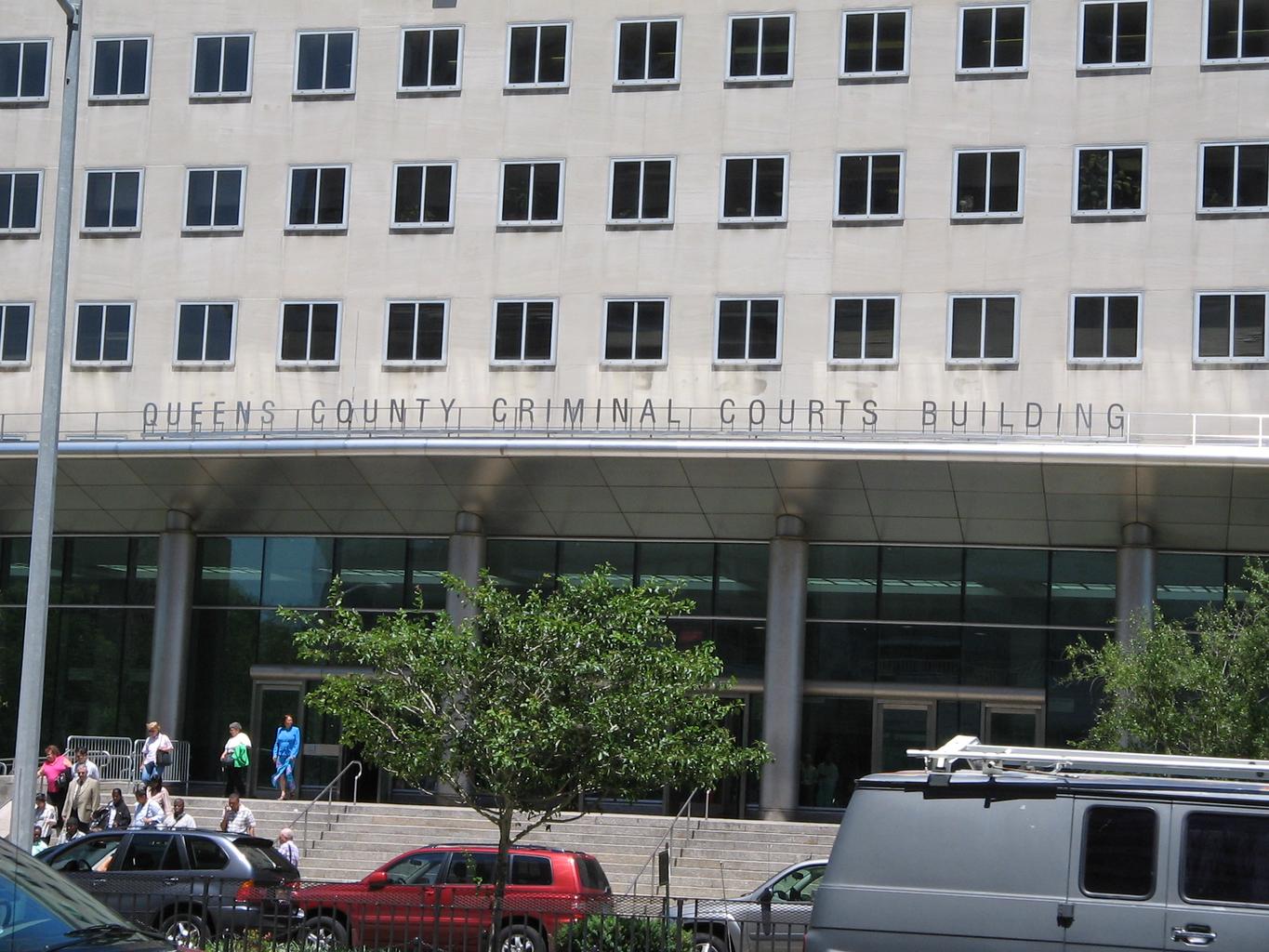
Thursday, January 6, 2022

CHILD CUSTODY - ANOTHER COVID VACCINE ARGUMENT


B.S. v. A.S., Redacted Index No., Date filed: 2021-12-21, Court: Supreme Court, Kings, Judge: Justice Jeffrey Sunshine:

".....

It is well-established that joint custody is appropriate between “stable, amicable parents who behave in a mature and civilized fashion” (Zall v. Theiss, 144 AD3d 831, 833, 40 NYS3d 555 [2 Dept.,2016]). Joint custody is not appropriate where the parties are antagonistic towards each other or have a demonstrated inability to cooperate on matters concerning the children (see Moore v. Conzalez, 134 AD3d 718, 21 NYS3d 292 [2 Dept.,2015]). Furthermore, it is well-established that where the Court can change joint custody to solo custody where it finds that “acrimony between the parties and their demonstrated inability to cooperate on matters concerning the child made continued joint custody inappropriate” (Paruchuri v. Akil, 156 AD3d 712, 713 [2 Dept.,2017]). It is also well-established the joint custody is not appropriate where “the parties are antagonistic towards each other, do not communicate at all, and have demonstrated an inability to cooperate on matters concerning the children” (Franklin v. Franklin, 199 AD3d 758 [2 Dept.,2021]).

It is clear that the parties each hold strong opinions — opinions inapposite to one another — as to the efficacy of the COVID-19 vaccine. The parties each propose numerous complex frameworks and rationales for this Court to choose which option is in their children’s best interest. The mother argues that health statistics, COVID variant surges in NYC, missed social interactions and the risk posed to the children due to the father’s alleged non-compliance with COVID safety guidelines make it necessary to vaccinate the children. The father argues that he does not consent to the children receiving the vaccine because, he alleges, pharmaceutical producers received waivers against future litigation for unknown long-term effects.

Under the facts and circumstances presented, this Court need not at this time become embroiled in the specific disagreement between the parties on the issue of the COVID-19 vaccine. Nor, at this time, does the Court need to become embroiled in a fact-finding proceeding as to which set of experts the parties may offer are “right”.3 As such, the immediate question presented to this Court is not whether the parties should vaccinate or not vaccinate these children: the immediate question presented is whether it is appropriate for the Court to continue joint custody on the limited issue of COVID health care or whether the Court must carve out a sphere of influence on this limited issue.

Here, the immediate issue before the Court is whether the relationship between the parties has deteriorated to the point where the level of acrimony makes joint decision making on the limited issue of the COVID-19 vaccination unsustainable.

Under the unique facts and circumstances herein where the parties already mutually agreed in a so-ordered stipulation on adopting the NYC and NYS guidelines for their family. The issue presented is whether joint custody on this issue remains viable if one of the parties subsequently violated that agreement. The mother raised questions of fact as to the father’s compliance. The father did not appear to dispute the allegations raise: instead, the father contends that any non-compliance was not “dangerous” because the children did not contract COVID-19. He contends, in effect, that the mother’s standard of proof must be that he jeopardized the children’s health by any non-compliance.

The Court does not adopt the mother’s position that based on this disagreement it is necessary, at this time, to consider a change of custody as to all medical decision making: both parties acknowledge that they have been successful in navigating all prior medical decisions for the children and the Court should attempt to preserve as much of the parties’ prior agreement as possible. Similarly, the Court does not adopt the father’s position that any change in custody related to medical decision making would be inappropriate because, he contends, the parties “only” disagree on this “one issue”: this issue has wide ranging implications and should not be minimized.

It is possible that the parties remain able to communicate maturely and civilly and to cooperate with one another on all other issues but this one: that general ability does not preclude this Court from carving out a sphere of influence as to the issue where they are unable to do so particularly if the animosity is placing the children “in the middle” of the disagreement which is an issue of concern raised by the attorney for the children (see generally Stone v. Weinberg, 189 AD3d 1426 [2 Dept,2020]; see also Elizabeth S. v. Edgard N., 150 AD3d 585 [1 Dept.,2017][holding that joint custody with "spheres of influence" was appropriate where the parties had an acrimonious relationship]). The Court notes that “[s]ince weighing the factors relevant to any custody determination requires an evaluation of the credibility and sincerity of the parties involved, the hearing court’s findings are accorded deference, and will not be disturbed unless they lack a sound and substantial basis in the record” (id. at 657).

One of the central requirements of joint custody is the ability of parents to cooperate with one another. Here, initially, it appears that even though the parties did not agree on how to navigate the pandemic situation they were eventually successful in reaching an agreement on how to cooperate moving forward which they memorialized in the April 2020 so-ordered agreement in which they voluntarily and contractually bound themselves to a specific set of externally determined guidelines. This is an example of parties successfully engaging in joint custody; however, the mother now alleges that the father has refused to comply with what he previously agreed to do.

The mother alleges that the father unilaterally and selectively chooses which geographic locations where he complies with following the NYC and NYS guidelines: this allegation is not disputed by the father in his affidavit in opposition. The parties chose to bind themselves in a contract as to how they will conduct themselves during this pandemic.

These allegations require this Court to consider whether there has been a change in circumstances in which the father became unwilling or unable to cooperate in following the guidelines he voluntarily adopted in the April 2020 agreement. Furthermore, the Court must consider whether the father has become unwilling or unable to communicate with the mother on this issue in a mature and civilized manner or whether the level of acrimony has made it impossible for him to do so on this limited issue.

The mother attached text messages to her application in which she appears to ask the father about compliance with the April 2020 so-ordered agreement — Would the children be wearing masks indoors? Would the children be socially distancing when around unvaccinated non-household members? Etc. — and it appears that the father used these questions as an opportunity to call her demeaning names and to engage in ad hominum attacks on her social views. It appears where the parties agreed to a joint approach to adopting the NYC and NYS guidelines but then if one of them stopped following those guidelines it could place the children in the untenable position of being “in the middle” and not in their best interest.

If it is true that the father is now unable or unwilling to cooperate with his prior consent agreement to follow all NYC and NYS guidelines, is it not proof that joint custody on this issue is no longer appropriate? Whether or not the father stopped complying with the April 2020 agreement requires an evidentiary hearing as does the question, inter alia, of whether the father’s use of disparaging name calling of the mother when asked about his compliance demonstrates that he has become unable to communicate with the mother on this issue in a “mature and civilized manner” and whether the level of acrimony makes it impossible for the father to continue to share joint custody on this issue. Under the most recent Appellate Division, Second Department caselaw the Court finds that the mother has alleged sufficient change of circumstances demonstrating a need for a change of custody to ensure the best interests of these children (see generally Assad v. Assad, 2021 NY Slip Op 06978 [2 Dept., December 15, 2021]).

The evidentiary hearing will address the following limited issues: 1) whether the level of animosity on the issue of COVID has become such that either party has demonstrated an unwillingness or inability to communicate without animosity regarding the best interests of the children on the medical decision making as to COVID issues; and 2) whether the father has cooperated and complied with the April 2020 so-ordered agreement to follow NYC and NYS guidelines. Neither of these questions require the testimony of “COVID experts”: the Court need only hear from the plaintiff and the defendant. Additionally, Appellate Division, Second Department caselaw, the Court believes that it will be necessary to conduct an in camera of the children (see Coleman v. Lymus, 193 AD3d 930 [2 Dept.,2021][holding that it was error not to conduct an in camera with the children because "while the express wishes of children are not controlling, 'they are entitled to great weight, particularly where their age and maturity would make their input particularly meaningful'"). The parties may seek permission to call fact witnesses on these limited issues of compliance with the April 2020 agreement and communication between the parties on this issue. The Court need not hear, at this time, any testimony as to the merits of either parties' opinions as to the issue of COVID as that issue is not presently before the Court.

The Court notes that, on consent of all counsel, the Court was notified by e-mail dated December 16, 2021 that after oral argument of this application, one of the children (age 10) tested positive for COVID-19 and is in quarantine with the father. The father must make arrangements to assure that the child (and or children) are shielded from this proceeding and any virtual appearances that may take place during the time with the child or children are in his care. The same is true for the mother if the children are in her care during any virtual proceedings.

Given the seriousness of the issue presented, the Court will adjourn the currently calendared matters from January 3, 2022 and will conduct a virtual evidentiary hearing on the limited issues defined herein-above on January 3, 2022 at 10:00 a.m. The Court will schedule the in camera with these children upon notice to the attorney for the children. If the children have questions about this proceeding they should be directed to speak with their attorney.

All prior orders remain in full force and effect.

This shall constitute the decision and order of the Court