Showing posts with label Tree. Show all posts

Friday, April 4, 2025

NY - NEIGHBOR DISPUTE: ANOTHER TREE CASE


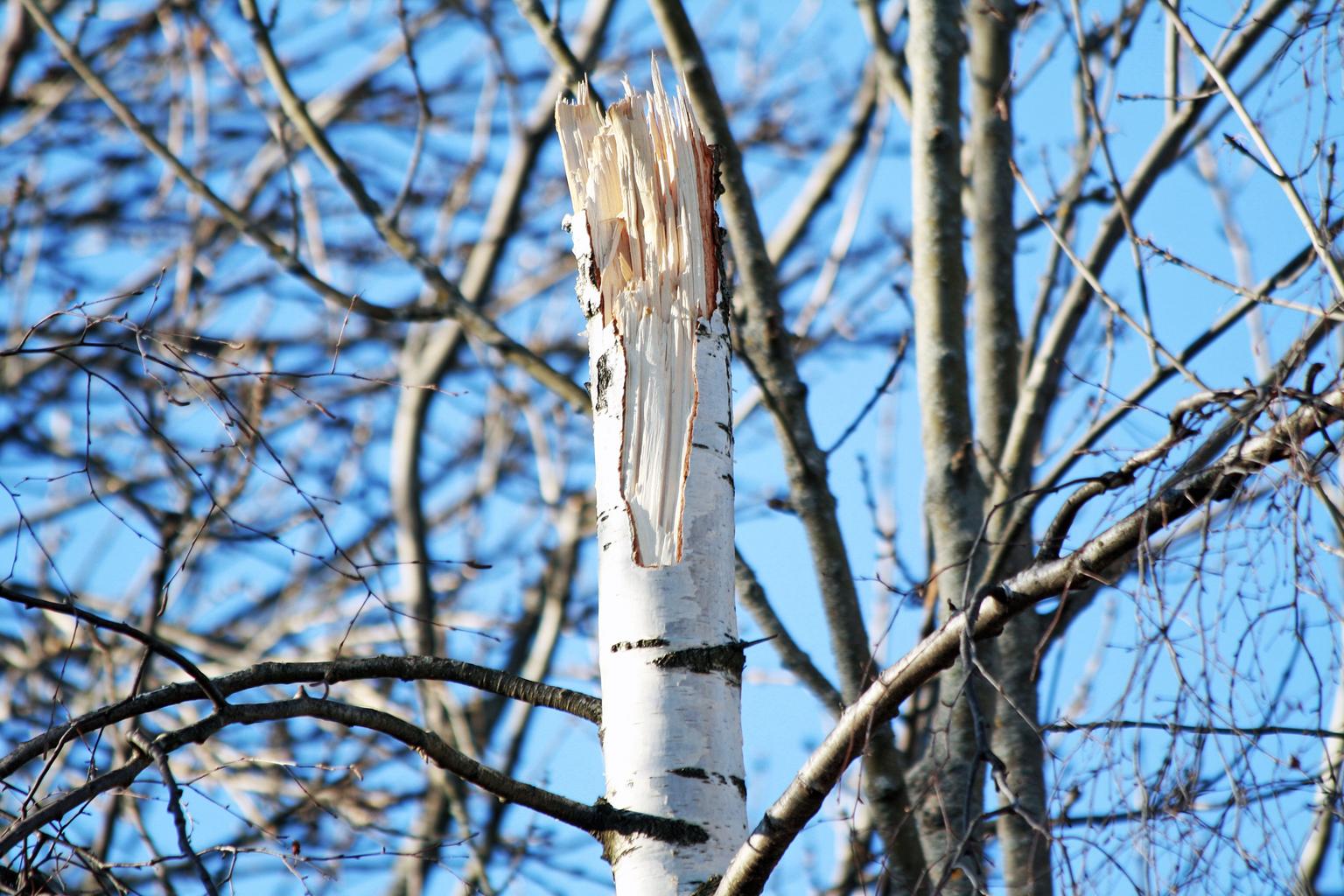
The above picture is not from this case.

Bedell v. LONG IS. LANDSCAPING, 2025 NY Slip Op 50379 - NY: Dist. Court, Suffolk County, 6th Dist. 2025:

"Plaintiff Donald W. Bedell ("Plaintiff") filed a complaint in this case on October 15, 2024 against Defendants Long Island Landscaping and Lorraine Fosmire ("Defendants"), seeking monetary damages as a result of damage to trees on Plaintiff's property. Specifically, Plaintiff alleges that his neighbor, Defendant Fosmire, hired the Co-Defendant, Long Island Landscaping, to trim Plaintiff's trees to the extent they hung over onto Defendant Fosmire's property; however, Defendant Long Island Landscaping crossed onto Plaintiff's property line without his permission and irreparably damaged his trees by cutting them back too far. Plaintiff seeks fourteen thousand ($14,000.00) dollars in compensatory damages. In addition, Defendant Long Island Landscaping has counterclaimed against Plaintiff Bedell for attorney's fees. There are no cross-claims in this case.

After presiding over a non-jury trial on February 21, 2025, this Court makes the following findings of fact and conclusions of law and issues this Decision and Order:

I. Summary of Trial

A. Plaintiff's Case

During trial, Plaintiff Bedell testified that he resides at 21 Melrose Parkway, East Patchogue, New York. Plaintiff's neighbor, Defendant Fosmire, resides at 11 Melrose Parkway, East Patchogue, New York.

On May 14, 2024, Plaintiff Bedell came home and noticed that the trees on his property had been damaged, namely, the branches on certain trees were cut to the trunk. Plaintiff's neighbor, Defendant Fosmire had hired a landscaping company, Defendant Long Island Landscaping, to trim Plaintiff's trees to the extent some branches hung over onto Defendant Fosmire's neighboring property. However, rather than trim the tree branches back to the property line (which was marked by a fence separating the two properties), the landscaping company cut the branches all the way back to the trunk. According to Plaintiff, the trees were approximately three (3) feet from the property line; thus, the landscaping company crossed onto his property by three (3) feet when it cut the tree branches back to the truck.

Plaintiff Bedell's wife, Janice Bedell, testified on behalf of her husband. She testified that, prior to the tree trimming, Defendant Fosmire's daughter asked Janice Bedell for permission to trim the trees that were hanging over the Fosmire's property, and she gave such permission. At that time, there was no conversation regarding exactly which branches could be trimmed. On May 14, 2024, Janice Bedell came home and saw the tree branches had been trimmed back to the trunk; she then asked Martinez what he had done. Martinez told Janice Bedell he trimmed the trees, just as Fosmire had asked. Janice Bedell told Martinez that he could not cut the branches past the property line. Martinez stated, "I did what I was told." Janice Bedell then spoke with Fosmire, who told Bedell "that [cutting the tree branches back to the truck] is not what I told him to do, and by the time I saw it, it was too late." Fosmire further stated that she obtained permission to trim the trees, and "I did not realize that [Martinez] had gone all the way up [the tree to the tree trunk] to the top." Defendant Fosmire admitted that Janice Bedell had accurately described their conversation.

In support of Plaintiff Bedell's case, he submitted the following exhibits: (1) photographs taken by Plaintiff of (a) the trees after being cut and (b) the property line; (2) estimates for replacement of the trees.

Plaintiff Bedell seeks fourteen thousand ($14,000.00) dollars in compensatory damages, which is the cost of removing the existing nine (9) trees, and replacing them with totally new trees.

B. Defendants' Evidence

Defendant Lorraine Fosmire testified that she resides at 11 Melrose Parkway, East Patchogue, New York, and is the Plaintiff's neighbor. She testified that, prior to hiring Defendant Long Island Landscaping, her daughter obtained permission from Plaintiff's wife to "trim" the Bedells' trees because they hung over onto Fosmire's property. Defendant Fosmire testified that her husband had trimmed the trees back for years; but, since he recently passed away, she hired Defendant Long Island Landscaping to trim the trees. She hired Defendant Long Island Landscaping to do the landscaping on May 14, 2024, for which she paid one thousand six hundred and thirty-eight ($1,638.00) dollars, and she was satisfied with the completed job. When the Bedells objected to the completed job, Defendant Fosmire stated that "I had no idea he [Martinez] was going to cut all the way up [the tree to the trunk]." She further testified that "[i]f he [Martinez] was going to do that, he should have — [unspecified]."

In Defendant Fosmire's defense, she submitted the following exhibits, which were entered into evidence: (1) arborist's report and (2) photos.

Alex Martinez, on behalf of Defendant Long Island Landscaping, testified that he is the manager of Long Island Landscaping. Long Island Landscaping was hired by Defendant Fosmire to do landscaping on her property on May 14, 2024, including trimming nine (9) trees in the front of the property. Martinez testified that he trimmed the trees as he was instructed to do by Defendant Fosmire. According to Martinez, Fosmire told him to "go as high as possible," and "cut all the way to the top," which he did. Upon completion, Defendant Fosmire stated that she was pleased with the job Martinez had done.

In addition, Martinez admitted to crossing onto Plaintiff Bedell's property by approximately a foot or a foot and a half to trim the trees. He further testified that he chose to cut the tree branches right to the trunk (rather than to the fence-line) because "[i]f we were to go to the fence line, pretty much, it's just one little stump that you're probably looking at, maybe like not even a foot long, which a lot of people that we have done work for don't like to see that [tree branch stumps]...they [customers] prefer to see it [the tree branch] flush with the tree." He further testified that Fosmire told him that she had Plaintiff Bedell's permission to cut the branches to the trunk. Martinez conceded that he had no conversation with Plaintiff Bedell, or his wife, at any time.

Finally, Martinez testified that Defendant Fosmire paid a total of one thousand six hundred and thirty-eight ($1,638.00) dollars, for the landscaping job, which included additional yard work; Martinez estimated that the cost of trimming the nine (9) trees in the front was approximately six hundred and thirty-eight ($638.00) dollars. Martinez also testified that the cut branches were beginning to grow again.[1]

In Defendant Long Island Landscaping's defense, Martinez submitted the following exhibits, which were entered into evidence: (1) invoice; and (2) photos (from Long Island Landscaping).

II. Findings of Fact

Based on the credible evidence submitted during trial, this Court finds that Defendant Fosmire, residing at 11 Melrose Parkway, East Patchogue, New York, hired Defendant Long Island Landscaping to do landscaping on her property on May 14, 2024. The landscaping included trimming tree branches on nine (9) trees [Japanese Cedars and White Pines] that were located on Plaintiff Bedell's neighboring property at 21 Melrose Parkway, East Patchogue, New York.

Prior to contracting with Defendant Long Island Landscaping, Defendant Fosmire's daughter had obtained permission from Janice Bedell to trim the tree branches to the extent they hung over onto the Fosmires' property.

On May 14, 2024, Defendant Long Island Landscaping trimmed Plaintiff's trees to the extent some branches hung over onto Defendant Fosmire's neighboring property. However, rather than trim the tree branches back to the property line (which was marked by a fence separating the two properties), Defendant Long Island Landscaping cut the branches all the way back to the trunk. In so doing, the Defendant Long Island Landscaping crossed onto Plaintiff Bedell's property by three (3) feet when it cut the tree branches back to the truck.

Defendant Fosmire paid Defendant Long Island Landscaping one thousand six hundred and thirty-eight ($1,638.00) dollars for the job.

III. Conclusions of Law

Courts have generally recognized that "vegetation penetrating adjacent property presents a type of legal problem for which the remedy of self-help can be invoked. This remedy can be generally defined as the adjoining owner's removal of branches or roots, to the extent that they protrude into his property." 65 ALR4th 603 [1988]. In addition, courts have generally prohibited the "cutting of the entire plant or tree in the exercise of self-help." Id. For example, the court in Grandona v. Lovdal, 70 Cal 161, 11 P 623, 624 [1886] held that trees whose branches extended over the land of another were only nuisances to the extent of the encroachment, and the person over whose premises they hung could, inter alia, cut the branches off to the property line, but could not cut down the tree.

Pursuant to the Restatement of Torts 2d § 929, the measure of damages resulting in harm to land from a trespass is as follows:

"§ 929. Harm to Land from Past Invasions
(1) If one is entitled to a judgment for harm to land resulting from a past invasion and not amounting to a total destruction of value, the damages include compensation for
(a) the difference between the value of the land before the harm and the value after the harm; or at his election in an appropriate case, the cost of restoration that has been or may be reasonably incurred,
(b) the loss of use of the land, and
(c) discomfort and annoyance to him as an occupant."
***
Restatement of Torts 2d § 929.

In this case, Martinez admitted he encroached onto the Plaintiff's property (albeit at the direction of Fosmire) to cut the tree branches back. In so doing, Martinez violated a basic rule of tree trimming (and land use): one cannot enter another's property without express permission. Accordingly, this Court concludes that Defendant Long Island Landscaping is liable for the harm to the Plaintiff's property as a result of the trespass.

With regard to damages, Plaintiff presented no proof of the property's "diminution in value" (such as an appraisal, expert opinion). In addition, the Plaintiff presented no evidence of the cost of repair. Instead, he presented evidence of the cost of entirely removing the existing nine (9) trees, and replacing them with totally new trees; this Court declines to award replacement costs in light of the testimony and evidence that the branches have begun to regrow.

Accordingly, this Court awards to Plaintiff the cost of the tree trimming job, (estimated to be six hundred and thirty-eight ($638.00) dollars), along with punitive damages in the same amount. Defendant Long Island Landscaping's counterclaim is DENIED.

By reason of the foregoing, it is hereby:

ORDERED: Judgment for the Plaintiff in the amount of six hundred and thirty-eight ($638.00) dollars in compensatory damages, and six hundred and thirty-eight ($638.00) in punitive damages, for a total of one thousand two hundred and seventy-six ($1,276.00) dollars, plus interest from the date of incident (May 14, 2024), at a rate of nine percent (9%) per annum pursuant to CPLR § 5001 and CPLR § 5004.

[1] This testimony is supported by the arborist's report submitted by Defendant Fosmire. (See Def.'s Ex. C)."

Tuesday, December 14, 2021

NEIGHBOR DISPUTES - TREE DAMAGE


Zaremba v. Stanco, Date filed: 2021-12-02, Court: District Court, Nassau, Judge: Judge Gary Carlton, Case Number: SC-000516/21OB:

"The Plaintiffs have brought this action for the property damage and tree removal costs caused by defendant’s tree which fell on their property.

FINDING OF FACTS

The subject tree was hanging over the plaintiffs’ property. The plaintiffs put the defendant on written notice of their concern about the tree.

The plaintiffs were given the opportunity to prove that the subject tree was decayed or defective, but have failed to do so.

APPLICABLE LAW

There is a large class of cases, in which injury is suffered by a party, where the law gives no redress. If a tree growing upon the land of one is blown down upon the premises of another, and in its fall injures his shrubbery, or his house, or his person, he has no redress against him upon whose land the tree grew, Sheldon v. Sherman, 42 N.Y. 484, 486, (1870).

The exception to that general rule of law is when a defendant has been put on notice of the subject tree being on the neighboring property and that the subject tree is defective or diseased. It is plaintiff’s burden to prove this. Cicio v. Pollack, 51 Misc. 3d 131A, 36 N.Y.S.3d 46 (Appellate Term 1st Dept.2016).

No evidence has been produced that the tree was defective, only the allegation that the defendant was put on actual notice that the subject tree will cause harm, McKeever v. City of Rye, 35 Misc. 3d 1208(A), 1208A, 950 N.Y.S.2d 724, (City Court of Rye 2012).

There is no claim that the defendant caused the tree to fall on plaintiffs’ property. There is no claim that the manifestation of decay was readily observable.

Absent said proof the defendant did not have a duty to take reasonable steps to prevent any potential harm that may have occurred to the plaintiffs on this property as a result of the tree falling on their property, Golan v. Astuto, 242 A.D.2d 669, 662 N.Y.S.2d 576 (2nd Dept. 1990).

Absent a duty, there is no liability."

Thursday, September 23, 2021

NEIGHBOR DISPUTES - TREE ROOTS


5 years in the court system over a $5000 claim.

BENJAMINOV v. Zheng, 2021 NY Slip Op 50832 - NY: Appellate Term, 2nd Dept. 2021:

"In this small claims action, commenced in December of 2016, plaintiff seeks to recover the sum of $5,000, alleging that her concrete patio and fence were damaged by the roots of a tree located on defendant's property. At a nonjury trial, it was established that defendant had purchased his property in January of 2016 and has since removed the offending tree. The tree had already been in existence when plaintiff moved into her property over 20 years ago. Following the trial, the court awarded plaintiff the principal sum of $5,000.

In a small claims action, our review is limited to a determination of whether "substantial justice has . . . been done between the parties according to the rules and principles of substantive law" (CCA 1807; see CCA 1804; Ross v Friedman, 269 AD2d 584 [2000]; Williams v Roper, 269 AD2d 125 [2000]).

It appears that plaintiff seeks to recover based on trespass, nuisance and/or negligence causes of action. In order for plaintiff to prevail based on trespass, her burden extends beyond proof of an invasion of her right to exclusive possession of her land to proof that such invasion or intrusion is the result of an act either intentionally done or so negligently done that such intent will be presumed (see Zimmerman v Carmack, 292 AD2d 601 [2002]; see Turner v Coppola, 102 Misc 2d 1043 [Sup Ct, Nassau County 1980], affd 78 AD2d 781 [1980]). The trespass may not be based on a mere nonfeasance or an omission to perform a duty (see Loggia v Grobe, 128 Misc 2d 973 [Dist Ct, Suffolk County 1985]). Here, there was no proof of an intentional intrusion or that defendant was even aware of root intrusion prior to notification by plaintiff of the alleged damages.

To the extent that her action was based on nuisance, plaintiff similarly could not prevail. Even if plaintiff could establish property damage due to an interference with the use and enjoyment of her land amounting to an injury in relation to a right of ownership in that land (see Kavanagh v Barber, 131 NY 211 [1892]; Turner v Coppola, 102 Misc 2d 1043, affd 78 AD2d 781), the facts and circumstances required that plaintiff resort to self-help in the first instance (see Ferrara v Metz, 49 Misc 2d 531 [Sup Ct, Suffolk County 1966]). However, plaintiff never availed herself of her right to self-help by removing those roots on her own land (see Iny v Collum, 13 Misc 3d 75 [App Term, 2d Dept, 9th and 10th Jud Dists 2006, Lippman, J., dissenting]; Ahmed v Zoghby, 63 Misc 3d 866 [Middletown City Court, Orange County 2019]; Ferrara v Metz, 49 Misc 2d 531; Colombe v City of Niagara Falls, 162 Misc 594 [Sup Ct, Niagara County 1937]; but see Norwood v City of New York, 95 Misc 2d 55 [Civ Ct, NY County 1978]), and there was no evidence that self-help would have been unreasonable and unrealistic.

Similarly, plaintiff's case fails as an action based on negligence. There is no proof that the injury arose due to the fault or negligence of defendant in the removal of the tree (see Turner v Coppola, 102 Misc 2d 1043, affd 78 AD2d 781). Plaintiff presented no before and after photographs and there was no expert testimony with respect to the cause of any damage (see Loggia v Grobe, 128 Misc 2d 973).

In view of the foregoing, the judgment in favor of plaintiff failed to render substantial justice between the parties according to the rules and principles of substantive law (see CCA 1804, 1807).

Accordingly, the judgment is reversed and the matter is remitted to the Civil Court for the entry of a judgment in favor of defendant dismissing the action.

ALIOTTA, P.J., and WESTON, J., concur.

TOUSSAINT, J., dissents and votes to affirm the judgment in the following memorandum:

"The standard of review on an appeal of a small claims judgment is whether substantial justice has . . . been done between the parties according to the rules and principles of substantive law ([CCA] 1807). The decision of a fact-finding court should not be disturbed on appeal unless it is obvious that its conclusions could not be reached under any fair interpretation of the evidence, particularly when the findings of fact rest in large measure on considerations relating to the credibility of witnesses. This principle applies with greater force to judgments rendered in small claims proceedings, given the limited scope of review" (Nunes v 1320 Heritage Place, LLC, 13 Misc 3d 144[A], 2006 NY Slip Op 52323[U], *1[App Term, 2d Dept, 9th & 10th Jud Dists 2006] [internal quotation marks omitted]; see Ross v Friedman, 269 AD2d 584 [2000]; Williams v Roper, 269 AD2d 125, 126 [2000]).

In this case, plaintiff claimed that, after moving in, defendant fixed his own property and not hers, and in the process, damaged her property even more. Plaintiff explained at trial that, when defendant took down a tree, both the fence and concrete porch were further damaged. Significantly, plaintiff produced two photographs taken after the tree was removed and submitted three separate estimates for the cost of repair. This case is therefore distinguishable from the case of Reed v Pilgrim (68 Misc 3d 126[A], 2020 NY Slip Op 50844[U], *2 [App Term, 2d Dept, 2d, 11th & 13th Jud Dists 2020]) wherein this court stated:

"Plaintiff failed to show that the portion of the chain link fence that defendants had removed was on plaintiff's property, and, in any event, plaintiff failed to establish any damages caused by defendants. Significantly, plaintiff failed to submit two estimates or itemized paid bills, which are deemed to be prima facie evidence of the reasonable value and necessity of any services and repairs."

Here, plaintiff provided prima facie evidence in the form of three estimates. There is no dispute that defendant's removal of the subject tree caused damage to plaintiff's fence and porch. Defense counsel was only concerned that the estimates included work not caused by the tree removal. That point of contention was resolved by the Civil Court's decision which specifically acknowledged "that claimant's estimates included work not caused by the repair and tree removal, thus the award to claimant does not include them."

The majority opinion focuses on the fact that the subject tree was present when plaintiff took residence in the adjacent home over 20 years ago; that plaintiff failed to resort to self-help or to procure an expert on root and tree propensity to show that self-help would have been unreasonable for a nuisance claim; and that plaintiff did not produce before and after photos for a negligence claim. Plaintiff presented photos of the damage after the tree removal and the court accordingly decided what award would effectively cover the damage caused by the tree removal distinguished from other damages within the estimates. Plaintiff is not seeking relief for the long-term damage caused by the roots but for the contemporaneous damage caused by the removal of the subject tree. Further, the majority states that there is no proof that defendant was aware of root intrusion of the tree, which was on both properties, prior to notification by plaintiff of the alleged damages. The majority ignores the fact that the cause of the damage is undisputed by defendant.

The credibility of plaintiff's statements and testimony is best observed and evaluated by the trial court. "Furthermore, the determination of a trier of fact as to issues of credibility is given substantial deference, as a trial court's opportunity to observe and evaluate the testimony and demeanor of the witnesses affords it a better perspective from which to assess their credibility" (Reed v Pilgrim, 68 Misc 3d 126[A], 2020 NY Slip Op 50844[U], *1-2; see Vizzari v State of New York, 184 AD2d 564 [1992]). "Accordingly, a small claims judgment may not be overturned simply because the determination appealed from involves an arguable point on which an appellate court may differ; the deviation from substantive law must be readily apparent and the court's determination clearly erroneous" (Schiffman v Deluxe Caterers of Shelter Rock, 100 AD2d 846, 846-847 [1984]). The Civil Court decided that the appropriate remedy was an award of damages in the amount necessary to repair the damage caused by the removal of the subject tree, and not the long-term damage caused by its roots. It cannot be said that the determination of the Civil Court was so clearly erroneous or shocking as to fail to render substantial justice between the parties (see CCA 1807, 1804). The Civil Court did not improvidently exercise its discretion in awarding limited damages.

Accordingly, I respectfully dissent and vote to affirm the judgment."

Wednesday, August 5, 2020

AFTER TROPICAL STORM ISAIAS - SOME "TREE" LAW


Looking outside after the storm stopped...the many fallen trees.

Russo v. Jay, 2020 NY Slip Op 50157 - NY: Appellate Term, 2nd Dept. January 3o, 2020:

"Plaintiffs commenced this small claims action against defendant, the owner of property abutting plaintiffs' property, to recover for damage that plaintiffs sustained after a limb from a tree, which was allegedly on defendant's property, fell into plaintiffs' yard in April of 2018, damaging their fence. Defendant counterclaimed to recover damages resulting from plaintiffs' workers trespassing on his property.

At a nonjury trial, plaintiffs testified that, in 2016, debris from a tree on defendant's property had fallen into their yard and damaged their pool fence. They had sent defendant a certified letter in 2016, informing defendant that he had several dead trees on his property, which represented a hazard to plaintiffs' property, but defendant did not accept the letter. Plaintiffs offered photographs taken in 2016 to support their position that the trees in defendant's yard had been in a deteriorated condition. Defendant asserted, among other things, that, in 2016, the debris from the tree fell as a result of an "act of God," and that plaintiffs had not shown that a dangerous condition existed in 2018 or that defendant had had notice of such a condition. As limited by the brief, defendant appeals from so much of a judgment of the Justice Court as awarded plaintiffs the principal sum of $568.67.
In a small claims action, our review is limited to a determination of whether "substantial justice has . . . been done between the parties according to the rules and principles of substantive law" (UJCA 1807; see UJCA 1804; Ross v Friedman, 269 AD2d 584 [2000]; Williams v Roper, 269 AD2d 125 [2000]).

To establish defendant's liability, plaintiffs bore the burden of demonstrating, among other things, that a defective condition existed and that defendant had affirmatively created the condition, or had actual or constructive notice of its existence (see Skalafuris v Arpadi, 43 Misc 3d 128[A], 2014 NY Slip Op 50484[U] [App Term, 2d Dept, 9th & 10th Jud Dists 2014]). "Constructive notice that a tree or limb is dangerous may be based upon signs of decay or other defects that are readily observable by someone on the ground or that a reasonable inspection would have revealed" (Babcock v County of Albany, 85 AD3d 1425, 1426 [2011]; see Ivancic v Olmstead, 66 NY2d 349, 351 [1985] [the manifestation of a tree's "decay must be readily observable in order to require a landowner to take reasonable steps to prevent harm"]; Michaels v Park Shore Realty Corp., 55 AD3d 802 [2008]; Lillis v Wessolock, 50 AD3d 969 [2008]). There is no duty to consistently and constantly check for non-visible decay. Although plaintiffs testified that debris had fallen from defendant's overhanging tree limbs in the past and that they had sought to advise defendant of that on one occasion two years earlier, they failed to provide any evidence that the particular tree from which the limb fell onto their property in 2018 was unhealthy or that defendant had actual or constructive notice of any defect in that tree. Thus, we conclude that plaintiffs failed to make out a prima facie case (see Skalafuris v Arpadi, 43 Misc 3d 128[A], 2014 NY Slip Op 50484[U]; Rosenbaum v Mount Hebron Cemetery, 42 Misc 3d 147[A], 2014 NY Slip Op 50366[U] [App Term, 2d Dept, 2d, 11th & 13th Jud Dists 2014]; see also Goldman v Severe, 31 Misc 3d 151[A], 2011 NY Slip Op 51124[U] [App Term, 2d Dept, 9th & 10th Jud Dists 2011]).

In any event, even if the testimony had established that the tree limb fell from defendant's rotted tree and that it was the overhanging limb that plaintiffs had previously complained to defendant about in 2016, plaintiffs failed to avail themselves of their right to self-help by pruning the tree branches to the extent that they were overhanging plaintiffs' property (see Kuney v Christian, 42 Misc 3d 136[A], 2014 NY Slip Op 50120[U] [App Term, 2d Dept, 9th & 10th Jud Dists 2014]; Hileman-Rizzo v Krysty, 10 Misc 3d 135[A], 2005 NY Slip Op 52118[U] [App Term, 2d Dept, 9th & 10th Jud Dists 2005]; see also 1 NY Jur 2d, Adjoining Landowners § 65). In view of the foregoing, we find that the judgment in favor of plaintiffs failed to render substantial justice between the parties according to the rules and principles of substantive law (see UJCA 1804, 1807)."

Wednesday, May 1, 2019

NEIGHBOR DISPUTE - A TREE


Never think that you shall see, a litigation about a tree.

Ahmed v. Zoghby, NYLJ April 30, 2019, Date filed: 2019-04-08,  Court: City Court, Orange, Judge: Judge Richard Guertin, Case Number: SC1257/2018:


"This is a Small Claims action by Shafi Ahmed and Nusrat Ahmed (“Claimants”) against Allen H. Zoghby (“Defendant”). The Claimants and the Defendant appeared pro se. The Claimants allege roots from a tree purportedly on the property next door, which property is owned by the Defendant and known as 73 Beattie Avenue, Middletown, New York, damaged the pavement and driveway located at the front of the house on the Claimants’ property, known as 75 Beattie Avenue, Middletown, New York. The Claimants also allege the tree’s roots are slowly moving under the foundation of the Claimants’ house and further claim the branches from the tree on the Defendant’s property had to be cut and trimmed by the Claimants at their cost. The Claimants initially sued the Defendant for $3,800.00.The Claimants submitted their Application to File Small Claims on October 16, 2018; the Court mailed notices of this action on October 17, 2018 to the Defendant setting December 7, 2018 as the date for the trial. The parties appeared on December 7, 2018 and agreed, after meeting with a mediator, to adjourn this action until January 18, 2019 so the Claimants could produce a survey showing where the subject tree is located to determine who owns the tree, and for a trial if the parties could not settle. On January 18, 2019, the Claimants appeared in court but the Defendant did not. The Court then conducted an inquest of the Claimants. After the inquest, the Claimants moved to amend their claim to conform with the proof, and the Court granted a default judgment to the Claimants in the amount of $4,675.00 plus costs.

The Defendant, on February 13, 2019, filed with the court an application for an Order to Show Cause to vacate the judgment and restore the case to the calendar. The Defendant submitted proof that he was unable to appear in court on January 18, 2019 due to his undergoing chemotherapy for a brain tumor. He also asserted a defense based on the need to have a survey to show on whose property the tree at issue is located. The Court signed the Order to Show Cause and set a return date of March 1, 2019. The Claimants and the Defendant appeared on March 1, 2019, at which time the Court granted the Order to Show Cause, vacated the judgment, and restored the case to the calendar. The parties again attempted mediation, which was unsuccessful, and the Court conducted a trial that day and reserved decision after the trial.

At the trial, the Claimant, Shafi Ahmed (“Ahmed”), and the Defendant (“Zoghby”) both testified under oath, and they both testified credibly. Both Ahmed and Zoghby submitted documentary evidence for the Court’s consideration.

FINDINGS OF FACT

The credible evidence at the trial showed the following:

A very large tree (“the tree”) straddles the property line separating 75 Beattie Avenue from 73 Beattie Avenue. Ahmed, an owner of 75 Beattie Avenue, testified roots from the tree have extended under and pushed up through a portion of the driveway at the Claimants’ property. He also testified branches from the tree hang over the Claimants’ property and have caused the deposit of leaves and other debris on the roof of the house on the Claimants’ property.

Ahmed produced documentation showing the Claimants borrowed money from the City of Middletown Community Development Office in 2013 for various home improvements, including $1,000.00 paid in August 2013 to a contractor to cut the tree’s branches overhanging the Claimants’ house (Claimants’ Exhibit 5, in evidence).1 Ahmed also produced a letter dated August 14, 2018 from the Claimants’ insurance company (Claimants’ Exhibit 6, in evidence) after an insurance company representative inspected the Claimants’ property. The letter contained the following recommendation (which, according to the letter, had “a direct influence upon [the company's] decision to continue coverage”): “Driveway apron: Repair the uneven pavement of the driveway apron along Beattie Avenue where there are uneven areas of asphalt near the road. Ensure that this area is returned to a smooth and level surface to prevent trip and fall hazards.” Ahmed presented pictures of both the roof of the house and the driveway area showing leaves on the roof (but no apparent damage) and cracks and upheavals in the driveway which appear to be the result of roots coming from the tree; the pictures were taken at various times of the year (Claimants’ Exhibits 2 and 3, in evidence). The pictures also show the tree appeared to straddle the property line between the two properties.

Apparently as a result of the insurance company’s requirements, the Claimants, in October 2018, obtained estimates from two companies to repave the driveway, including cutting off the roots of the tree (collectively, Claimants’ Exhibit 4, in evidence). The Claimants eventually hired a third contractor, Max Landscape LLC, at a cost of $2,950.00 to do the work. The work included removing the tree’s roots, demolishing and disposing the existing driveway, grading and compacting, and installing a new paved driveway. The Claimants paid Max Landscape $2,950.00 and produced a paid receipt showing the work was done in February 2019 (Claimants’ Exhibit 7, in evidence).

Zoghby testified that he caused the entire tree (including branches hanging over both his property and the Claimants’ property) to be trimmed approximately eight to ten years ago. He did not know if the tree was on his property or the Claimants’ property but believed it straddled the property line between the two properties. He further testified that roots from the tree not only were growing under the Claimants’ driveway but under his as well, causing cracks in both driveways. Zoghby produced pictures (Defendant’s Exhibit A, in evidence) showing the tree and the driveways to both properties. The pictures, like the pictures offered by Ahmed, show the tree on a grassy strip between both driveways and show cracks in the driveways.2

The Claimants purchased their property (75 Beattie Avenue) in December 2004; Zoghby purchased his property (73 Beattie Avenue) in October 2002 and sold it to Alvaro Gonzalez in August 2018.3 Ahmed produced a copy of a survey by Ernest Johnson, P.L.S. The survey is undated4 but shows the line between Zoghby’s property and the Claimants’ property going through what appears to be a symbol for a bush or tree at the front (Beattie Avenue side) of both properties, but the survey does not identify what that symbol means. The survey also shows more of the symbol appears to be on Zoghby’s property, but there is nothing indicating whether the symbol (if it, indeed, represents the tree) is of the trunk of the tree or the branches of the tree.5 Ahmed, in his testimony, indicated he believes there is a survey mark or pole on the property line indicating approximately ten percent of the tree itself is on the Claimants’ property and agreed the tree is on both properties, but neither party offered anything in evidence showing precisely where the tree was located with respect to each property.

The testimony and evidence at the trial ultimately shows the tree straddles the common line separating the Claimants’ property from Zoghby’s property.

DISCUSSION

There are several issues raised by the testimony and evidence at the trial: ownership of the tree; the Claimants’ assertion that Zoghby must pay for the removal of branches in 2013; and the Claimants’ assertion that Zoghby must pay for the removal of roots and the driveway work on the Claimants’ property. Each of these issues are addressed below.

1.  Ownership of the Tree

It is the long-standing rule in New York that a “tree is wholly the property of him upon whose land the trunk stands” (Hoffman v. Armstrong, 48 NY 201, 203 [1872]; accord Hileman-Rizzo v. Krysty, 10 Misc 3d 135[A] [App Term, 2d Dept, 9th & 10th Jud Dists 2005]; Colombe v. City of Niagara Falls, 162 Misc 594, 596 [Sup Ct, Niagara County 1937]; Oshea v. Shanzer, 40 Misc 3d 1224[A] [Suffolk Dist Ct 2013]). If a tree, however, straddles the line between two properties, the owners of each property own the tree as tenants in common (Dubois v. Beaver, 25 NY 123, 126-127 [1862]; Hileman-Rizzo at 135[A]; Oshea at 1224[A]; 1 NY Jur 2d, Adjoining Landowners §64 [Note: online version] [February 2019 update]). Even if a tree were originally planted on one property and, over the years, grew “over the property line so that it stood on the land of both parties[, that fact] would render the parties tenants in common in the tree” (Hileman-Rizzo at 135[A]).

The testimony of both Ahmed and Zoghby and the evidence at trial show that the tree (and not just the roots and branches but the trunk as well) is on both properties and straddles the line between both properties. There was no testimony or evidence from either party establishing precisely where the tree was located with respect to each property; Ahmed and Zoghby admitted the tree appeared to be on both properties.6 As a result, under the Dubois rule and as reiterated in a number of New York cases thereafter, the Claimants and Zoghby were owners of the tree as tenants in common during the time Zoghby owned his property. Because Zoghby sold his property to Alvaro Gonzalez in August 2018, the Claimants and Gonzalez (who is not a party to this action) now own the tree as tenants in common.

2.  The Claimants’ Removal of Branches From the Tree in 2013

In August 2013, the Claimants paid $1,000.00 to a contractor to cut the tree’s branches overhanging the Claimants’ house. Ahmed also produced pictures showing leaves on the roof of the Claimants’ house, ostensibly from the tree. He claimed Zoghby owed the Claimants $1,000.00 for the cost of cutting the tree’s branches to prevent leaves from falling and accumulating on the roof. The Claimants apparently sought the $1,000.00 under a private nuisance theory.

There are three reasons the Claimants’ claim for reimbursement of the $1,000.00 must fail. First, the Claimants’ assertion (based on nuisance) is time barred by New York Civil Practice Law and Rules §214(4). Under Section 214(4), actions to recover damages for injury to property must be commenced within three years of the property damage (see McNaught v. Mascia, 11 Misc. 3d 143[A] [App Term, 2d Dept, 9th & 10th Jud Dists 2006]). Since the Claimants paid a contractor to remove the offending branches in 2013, more than three years elapsed after the purported damage to the roof from the falling and accumulating leaves and before the Claimants started this action in 2018.

Second, overhanging branches, accumulated fallen leaves, branches, and or buds, or cosmetic damage to a garage, or branches and leaves blocking the sun, without proof of actual injury to a person or that person’s property (which injury is known as “sensible damage”), is not enough to sustain a claim of private nuisance (Turner v. Coppola, 102 Misc. 2d 1043, 1044-1045 [Sup Ct, Nassau County 1980], affd 78 AD2d 781 [2d Dept 1980]; accord Iny v. Collom, 13 Misc. 3d 75, 84 [App Term, 2d Dept, 9th & 10th Jud Dists 2006, Lippman, J., dissenting]). As the Turner trial court noted, “[r]ecovery for damages from overhanging branches depends upon the presence of actual injury to plaintiff or plaintiff’s property. Upon the facts stated and the allegations made in the complaint, there is insufficient basis for an action as a private nuisance because real, sensible damage has not been shown to result from the overhanging tree branches or leaves [citation omitted]” (id. at 1045). The remedy in such case, according to the Turner trial court, is self-help: “ Summary abatement by self-help under these circumstances is a sufficient remedy [citation omitted]. Just as it has been established that a property owner may resort to self-help in the first instance to remove tree roots adversely affecting his land [citations omitted], so it has been held with the removal of overhanging tree branches” (id. at 1046). The Claimants, in essence, resorted to self-help in 2013 by hiring a contractor to remove the branches and leaves, and that self-help was appropriate in this case because of the lack of “sensible damage” from the falling and accumulating leaves.

Third, even if the branches and leaves caused “sensible damage,” the Claimants would not have a right to require Zoghby to reimburse them $1,000.00 because the Claimants owned the tree as tenants in common with Zoghby. The Claimants’ remedy, as a co-owner of the tree as tenants in common with Zoghby, would be self-help by trimming the branches, so long as that action does not “injure the main trunk of the tree.” As the trial court in Hileman-Rizzo noted (at 135[A]), “each party in such a case [where the parties own the tree as tenants in common] is entitled to conduct ordinary clipping or pruning, so long as this does not injure the main trunk of the tree” (citation omitted). See also Dubois at 127-128; Oshea at 1224(A); 1 NY Jur 2d, Adjoining Landowners §64. The actions by the Claimants in hiring a contractor at a cost of $1,000.00 to trim the tree’s branches overhanging the Claimants’ property are self-help actions as co-owners of the tree and are not subject to reimbursement by Zoghby.

3. Defendant’s Liability for the Costs to Remove Roots from the Claimants’ Property and to Repave the Claimants’ Driveway

There are few, if any, reported New York cases involving damage claims from tree roots where the tree straddles a common property line. The cases that address damage from roots of a tree generally involve a tree located solely on a neighbor’s property; those cases generally acknowledge and allow self-help, in the first instance, to remove those roots that have emerged from such a tree. See e.g. 1212 Ocean Avenue Housing Development Corp. v. Brunatti, 50 AD3d 1110, 1112 (2d Dept 2008); In re Black, 2002 NY Slip Op 4049(U) *3 (Sup Ct, Suffolk County 2002); Ferrara v. Metz, 49 Misc. 2d 531 (Sup Ct, Suffolk County 1966); Colombe at 596; Loggia v. Grobe, 128 Misc. 2d 973, 974-975 (Suffolk Dist Ct 2013); but see Ferrara at 531 (depending on the case, self-help efforts may be futile); Norwood v. City of New York, 95 Misc. 2d 55, 57, 58 (Civ Ct, Queens County 1978 (sewer line damage from roots of tree planted by the City; self-help not required “where the sewer line is properly constructed [because] the municipality, rather than the landowner, should bear the cost of repairing the sewer line when it plants a tree, having the propensity to dig into sewer lines, over that sewer line”); cf. Iny v. Collom, 13 Misc. 3d 75, 76 (App Term, 2d Dept, 9th & 10th Jud Dists 2006) (roots from a tree on the defendant’s property damaged the garage on the plaintiff’s property; the defendant was ordered to show proof within 60 days the tree was removed; otherwise, award of $2,100.00 affirmed based on the defendant’s liability and the plaintiff’s damages).

The above cases all involve similar facts: the plaintiffs in those cases alleged their properties were damaged by roots from trees solely on the defendants’ properties. Again, that is not the case here. In this case, any damage to the Claimants’ driveway was caused by roots emanating from the tree, and the Claimants own the tree as tenants in common with Zoghby (and, now, Zoghby’s successor in interest). The Claimants weren’t the only ones suffering damage caused by roots from the tree; Zoghby, in testimony and through evidence, proved roots from the tree also damaged the driveway on his property. In essence, then, if the Claimants were to be awarded damages from Zoghby due to the tree’s roots, Zoghby also could be awarded damages from the Claimants for harm caused by the roots to the driveway on Zoghby’s property.

After considering the established facts in this action, and extending the ruling of the Appellate Term in Hileman-Rizzo to an action for damages caused by roots from a tree owned by neighbors as tenants in common, it would appear the logical and common sense rule to apply is this: if damage is caused by roots growing from a tree straddling a common property line between two properties, the tree, as noted above, is owned as tenants in common by both property owners. In such a case, each property owner may not recover from the other property owner but is limited to self-help remedies to cure any such damage on that owner’s property caused by the tree’s roots (so long as that action does not “injure the main trunk of the tree” [Hileman-Rizzo at 135(A)]).

The Court, in this small claims action, must “do substantial justice between the parties” (Uniform City Court Act §1804). Under the circumstances of this action, and in view of the fact that the parties own the tree as tenants in common, it would defy substantial justice to hold the Defendant liable. The Defendant thus owes nothing to the Claimants.

DECISION

After hearing the testimony at the trial, giving weight to the credible testimony of the

Claimant, Ahmed, and the Defendant, Zoghby, and reviewing all documentary evidence produced by the parties at the trial, it is

ORDERED, that the Claimants’ action against the Defendant is dismissed, without costs, and it is further

ORDERED, that judgment shall issue for the Defendant dismissing this action in its entirety.

The foregoing constitutes the Decision and Order of this Court.

Dated: April 8, 2019

Middletown, New York


Footnotes

1. Ahmed never stated the leaves from the tree caused any damage to the Claimants' property and never submitted proof of such damage.

2. The pictures from both Ahmed and Zoghby show a strip of land between the two driveways on the properties, with the tree on that strip as well as smaller trees and another large tree on the grassy strip toward the back of both properties. If anything, the pictures appear to show more of a grassy strip on Zoghby's property and less of one on the Claimants' property, which would appear to indicate the tree at issue in this case may be located more on the Claimants' property than Zoghby's property. As discussed below, however, the more important fact is that the tree straddles both properties.

3. According to the online Image Mate service provided by the County of Orange, New York to the general public, the Claimants purchased their property on December 28, 2004, and Zoghby purchased his property on October 3, 2002. The Image Mate online record also shows Zoghby sold his property to Alvaro Gonzalez on August 20, 2018. Alvaro Gonzalez was not made a party to this action.

4. Ahmed obtained the survey when the Claimants purchased their property.

5. Although the survey includes the symbol as noted, there are no other, similar symbols along the common property line despite the fact that at least one other, large tree exists toward the rear of the common property line as shown in Defendant's Exhibit A.

6.The survey produced by Ahmed was inconclusive as to the exact location of the tree but appeared to indicate the tree was on both properties. The Claimants failed to prove the tree was entirely on Zoghby's property. See Eylers v. Klein, 42 Misc. 3d 148(A) (App Term, 2d Dept, 9th & 10th Jud Dists 2014)."