Showing posts with label Trespass. Show all posts

Friday, April 4, 2025

NY - NEIGHBOR DISPUTE: ANOTHER TREE CASE


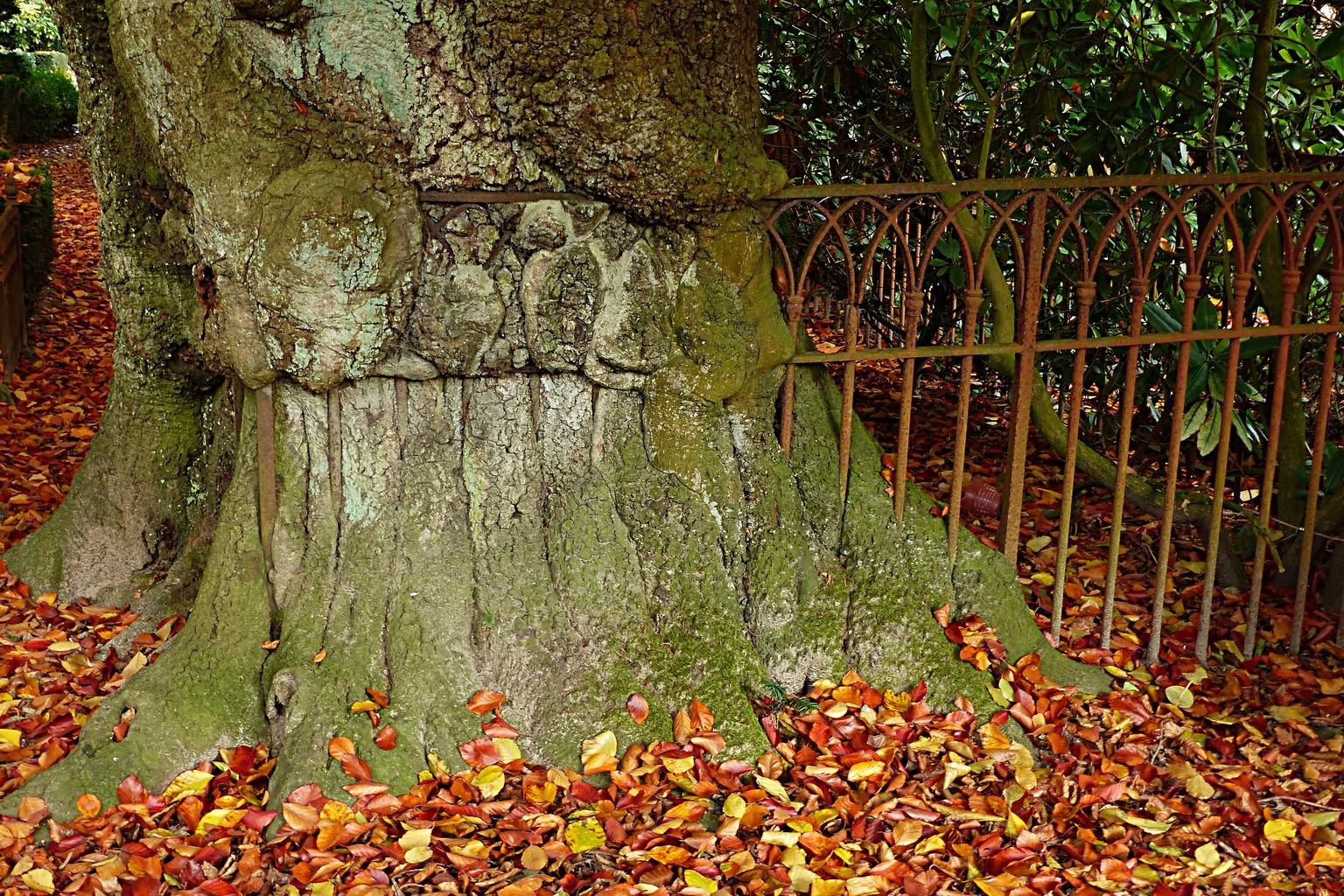
The above picture is not from this case.

Bedell v. LONG IS. LANDSCAPING, 2025 NY Slip Op 50379 - NY: Dist. Court, Suffolk County, 6th Dist. 2025:

"Plaintiff Donald W. Bedell ("Plaintiff") filed a complaint in this case on October 15, 2024 against Defendants Long Island Landscaping and Lorraine Fosmire ("Defendants"), seeking monetary damages as a result of damage to trees on Plaintiff's property. Specifically, Plaintiff alleges that his neighbor, Defendant Fosmire, hired the Co-Defendant, Long Island Landscaping, to trim Plaintiff's trees to the extent they hung over onto Defendant Fosmire's property; however, Defendant Long Island Landscaping crossed onto Plaintiff's property line without his permission and irreparably damaged his trees by cutting them back too far. Plaintiff seeks fourteen thousand ($14,000.00) dollars in compensatory damages. In addition, Defendant Long Island Landscaping has counterclaimed against Plaintiff Bedell for attorney's fees. There are no cross-claims in this case.

After presiding over a non-jury trial on February 21, 2025, this Court makes the following findings of fact and conclusions of law and issues this Decision and Order:

I. Summary of Trial

A. Plaintiff's Case

During trial, Plaintiff Bedell testified that he resides at 21 Melrose Parkway, East Patchogue, New York. Plaintiff's neighbor, Defendant Fosmire, resides at 11 Melrose Parkway, East Patchogue, New York.

On May 14, 2024, Plaintiff Bedell came home and noticed that the trees on his property had been damaged, namely, the branches on certain trees were cut to the trunk. Plaintiff's neighbor, Defendant Fosmire had hired a landscaping company, Defendant Long Island Landscaping, to trim Plaintiff's trees to the extent some branches hung over onto Defendant Fosmire's neighboring property. However, rather than trim the tree branches back to the property line (which was marked by a fence separating the two properties), the landscaping company cut the branches all the way back to the trunk. According to Plaintiff, the trees were approximately three (3) feet from the property line; thus, the landscaping company crossed onto his property by three (3) feet when it cut the tree branches back to the truck.

Plaintiff Bedell's wife, Janice Bedell, testified on behalf of her husband. She testified that, prior to the tree trimming, Defendant Fosmire's daughter asked Janice Bedell for permission to trim the trees that were hanging over the Fosmire's property, and she gave such permission. At that time, there was no conversation regarding exactly which branches could be trimmed. On May 14, 2024, Janice Bedell came home and saw the tree branches had been trimmed back to the trunk; she then asked Martinez what he had done. Martinez told Janice Bedell he trimmed the trees, just as Fosmire had asked. Janice Bedell told Martinez that he could not cut the branches past the property line. Martinez stated, "I did what I was told." Janice Bedell then spoke with Fosmire, who told Bedell "that [cutting the tree branches back to the truck] is not what I told him to do, and by the time I saw it, it was too late." Fosmire further stated that she obtained permission to trim the trees, and "I did not realize that [Martinez] had gone all the way up [the tree to the tree trunk] to the top." Defendant Fosmire admitted that Janice Bedell had accurately described their conversation.

In support of Plaintiff Bedell's case, he submitted the following exhibits: (1) photographs taken by Plaintiff of (a) the trees after being cut and (b) the property line; (2) estimates for replacement of the trees.

Plaintiff Bedell seeks fourteen thousand ($14,000.00) dollars in compensatory damages, which is the cost of removing the existing nine (9) trees, and replacing them with totally new trees.

B. Defendants' Evidence

Defendant Lorraine Fosmire testified that she resides at 11 Melrose Parkway, East Patchogue, New York, and is the Plaintiff's neighbor. She testified that, prior to hiring Defendant Long Island Landscaping, her daughter obtained permission from Plaintiff's wife to "trim" the Bedells' trees because they hung over onto Fosmire's property. Defendant Fosmire testified that her husband had trimmed the trees back for years; but, since he recently passed away, she hired Defendant Long Island Landscaping to trim the trees. She hired Defendant Long Island Landscaping to do the landscaping on May 14, 2024, for which she paid one thousand six hundred and thirty-eight ($1,638.00) dollars, and she was satisfied with the completed job. When the Bedells objected to the completed job, Defendant Fosmire stated that "I had no idea he [Martinez] was going to cut all the way up [the tree to the trunk]." She further testified that "[i]f he [Martinez] was going to do that, he should have — [unspecified]."

In Defendant Fosmire's defense, she submitted the following exhibits, which were entered into evidence: (1) arborist's report and (2) photos.

Alex Martinez, on behalf of Defendant Long Island Landscaping, testified that he is the manager of Long Island Landscaping. Long Island Landscaping was hired by Defendant Fosmire to do landscaping on her property on May 14, 2024, including trimming nine (9) trees in the front of the property. Martinez testified that he trimmed the trees as he was instructed to do by Defendant Fosmire. According to Martinez, Fosmire told him to "go as high as possible," and "cut all the way to the top," which he did. Upon completion, Defendant Fosmire stated that she was pleased with the job Martinez had done.

In addition, Martinez admitted to crossing onto Plaintiff Bedell's property by approximately a foot or a foot and a half to trim the trees. He further testified that he chose to cut the tree branches right to the trunk (rather than to the fence-line) because "[i]f we were to go to the fence line, pretty much, it's just one little stump that you're probably looking at, maybe like not even a foot long, which a lot of people that we have done work for don't like to see that [tree branch stumps]...they [customers] prefer to see it [the tree branch] flush with the tree." He further testified that Fosmire told him that she had Plaintiff Bedell's permission to cut the branches to the trunk. Martinez conceded that he had no conversation with Plaintiff Bedell, or his wife, at any time.

Finally, Martinez testified that Defendant Fosmire paid a total of one thousand six hundred and thirty-eight ($1,638.00) dollars, for the landscaping job, which included additional yard work; Martinez estimated that the cost of trimming the nine (9) trees in the front was approximately six hundred and thirty-eight ($638.00) dollars. Martinez also testified that the cut branches were beginning to grow again.[1]

In Defendant Long Island Landscaping's defense, Martinez submitted the following exhibits, which were entered into evidence: (1) invoice; and (2) photos (from Long Island Landscaping).

II. Findings of Fact

Based on the credible evidence submitted during trial, this Court finds that Defendant Fosmire, residing at 11 Melrose Parkway, East Patchogue, New York, hired Defendant Long Island Landscaping to do landscaping on her property on May 14, 2024. The landscaping included trimming tree branches on nine (9) trees [Japanese Cedars and White Pines] that were located on Plaintiff Bedell's neighboring property at 21 Melrose Parkway, East Patchogue, New York.

Prior to contracting with Defendant Long Island Landscaping, Defendant Fosmire's daughter had obtained permission from Janice Bedell to trim the tree branches to the extent they hung over onto the Fosmires' property.

On May 14, 2024, Defendant Long Island Landscaping trimmed Plaintiff's trees to the extent some branches hung over onto Defendant Fosmire's neighboring property. However, rather than trim the tree branches back to the property line (which was marked by a fence separating the two properties), Defendant Long Island Landscaping cut the branches all the way back to the trunk. In so doing, the Defendant Long Island Landscaping crossed onto Plaintiff Bedell's property by three (3) feet when it cut the tree branches back to the truck.

Defendant Fosmire paid Defendant Long Island Landscaping one thousand six hundred and thirty-eight ($1,638.00) dollars for the job.

III. Conclusions of Law

Courts have generally recognized that "vegetation penetrating adjacent property presents a type of legal problem for which the remedy of self-help can be invoked. This remedy can be generally defined as the adjoining owner's removal of branches or roots, to the extent that they protrude into his property." 65 ALR4th 603 [1988]. In addition, courts have generally prohibited the "cutting of the entire plant or tree in the exercise of self-help." Id. For example, the court in Grandona v. Lovdal, 70 Cal 161, 11 P 623, 624 [1886] held that trees whose branches extended over the land of another were only nuisances to the extent of the encroachment, and the person over whose premises they hung could, inter alia, cut the branches off to the property line, but could not cut down the tree.

Pursuant to the Restatement of Torts 2d § 929, the measure of damages resulting in harm to land from a trespass is as follows:

"§ 929. Harm to Land from Past Invasions
(1) If one is entitled to a judgment for harm to land resulting from a past invasion and not amounting to a total destruction of value, the damages include compensation for
(a) the difference between the value of the land before the harm and the value after the harm; or at his election in an appropriate case, the cost of restoration that has been or may be reasonably incurred,
(b) the loss of use of the land, and
(c) discomfort and annoyance to him as an occupant."
***
Restatement of Torts 2d § 929.

In this case, Martinez admitted he encroached onto the Plaintiff's property (albeit at the direction of Fosmire) to cut the tree branches back. In so doing, Martinez violated a basic rule of tree trimming (and land use): one cannot enter another's property without express permission. Accordingly, this Court concludes that Defendant Long Island Landscaping is liable for the harm to the Plaintiff's property as a result of the trespass.

With regard to damages, Plaintiff presented no proof of the property's "diminution in value" (such as an appraisal, expert opinion). In addition, the Plaintiff presented no evidence of the cost of repair. Instead, he presented evidence of the cost of entirely removing the existing nine (9) trees, and replacing them with totally new trees; this Court declines to award replacement costs in light of the testimony and evidence that the branches have begun to regrow.

Accordingly, this Court awards to Plaintiff the cost of the tree trimming job, (estimated to be six hundred and thirty-eight ($638.00) dollars), along with punitive damages in the same amount. Defendant Long Island Landscaping's counterclaim is DENIED.

By reason of the foregoing, it is hereby:

ORDERED: Judgment for the Plaintiff in the amount of six hundred and thirty-eight ($638.00) dollars in compensatory damages, and six hundred and thirty-eight ($638.00) in punitive damages, for a total of one thousand two hundred and seventy-six ($1,276.00) dollars, plus interest from the date of incident (May 14, 2024), at a rate of nine percent (9%) per annum pursuant to CPLR § 5001 and CPLR § 5004.

[1] This testimony is supported by the arborist's report submitted by Defendant Fosmire. (See Def.'s Ex. C)."

Thursday, September 23, 2021

NEIGHBOR DISPUTES - TREE ROOTS


5 years in the court system over a $5000 claim.

BENJAMINOV v. Zheng, 2021 NY Slip Op 50832 - NY: Appellate Term, 2nd Dept. 2021:

"In this small claims action, commenced in December of 2016, plaintiff seeks to recover the sum of $5,000, alleging that her concrete patio and fence were damaged by the roots of a tree located on defendant's property. At a nonjury trial, it was established that defendant had purchased his property in January of 2016 and has since removed the offending tree. The tree had already been in existence when plaintiff moved into her property over 20 years ago. Following the trial, the court awarded plaintiff the principal sum of $5,000.

In a small claims action, our review is limited to a determination of whether "substantial justice has . . . been done between the parties according to the rules and principles of substantive law" (CCA 1807; see CCA 1804; Ross v Friedman, 269 AD2d 584 [2000]; Williams v Roper, 269 AD2d 125 [2000]).

It appears that plaintiff seeks to recover based on trespass, nuisance and/or negligence causes of action. In order for plaintiff to prevail based on trespass, her burden extends beyond proof of an invasion of her right to exclusive possession of her land to proof that such invasion or intrusion is the result of an act either intentionally done or so negligently done that such intent will be presumed (see Zimmerman v Carmack, 292 AD2d 601 [2002]; see Turner v Coppola, 102 Misc 2d 1043 [Sup Ct, Nassau County 1980], affd 78 AD2d 781 [1980]). The trespass may not be based on a mere nonfeasance or an omission to perform a duty (see Loggia v Grobe, 128 Misc 2d 973 [Dist Ct, Suffolk County 1985]). Here, there was no proof of an intentional intrusion or that defendant was even aware of root intrusion prior to notification by plaintiff of the alleged damages.

To the extent that her action was based on nuisance, plaintiff similarly could not prevail. Even if plaintiff could establish property damage due to an interference with the use and enjoyment of her land amounting to an injury in relation to a right of ownership in that land (see Kavanagh v Barber, 131 NY 211 [1892]; Turner v Coppola, 102 Misc 2d 1043, affd 78 AD2d 781), the facts and circumstances required that plaintiff resort to self-help in the first instance (see Ferrara v Metz, 49 Misc 2d 531 [Sup Ct, Suffolk County 1966]). However, plaintiff never availed herself of her right to self-help by removing those roots on her own land (see Iny v Collum, 13 Misc 3d 75 [App Term, 2d Dept, 9th and 10th Jud Dists 2006, Lippman, J., dissenting]; Ahmed v Zoghby, 63 Misc 3d 866 [Middletown City Court, Orange County 2019]; Ferrara v Metz, 49 Misc 2d 531; Colombe v City of Niagara Falls, 162 Misc 594 [Sup Ct, Niagara County 1937]; but see Norwood v City of New York, 95 Misc 2d 55 [Civ Ct, NY County 1978]), and there was no evidence that self-help would have been unreasonable and unrealistic.

Similarly, plaintiff's case fails as an action based on negligence. There is no proof that the injury arose due to the fault or negligence of defendant in the removal of the tree (see Turner v Coppola, 102 Misc 2d 1043, affd 78 AD2d 781). Plaintiff presented no before and after photographs and there was no expert testimony with respect to the cause of any damage (see Loggia v Grobe, 128 Misc 2d 973).

In view of the foregoing, the judgment in favor of plaintiff failed to render substantial justice between the parties according to the rules and principles of substantive law (see CCA 1804, 1807).

Accordingly, the judgment is reversed and the matter is remitted to the Civil Court for the entry of a judgment in favor of defendant dismissing the action.

ALIOTTA, P.J., and WESTON, J., concur.

TOUSSAINT, J., dissents and votes to affirm the judgment in the following memorandum:

"The standard of review on an appeal of a small claims judgment is whether substantial justice has . . . been done between the parties according to the rules and principles of substantive law ([CCA] 1807). The decision of a fact-finding court should not be disturbed on appeal unless it is obvious that its conclusions could not be reached under any fair interpretation of the evidence, particularly when the findings of fact rest in large measure on considerations relating to the credibility of witnesses. This principle applies with greater force to judgments rendered in small claims proceedings, given the limited scope of review" (Nunes v 1320 Heritage Place, LLC, 13 Misc 3d 144[A], 2006 NY Slip Op 52323[U], *1[App Term, 2d Dept, 9th & 10th Jud Dists 2006] [internal quotation marks omitted]; see Ross v Friedman, 269 AD2d 584 [2000]; Williams v Roper, 269 AD2d 125, 126 [2000]).

In this case, plaintiff claimed that, after moving in, defendant fixed his own property and not hers, and in the process, damaged her property even more. Plaintiff explained at trial that, when defendant took down a tree, both the fence and concrete porch were further damaged. Significantly, plaintiff produced two photographs taken after the tree was removed and submitted three separate estimates for the cost of repair. This case is therefore distinguishable from the case of Reed v Pilgrim (68 Misc 3d 126[A], 2020 NY Slip Op 50844[U], *2 [App Term, 2d Dept, 2d, 11th & 13th Jud Dists 2020]) wherein this court stated:

"Plaintiff failed to show that the portion of the chain link fence that defendants had removed was on plaintiff's property, and, in any event, plaintiff failed to establish any damages caused by defendants. Significantly, plaintiff failed to submit two estimates or itemized paid bills, which are deemed to be prima facie evidence of the reasonable value and necessity of any services and repairs."

Here, plaintiff provided prima facie evidence in the form of three estimates. There is no dispute that defendant's removal of the subject tree caused damage to plaintiff's fence and porch. Defense counsel was only concerned that the estimates included work not caused by the tree removal. That point of contention was resolved by the Civil Court's decision which specifically acknowledged "that claimant's estimates included work not caused by the repair and tree removal, thus the award to claimant does not include them."

The majority opinion focuses on the fact that the subject tree was present when plaintiff took residence in the adjacent home over 20 years ago; that plaintiff failed to resort to self-help or to procure an expert on root and tree propensity to show that self-help would have been unreasonable for a nuisance claim; and that plaintiff did not produce before and after photos for a negligence claim. Plaintiff presented photos of the damage after the tree removal and the court accordingly decided what award would effectively cover the damage caused by the tree removal distinguished from other damages within the estimates. Plaintiff is not seeking relief for the long-term damage caused by the roots but for the contemporaneous damage caused by the removal of the subject tree. Further, the majority states that there is no proof that defendant was aware of root intrusion of the tree, which was on both properties, prior to notification by plaintiff of the alleged damages. The majority ignores the fact that the cause of the damage is undisputed by defendant.

The credibility of plaintiff's statements and testimony is best observed and evaluated by the trial court. "Furthermore, the determination of a trier of fact as to issues of credibility is given substantial deference, as a trial court's opportunity to observe and evaluate the testimony and demeanor of the witnesses affords it a better perspective from which to assess their credibility" (Reed v Pilgrim, 68 Misc 3d 126[A], 2020 NY Slip Op 50844[U], *1-2; see Vizzari v State of New York, 184 AD2d 564 [1992]). "Accordingly, a small claims judgment may not be overturned simply because the determination appealed from involves an arguable point on which an appellate court may differ; the deviation from substantive law must be readily apparent and the court's determination clearly erroneous" (Schiffman v Deluxe Caterers of Shelter Rock, 100 AD2d 846, 846-847 [1984]). The Civil Court decided that the appropriate remedy was an award of damages in the amount necessary to repair the damage caused by the removal of the subject tree, and not the long-term damage caused by its roots. It cannot be said that the determination of the Civil Court was so clearly erroneous or shocking as to fail to render substantial justice between the parties (see CCA 1807, 1804). The Civil Court did not improvidently exercise its discretion in awarding limited damages.

Accordingly, I respectfully dissent and vote to affirm the judgment."

Friday, November 22, 2019

NEIGHBOR'S DISPUTE ON WATER RUNOFF BARRED BY STATUTE OF LIMITATIONS


Perhaps he could have resolved this earlier.

Ubiles v. Ngardingabe, NYLJ November 21, 2019,  Date filed: 2019-10-31, Court: Supreme Court, New York, Judge: Justice Arlene Bluth. Case Number: 151439/2017:

"Plaintiffs and defendants are neighbors and they own adjoining properties on West 147th Street in Manhattan. Plaintiffs claim that rain water and snow melt flows from defendants’ driveway into plaintiffs’ property. Plaintiffs contend that as a result of this runoff, the foundation and the walls of their home have been damaged. They contend that defendants caused this condition by impermissibly altering the water drainage system in defendants’ driveway and defendants have done nothing to remediate the problem despite plaintiffs’ complaints
Defendants move to dismiss based on the statute of limitations and on plaintiffs’ failure to state a cause of action. Defendants claim that the driveway was installed in 1989 when two lots (431 and 433 West 147th Street) were merged. Defendants argue that the driveway is pitched towards the street and is not causing damage to plaintiffs’ property. Defendants claim that in 2006, plaintiffs requested permission from defendants to access defendants’ driveway to do pointing work and partial waterproofing on plaintiffs’ wall. Defendants contend that by 2009, the work on plaintiffs’ wall was deteriorating and rendered the property vulnerable to damage from rain and snow.
In 2014, plaintiffs again requested access to defendants’ property and defendants insist they allowed plaintiffs to install a tarp over a portion of the subject wall. In May 2015, defendants received a letter from plaintiffs’ attorney arguing that defendants’ actions in 2009 or 2010 (cementing over the existing driveway) were deficient and caused the surface to pitch towards plaintiffs’ property. Defendants admit that the driveway was paved in 2009.
Defendants also point out that they notified their insurance company after receiving this letter from plaintiffs’ counsel but that their insurance company found that the driveway did not contribute to plaintiffs’ damage. Defendants maintain that plaintiffs reached out to plaintiffs’ insurance carrier, who also denied plaintiffs’ claim based on the water runoff.
Defendants argue that this case is time-barred because the driveway was altered, at the latest, eight years before this action was commenced. Defendants also argue that the continuous wrong doctrine does not apply because the damage arises out of a single allegedly objectionable act (the altering of the driveway). Defendants conclude that plaintiffs knew about the damage since at least 2006 and, therefore, they cannot claim a continuing trespass or nuisance.
In opposition, plaintiffs insist they did not know about the source of the water flow until 2015. Plaintiffs purportedly hired an architect in 2015, who found that the water was flowing from defendants’ driveway. Plaintiffs argue that defendants expanded their driveway without the proper approval from the city. Plaintiffs dispute that they knew about the water damage in 2006 even though they claim that every time it rains or snows, their property is inundated with water runoff. Plaintiffs conclude that the water runoff constitutes a trespass to their property.
Discussion
“In moving to dismiss an action as barred by the statute of limitations, the defendant bears the initial burden of demonstrating, prima facie, that the time within which to commence the cause of action has expired. The burden then shifts to the plaintiff to raise a question of fact as to whether the statute of limitations is inapplicable or whether the action was commenced within the statutory period, and the plaintiff must aver evidentiary facts establishing that the action was timely or [] raise an issue of fact as to whether the action was timely” (MTGLQ Investors, LP v. Wozencraft, 2019 WL 2291865, 2019 NY Slip Op 04287 [1st Dept 2019] [internal quotations and citations omitted]).
“The continuous wrong doctrine is an exception to the general rule that the statute of limitations runs from the time of the breach though no damage occurs until later. The doctrine is usually employed where there is a series of continuing wrongs and serves to toll the running of a period of limitations to the date of the commission of the last wrongful act. Where applicable, the doctrine will save all claims for recovery of damages but only to the extent of wrongs committed within the applicable statute of limitations. The doctrine may only be predicated on continuing unlawful acts and not on the continuing effects of earlier unlawful conduct. The distinction is between a single wrong that has continuing effects and a series of independent, distinct wrongs. The doctrine is inapplicable where there is one tortious act complained of since the cause of action accrues in those cases at the time that the wrongful act first injured plaintiff and it does not change as a result of continuing consequential damages” (Henry v. Bank of America, 147 AD3d 599, 601 48 NYS3d 67 [1st Dept 2017] [internal quotations and citations omitted]).
Here, the Court finds that the instant action is barred by the statute of limitations. This case was filed in 2017. The allegedly unlawful acts were either the construction of the driveway in 1989 or the paving of the driveway in 2009. Both of these acts (which purportedly caused the water runoff) occurred prior to the three-year statute of limitations applicable to plaintiffs’ causes of action. Plaintiffs do not allege that defendants did anything else to cause the water runoff. Therefore, the Court finds that, assuming plaintiffs’ claims are true, the paving of the driveway in 2009 was a single and distinct wrong that has had purportedly continuing effects rather than a series of independent acts. Put another way, because defendants have not altered the driveway since 2009, the water runoff when it rains or snows are not new wrongful acts by defendants.
Moreover, the record shows plaintiffs were experiencing water runoff problems since at least 2006. The letter correspondence between the parties makes clear that plaintiffs needed to have work done to keep their basement dry (NYSCEF Doc. No. 78). In fact, the parties’ communications show that a wall was built by plaintiffs in 2006 for “drainage enhancement” (id.). In other words, plaintiffs clearly had water problems in 2006 and took actions to try and remediate the problem more than three years before they brought this action.
The opposition, an affidavit from plaintiff Joseph Ubiles, conveniently skips from a conclusory assertion that defendants’ driveway had nothing to do with the 2006 work to 2015 (NYSCEF Doc. No. 86,10-15). There is no explanation for why they did not seek to discover the cause of the water issues in 2006 despite the fact that they needed access to defendants’ property to do the work. And that work involved the construction of a wall that defendants’ claim was impermissibly built on their property. That plaintiffs waited until 2015 to hire an architect, who claims that the water runoff was from defendants’ driveway, does not extend the statute of limitations. Plaintiffs cannot sit on their rights for over a decade after their property suffered water damage. Therefore, plaintiffs’ claims are untimely (see Alamio v. Town of Rockland, 302 AD2d 842, 755 NYS2d 754 [3d Dept 2003] [finding that continuing trespass and nuisance claims arising out of water runoff from an adjacent parking lot were time-barred because the damage was apparent more than three years prior to the commencement of the action]).:

Thursday, April 5, 2018

DISPUTES WITH NEIGHBORS


This is an old case, 1980, but is still cited as authority, most recently in Coffey v. GERELLI, 2017 NY Slip Op 50817 - NY: Appellate Term, 2nd Dept. 2017 ("When the branches of a tree overhang the property of an adjoining landowner, the adjoining landowner may resort to self help to remove those branches (see 1 NY Jur 2d, Adjoining Landowners § 65). The right to self help extends to ordinary trimming and clipping, and does not extend to the destruction of, or injury to, the main support systems of the tree; nor does it extend past the adjoining landowner's property line").

Turner v. Coppola, 102 Misc. 2d 1043 - NY: Supreme Court, Nassau 1980:

"This is an action for omnibus relief due to an alleged nuisance. The adversaries own and reside upon adjoining lots in the Village of Malverne, Nassau County, New York.

As a first cause of action in equity, plaintiff alleges that leaves, twigs, branches, and buds from defendants' trees constantly fall upon plaintiff's property, cluttering the lawn, driveway, and sewer vents. Plaintiff further alleges a continuing hardship in excessive time, money, and labor expended to collect and transport this accumulated tree rubbish.

As a second cause of action in law, plaintiff alleges, pursuant to section 871 of the Real Property Actions and Proceedings Law, that some of defendants' tree branches overhang and encroach upon her premises, cause cosmetic damage to her garage, prevent her lawn from receiving adequate sunlight, and deprive her of the exclusive, safe use and enjoyment of her property.

Defendants' motion to dismiss the complaint for failure to state a cause of action is based upon an allegation of damnum absque injuria, or harm without injury in the legal sense.

The primary issue before this court is whether or not plaintiff has stated a cause of action, in equity or in law, for the alleged damages caused by defendants' trees which are in close proximity to plaintiff's property.

1045*1045The specific question raised is whether the overhanging branches and/or accumulated fallen leaves, branches, and buds, under the circumstances stated, constitute a nuisance or other actionable legal theory, entitling plaintiff to relief.

When plaintiff states in her affidavit in answer to defendants' motion for dismissal of the complaint that this action does not fall within the category of nuisance or negligence or self-help "by clipping off the offensive encroaching branches", this court agrees in part.

The essence of a private nuisance is interference with the use and enjoyment of land amounting to an injury in relation to a right of ownership in that land. (Kavanagh v Barber, 131 N.Y. 211; Mandell v Pivnick, 20 Conn Supp 99.) Since the trees in this case are not poisonous or noxious in their nature, they are not a nuisance per se, in such a sense as to sustain an action for relief. (Countryman v Lighthill, 24 Hun 405.)

Recovery for damages from overhanging branches depends upon the presence of actual injury to plaintiff or plaintiff's property. Upon the facts stated and the allegations made in the complaint, there is insufficient basis for an action as a private nuisance because real, sensible damage has not been shown to result from the overhanging tree branches or leaves. (Countryman v Lighthill, supra.) There is some difference of opinion as to the extent of damages required to constitute sensible or substantial damages, only that without this showing, an action in nuisance does not arise. The cases are in agreement that trees ordinarily are not nuisances, unless decayed or otherwise dangerously unsound. (Gibson v Denton, 4 App Div 198.) One standard for measuring the degree of damage in this area is definite offensiveness, inconvenience or annoyance to the normal person in the community where the customs of the community are to be taken into account. (Wade v Miller, 188 Mass 6; Restatement, Torts, § 822, comment g.)

Neither does plaintiff have an action in trespass. The majority of cases distinguish trespass from nuisance on the ground that trespass is an invasion of the plaintiff's interest in the exclusive possession of her land. If such an invasion also deprives plaintiff of the use and enjoyment of her land, then nuisance would jointly arise (Burk v High Point Homes, 22 Misc 2d 492) so long as the interference causes substantial harm for the nuisance action and intentional intrusion for the 1046*1046 trespass action. (Restatement, Torts 2d, § 166.) We do not find such interference or intrusion here.

Neither does plaintiff have an action in negligence. There is a large class of cases, in which injury is suffered by a party, where the law gives no redress. If a tree growing upon the land of one is blown down upon the premises of another, and in its fall injures his shrubbery, or his house, or his person, he has no redress against him upon whose land the tree grew (Sheldon v Sherman, 42 N.Y. 484) provided such injury arises from a fortuitous occurrence beyond the control of man, without his fault or negligence. Certainly, if liability does not ensue in negligence for falling trees, therefore it cannot ensue in negligence for falling leaves and overhanging branches which cause cosmetic damage to a garage or block the sun from a sod-covered lawn. In these cases, the party through whom such acts occur is not responsible for it. (Sheldon v Sherman, supra.)

Since our statutes do not accord a remedy to one whose personal enjoyment and use of private property is lessened by mere overhanging tree branches or falling leaves, there is no statutory ground for damages or abatement of the alleged injury.

Summary abatement by self-help under these circumstances is a sufficient remedy. (Countryman v Lighthill, supra.) Just as it has been established that a property owner may resort to self-help in the first instance to remove tree roots adversely affecting his land (Michalson v Nutting, 275 Mass 232; Colombe v City of Niagara Falls, 162 Misc 594; Ferrara v Metz, 49 Misc 2d 531) so it has been held with the removal of overhanging tree branches. We do not see this burden as an unreasonable one upon the plaintiff. Such a limitation upon the rights of a landowner is proper with respect to innoxious tree branches and leaves, as they are readily visible, unlike roots, and may be cut and collected without great difficulty. (Norwood v City of New York, 95 Misc 2d 55.) Indeed, such natural growth and shedding processes of trees are inherent in such an area, and to most people constitute a pleasurable reflection of seasonal changes.

Plaintiff's right to ordinary trimming and clipping of the overhanging branches does not extend to destruction or injury to the main support systems of the tree. (Spadaro v Putter, 108 NYS2d 343; Adams v Hahne, 59 Misc 2d 827, where controlled clipping of an encroaching hedge was allowed but 1047*1047 legal action was not.) In any event, plaintiff may not go beyond the property line to cut or destroy part or all of a tree on the adjoining land unless the tree becomes a private nuisance as to an abutting owner, due to its rotted and diseased condition. (Childers v New York Power & Light Corp., 275 App Div 133.)

Under the maxim de minimis non curat lex, we further believe that the alleged damages are not substantial enough to seriously interfere with the use and enjoyment of the plaintiff's premises (Ungrich v Shaff, 119 App Div 843) or to require this court's further attention.

Clashing land uses require an examination of the character of the neighborhood as well as the character of the defendants' and plaintiff's alleged harms and equities within a balancing framework. Using such a framework, upon these facts, this court is not persuaded that plaintiff has suffered unreasonable injury or that she carries an unreasonable burden by continued exercise of her right to cut off the offending, overhanging branches and bag or rake the offending leaves. Plaintiff moved into this neighborhood only eight years ago, with knowledge of the trees already there and of their visible maturity. If a valid nuisance does arise in the future, however, plaintiff would not be barred from complaining about it merely because the nuisance was there first. (Campbell v Seaman, 63 N.Y. 568.)

On the other half of the scale, it appears that defendants would bear an unreasonable burden in being held responsible for natural conditions over which they have little, if any, control. Certainly, mature trees, rooted and growing for many years before defendants or plaintiff moved into their respective homes, would qualify as such.

In conclusion, one whose land is intruded upon by tree branches and leaves, which are not poisonous or inherently injurious to the extent of sensible or substantial damages, or of reasonable foreseeability, has no cause of action against adjoining landowners of such trees, but may protect herself therefrom by reasonable cutting of branches to the extent that they invade her property and no more.

We have not considered the jurisdictional question raised by the defendants insofar as it relates to improper service of process for two reasons: (1) the objection is raised on the basis of an attorney's affidavit which consists mainly of hearsay 1048*1048 evidence which is not considered by this court; and (2) the objection is considered moot by the decision of this court."

Wednesday, August 3, 2016

POKEMON GO FOR GOOD


A New Jersey personal injury attorney has filed a class-action lawsuit against Niantic, the company behind Pokemon Go, for the “unlawful and wrongful” invasion of his property. Read the complaint at:

http://online.wsj.com/public/resources/documents/2016_0802_pokemon_lawsuit.pdf