
Wednesday, April 7, 2021


Tuesday, April 6, 2021

Monday, April 5, 2021
WORKING AND COVID 19 VACCINE

On March 12, 2021, Governor Cuomo signed legislation providing all public and private employees in New York up to four hours of paid leave per vaccine injection to obtain a COVID-19 vaccine.
Is 4 hours enough time? That would depend on when and where you are getting the vaccine which hopefully will expand further,
"1. Every employee shall be provided a paid leave of absence from his or her employer for a sufficient period of time, not to exceed four hours per vaccine injection, unless such employee shall receive a greater number of hours pursuant to a collectively bargained agreement or as otherwise authorized by the employer, to be vaccinated for COVID-19.
2. The entire period of the leave of absence granted pursuant to this section shall be provided at the employee's regular rate of pay and shall not be charged against any other leave such employee is otherwise entitled to, including sick leave pursuant to section one hundred ninety-six-b of this article, or any leave provided pursuant to a collective bargaining agreement.
3. The provisions of this section may be waived by a collective bargaining agreement, provided that for such waiver to be valid, it shall explicitly reference this section of law."
Public employees are covered by Section 159-c to the New York Civil Service Law.
Friday, April 2, 2021
EMANCIPATION AND CHILD SUPPORT - IS ENTERING A MILITARY ACADEMY ENTERING THE MILITARY?

In contracts, especially divorce agreements, the devil is in the details.
DENATALE v. DENATALE, 2021 NY Slip Op 50247 - Nassau Supreme Court January 15, 2021:
"....In the case of Beekman-Ellner v. Ellner, 296 AD2d 404 (2d Dept. 2002), the Appellate Division upheld the decision of the Family Court which terminated child support "[s]ince the parties' child enrolled in full-time training duty at the U.S. Naval Academy at Annapolis and his life at Annapolis was largely controlled by the government, which also provided for the bulk of his material needs, he was clearly engaged in `active military service' to render him emancipated" (citing 10 USC Sec 101[d][1]). Ex-Husband argues that the facts and circumstances of this case as they compare to Ned's are almost identical. This case does not provide any insight into the agreement of the parties.
Similarly, in Zuckerman v. Zuckerman, 154 AD2d 666 (2d Dept. 1989), the Appellate Division held that the parties' son "became emancipated when he entered West Point." In Zuckerman, the parties' stipulation obligated the father to pay child support for each of the two children of the marriage until such time as each child attained 21 years of age, died, married, or became emancipated. The Appellate Court found that pursuant to 10 USC Sec 3075[b][2]1, upon entering West Point, the minor child "is considered a member of the regular army and subject to extensive governmental control, which is inconsistent with a parent's control and support of a child." The Appellate Court further explained that the child "attends West Point tuition free and is provided with room, board, health care, and monthly pay of $504.30, plus other allowances. Thus, he is self-supporting and financially independent of his parents."
Ex-Wife contends that the USNA's own introduction handbook dictates that it is an undergraduate college. Her main argument lies with the Stipulation, and not Federal codes or handbook descriptions, as the parties manifested a clear intent that attendance at college not be determinative of emancipation. She contends that the intent of the parties is unambiguous and clear from the four corners of the Stipulation, to wit: a child's college attendance was not intended to be an emancipation event. She therefore argues that the emancipation event in the Stipulation of "entry into the armed forces of the United States" cannot fairly be interpreted to include attendance at a four-year military college where the parties evinced such a clear intent that attendance at college not be considered an emancipation event. Although she acknowledges that Ned is provided a stipend by the USNA of $1,100 per month, she argues that there are deductions for "laundry, barber, cobbler, activities fees, and other service charges" which leaves Ned with only $125.00 per month. She sets forth the numerous financial responsibilities Ned would have to cover with his $125.00 monthly net funds such as insurance co-pays, car insurance, spending money when home, spending money when not at the USNA campus, non-uniform clothing, sneakers, underwear, toiletries, cell phone and other electronics, and other necessities. Therefore, she contends that Ned simply cannot be deemed self supporting as even the Ex-Husband claims to provide Ned additional funds.
Ex-Wife further contends that the Military Codes and citations provide no insight on whether it was the intent of the parties that attendance at a four-year military college be an emancipation event. She also argues that whether a child is emancipated is governed by the State of New York, and not federal law.
Ex-Wife contends that the cases cited above do not provide enough factual background to conclude they are directly on-point. Ex-Wife does agree that there are only two Appellate Division cases on this fact specific issue, both of which are addressed above.
It is well established that a "stipulation of settlement which is incorporated but not merged into a judgment of divorce is a contract, the terms of which are binding on the parties." Moss v. Moss, 91 AD3d 783 (2d Dept. 2012). Moreover, "[i]n interpreting a marital contract, a court should construe it is such a way as to `give fair meaning to all of the language employed by the parties to reach a practical interpretation of the expressions of the parties so that their reasonable expectations will be realized.'" Id at 784 (citing Hyland v. Hyland, 63 AD3d 1106 (2d Dept. 2009). Furthermore, the Second Department has held "the court should determine the intent of the parties from within the four corners of the contract without looking to extrinsic evidence to create ambiguities." Wider Consol., Inc. v. Tony Melillo, LLC, 107 AD3d 883 (2d Dept. 2013).
This Court can not analyze the facts of this case as one solely reliant upon the language in the Stipulation, or the intent of the parties as the Ex-Wife proposes. The crux of the issue regarding the emancipation of a child is whether that child is self supporting and no longer needs the financial assistance of that child's parents. When looking at the language of the Stipulation, all of the emancipation events listed would be the result of Ned being self supporting. There can be no doubt, that a parent's obligation to financially support their child ends if that child gets married. There is no doubt that a parent's obligation to financially support their child ends if that child resides away from both parents, on their own, so long as they are not at boarding school or college, as the child would be financially responsible to support such living arrangements. Of course, there would be exceptions if the parent(s) agree to continue to support that child living elsewhere, as if a parent chooses to pay for the child's housing, despite being employed, or no longer in school. That is not the situation here. Clearly, a parent's obligation to financially support their child ends if that child becomes gainfully employed at an age over 18. Again, it is because the end result is that said child would be self supporting.
The sticking issue in this case, is the emancipation event listed in the Stipulation as "entry into the armed forces". There can be no doubt, that if a child under the age of 21 (where pursuant to New York State law is the age upon which parents are still financially obligated to support their children), enters the armed forces, they are employed on a full time basis. Here, Wife argues that Ned's financial situation is akin to a student attending a civilian college, on a full scholarship, who procures a part time job to help pay for odds and ends. There is no dispute that Ned is one of the elite few to gain entrance into the prestigious USNA. There is no dispute that all fees associated with Ned's attendance/enrollment in the USNA is paid in full by the United States. There is no dispute that Ned took an Oath and committed to five years of service in the United States Navy, after graduation. However, the five years of service are not inclusive of his time at USNA. Further, he agreed to become an officer and accept his assignment, after graduation. There is also no dispute that Ned receives $1,100.00 per month from the USNA, with deductions being made for certain necessities. As set forth above, according to the Ex-Wife, after those deductions, Ned nets only $125.00 per month.
To weigh the facts of this case, the Court must look at the language of the Stipulation, as set forth above, the relevant case law and understand the legislative intent of the CSSA statute. Here, the Ex-Husband agreed to be obligated to pay child support through the age 22, inclusive of the Children's time at college with an exception if the Child elected military service. It is clear that the intent based upon this language is that child support ends if the Child elected military service, instead of college. The Stipulation is silent as to the current situation where Ned is attending a military academy. The Stipulation clearly envisions that the first priority of the parents was to have the Children obtain a college degree and the Ex-Husband agreed to support the Children throughout that process. That was clearly the bargain based upon the reduced amount in child support.
It is clear that the New York State Legislature has always wanted children attending college supported by their parents, hence the child support cutoff age of 21. Further still, the Legislature enacted the Excelsior Scholarships which makes college tuition free or low cost depending the individual's financial circumstances and factors. Despite these scholarships, the Legislature did not reduce the age of required child support based upon said scholarships. There is a clear recognition that the Legislature wants parents to support their children until 21, even if they have no college costs, as is the case here with Ned.
There is no dispute that many of Ned's necessities are provided for by the USNA. However, it is questionable whether the free tuition and funds provided enable Ned to be self supporting if both of his parents' financial obligations were to be terminated. If the Ex-Husband and/or Ex-Wife do not pay for civilian clothing, toiletries, a cell phone, food money when away from USNA, or provide him money to come home during his 5 weeks when he is permitted to be away from the USNA, would he be able to pay for these everyday items and necessities?
Although the Stipulation is clear that attendance at a college is not an emancipation event, it is also clear that enlistment in the military is one. However, as detailed as this Stipulation is regarding child support and college, it is silent regarding whether the parties agree that attendance at a military academy such as USNA, does not constitute enlistment in the military. If the Stipulation were that specific, the Wife's argument would have more weight.
Accordingly, based upon the facts and circumstances of this case, the clear Appellate Division precedent, and the silence of the Stipulation regarding this specific issue of attendance at a military academy, the Ex-Husband's motion to terminate child support for Ned is GRANTED. ...."
Thursday, April 1, 2021
LANDLORD ONLY LIABLE TO A TENANT FOR FAILURE TO ACT UPON RACIAL INCIDENTS OF ANOTHER TENANT UNDER FAIR HOUSING ACT IF THERE WAS SUBSTANTIAL CONTROL AND DELIBERATE INDIFFERENCE

In the spotlight again is Francis v. KINGS PARK MANOR, INC., Court of Appeals, 2nd Circuit March 25, 2021.
Last year, a panel court held: "Just over fifty years ago, spurred by the assassination of Dr. Martin Luther King, Jr., Congress enacted Title VIII of the Civil Rights Act of 1968, commonly referred to as the Fair Housing Act of 1968 (“FHA” or “Act”), 42 U.S.C. § 3601 et seq., a landmark piece of civil rights legislation that accompanied the Civil Rights Act of 1964 and the Voting Rights Act of 1965. The main question before us is whether a landlord may be liable under the FHA for failing to take prompt action to address a racially hostile housing environment created by one tenant targeting another, where the landlord knew of the discriminatory conduct and had the power to correct it. In holding that a landlord may be liable in those limited circumstances, we adhere to the FHA’s broad language and remedial scope and agree with the views of the United States Department of Housing and Urban Development (“HUD”), the agency tasked with administering the FHA. "
After ordering a rehearing en banc, the court now holds:
"The FHA makes it unlawful "[t]o discriminate against any person in the terms, conditions, or privileges of sale or rental of a dwelling, or in the provision of services or facilities in connection therewith, because of race . . . ."[16] When, as here, a plaintiff brings a claim under the FHA that does not rest on direct evidence of landlord discrimination, we analyze the claim under the familiar McDonnell Douglas burden-shifting framework first developed in Title VII cases.[17] Plaintiffs have specific, "reduced" pleading burdens in cases subject to the McDonnell Douglas analysis.[18] For a plaintiff's claim to survive a motion to dismiss in a McDonnell Douglas case, he must plausibly allege that he "[1] is a member of a protected class, . . . [2] suffered an adverse . . . action, and [3] has at least minimal support for the proposition that the [housing provider] was motivated by discriminatory intent."[19]
We conclude that the factual allegations in Francis's Complaint do not suffice to carry his modest burden.[20] Although Francis has claimed that he is a member of a protected class, his Complaint lacks even "minimal support for the proposition" that the KPM Defendants were motivated by discriminatory intent.[21] The Complaint alleges, in a conclusory fashion, only that the "KPM Defendants have intervened against other tenants at Kings Park Manor regarding non-race-related violations of their leases or of the law."[22] But because the Complaint does not provide enough information to compare the events of which Francis complains to the KPM Defendants' responses to other violations, there is no factual basis to plausibly infer that the KPM Defendants' conduct with regard to Francis was motivated by racial animus.[23]
To hold that Francis has plausibly pleaded discriminatory intent on these facts would be to indulge the speculative inference that "because the KPM Defendants did something with regard to some incident involving some tenant at some past point," racial animus explains the failure to intervene here.[24] Francis does not allege that the KPM Defendants regularly intervened in other disputes among tenants, much less that it had a practice of addressing tenant-on-tenant harassment when the matter did not involve an African American victim and a white harasser. Francis's vague allegation that the "KPM Defendants have intervened against other tenants . . . regarding non-race-related violations of their leases" could refer to efforts to collect rent, stop unauthorized subletting, or remedy improper alterations to the rental premises. Only untethered speculation supports an inference of racial animus on the part of the KPM Defendants. We decline to engage in such speculation.[25]
In an apparent attempt to avoid the obligation to plead facts that plausibly support an inference that the KPM Defendants were motivated by racial animus, Francis asserts that his allegations establish that the KPM Defendants intentionally discriminated against him under a deliberate indifference theory of liability. This theory of liability has been applied almost exclusively in custodial environments such as public schools and prisons, where it is clear that the defendant has both "substantial control over the context in which harassment occurs" and "a custodial [power over the harasser] . . . permitting a degree of supervision and control that could not be exercised over free adults."[26] Francis argues that a landlord may be held liable for intentional discrimination if the landlord "ignore[d] the known discriminatory harassment of a third party."[27]
We assume, for purposes of this appeal, that deliberate indifference may be used to establish liability under the FHA when a plaintiff plausibly alleges that the defendant exercised substantial control over the context in which the harassment occurs and over the harasser.[28] Nevertheless, we hold that Francis has failed to state a claim because his Complaint provides no factual basis to infer that the KPM Defendants had "substantial control over [Endres] and the context in which the known harassment occur[red]."[29] Nor can such control be reasonably presumed to exist in the typically arms-length relationship between landlord and tenant, unlike the custodial environments of schools and prisons.[30] The typical powers of a landlord over a tenant— such as the power to evict—do not establish the substantial control necessary to state a deliberate indifference claim under the FHA.[31]
Francis's appeal to the employment context to support his theory of liability for landlords under the FHA is also unavailing. He argues that since employers are responsible for employee-on-employee harassment under Title VII, landlords must be responsible for tenant-on-tenant harassment under similarly worded provisions of the FHA.[32] But the employer-employee relationship differs from the landlord-tenant relationship in important ways. Employees are considered agents of their employer. And a landlord's control over tenants and their premises is typically far less than an employer's control over "free adult[]" employees and their workspaces.[33] We are hard-pressed to presume that an employer's manner and degree of control over its agent-employees is equivalent to that of a landlord over its tenants.[34]
To hold the KPM Defendants liable for Endres's conduct on the facts alleged would also be inconsistent with the background tort principles against which the FHA was enacted. The Supreme Court has been clear that when Congress creates "a species of tort liability,"[35] as it did in enacting the FHA, Congress "legislates against a legal background of ordinary tort-related . . . liability rules" which it presumptively "intends its legislation to incorporate."[36]
Under New York law, landlords have a duty "to take reasonable precautionary measures to protect members of the public from the reasonably foreseeable criminal acts of third persons . . . on the premises."[37] But New York tort law has long been clear that a landlord has no general duty to protect tenants even from "the criminal acts of yet another tenant, since it cannot be said that [a] landlord ha[s] the ability or a reasonable opportunity to control [the offending tenant]" and the "power to evict cannot be said to . . . furnish" such control.[38]
It is true that the Seventh Circuit, in Wetzel v. Glen St. Andrew Living Cmty., LLC, 901 F.3d 856 (7th Cir. 2018), has recognized a deliberate indifference theory of liability for a claim of discrimination under the FHA.[39] But, unlike in this case, the plaintiff's allegations in Wetzel gave rise to the plausible inference that the defendant-landlord had unusual supervisory control over both the premises and the harassing tenants.[40] Moreover, as the panel dissenter observed, the landlord in Wetzel, unlike the KPM Defendants, was alleged to have affirmatively acted against the plaintiff.[41] In the absence of any factual allegations suggesting that the KPM Defendants had a similarly unusual degree of control over the premises and tenants, or actively facilitated or compounded harm to Francis, the Seventh Circuit's decision in Wetzel does not suggest, much less compel, a different outcome here.[42]
As a final matter, we note that even if Francis had plausibly pleaded that the KPM Defendants had substantial control over Endres, he would still have failed to state an FHA claim for discrimination under a deliberate indifference theory. To state a deliberate indifference claim, a plaintiff must plausibly plead that the defendant's response to harassment by a third party was "clearly unreasonable in light of the known circumstances."[43] It cannot be said that the KPM Defendants' inaction was "clearly unreasonable" in light of the circumstances described in Francis's Complaint. The KPM Defendants were aware that the police were involved, and indeed, the police conducted an investigation that ultimately led to Endres's arrest and prosecution.[44] We therefore have no factual basis to infer that the KPM Defendants clearly acted unreasonably.[45]
We think that our decision today coheres with the aims of those who are concerned about mounting housing costs for renters and increasing risks of housing loss for some of the most vulnerable among us.[46] The alternative pleading standard proposed by Francis would generate considerable uncertainty about the scope of a landlord's responsibility for tenant behavior. The prophylactic measures by which landlords would manage the ensuing uncertainty would come at a cost, one that would almost certainly be borne, in one form or another, by current and prospective renters.[47]
Finally, we note that laws making landlords legally responsible for discriminatory tenant misbehavior are conspicuously absent from the abundant and exemplary history of New York legislation designed to proscribe discrimination in housing.[48] If the legislative bodies of New York have not seen fit to impose such landlord liability, there is good reason to doubt that it is a suitable tool for promoting fair housing. Contrary to the suggestions of a dissenting colleague, such observations do not indicate that our interpretation of the FHA improperly "puts a policy concern ahead of a legal mandate."[49] Rather, we stress the potentially dramatic and arguably undesirable implications of the panel's faulty interpretation of the FHA because it is improbable that such implications could have gone unnoticed for over fifty years after the passage of that much-discussed and much-litigated legislation."
Wednesday, March 31, 2021
CDC MORATORIUM TO JUNE 30

The new CDC moratorium to June 30 on evictions can be viewed here:
Tuesday, March 30, 2021
THE "RELATION BACK" DOCTRINE AND AMENDED PLEADINGS

CPLR 203 (f) provides: "(f) Claim in amended pleading. A claim asserted in an amended pleading is deemed to have been interposed at the time the claims in the original pleading were interposed, unless the original pleading does not give notice of the transactions, occurrences, or series of transactions or occurrences, to be proved pursuant to the amended pleading."
In Campbell v. BRADCO SUPPLY CO., 2021 NY Slip Op 1744 - NY: Appellate Div., 2nd Dept. March 24, 2021, plaintiff sued over broken cabinets that were purchased and then sought to amend its pleading to add causes of actions for personal injuries. The court noted:
"It is undisputed that the plaintiff's ninth and tenth causes of action, which were raised for the first time in the amended complaint, were time-barred (see CPLR 213[2]; 214[5]). "However, under the relation-back doctrine, a plaintiff may interpose a claim or cause of action which would otherwise be time-barred, where the allegations of the original complaint gave notice of the transactions or occurrences to be proven and the cause of action would have been timely interposed if asserted in the original complaint" (Carlino v Shapiro, 180 AD3d 989, 990 [internal quotation marks omitted]; see CPLR 203[f]). Contrary to the plaintiff's contention, the allegations in the original complaint gave no notice of the facts, transactions, and occurrences giving rise to the proposed supplemental claims raised in the ninth and tenth causes of action and, thus, the relation-back doctrine does not apply (see CPLR 203[f]; Carlino v Shapiro, 180 AD3d at 990-991; Sabella v Vaccarino, 263 AD2d 451, 452). Therefore, the Supreme Court properly granted the defendants' motion pursuant to CPLR 3211(a) to dismiss those causes of action (see Hustedt Chevrolet, Inc. v Jones, Little & Co., 129 AD3d 669)."
Monday, March 29, 2021
WHEN DRAFTING A MOTION FOR SUMMARY JUDGMENT....

....remember that the rules of evidence still apply. The procedures to lay a foundation that apply to a trial also apply to the motion and appellate courts are addressing this especially in foreclosure matters. Thus, in BNH Milf, LLC v Milford St. Props., LLC, 2021 NY Slip Op 01742, Decided on March 24, 2021, Appellate Division, Second Department:
""In moving for summary judgment in an action to foreclose a mortgage, a plaintiff establishes its prima facie case through the production of the mortgage, the unpaid note, and evidence of default" (Tri-State Loan Acquisitions III, LLC v Litkowski, 172 AD3d 780, 782). "On its motion for summary judgment, a plaintiff has the burden of establishing, by proof in admissible form, its prima facie entitlement to judgment as a matter of law" (US Bank N.A. v Hunte, 176 AD3d 894, 896 [internal quotation marks omitted]). "A default is established by (1) an admission made in response to a notice to admit, (2) an affidavit from a person having personal knowledge of the facts, or (3) other evidence in admissible form" (Deutsche Bank Natl. Trust Co. v McGann, 183 AD3d 700, 702).
Here, the affidavits of Steve Hackel, an officer of the plaintiff, and John P. O'Gorman, a vice president of Capital One, submitted in support of the plaintiff's motion, inter alia, for summary judgment, failed to establish the defendants' default in payment under the note (see Tri-State Loan Acquisitions III, LLC v Litkowski, 172 AD3d at 782). While O'Gorman's affidavit refers to certain default and acceleration letters claimed to have been sent to the defendants, the default letters are conclusory, lack factual basis, and are without evidentiary value (see JPMorgan Chase Bank, N.A. v Akanda, 177 AD3d 718, 719). Additionally, both affidavits failed to establish that Capital One's records were provided to the plaintiff and incorporated into the plaintiff's own records, or that the plaintiff routinely relied upon such records in its business. Thus, the affidavits failed to lay the proper foundation for the admission of Capital One's records (see id. at 720; Tri-State Loan Acquisitions III, LLC v Litkowski, 172 AD3d at 783). Since the plaintiff failed to establish the defendants' default in payment under the note, it failed to establish its prima facie entitlement to judgment as a matter of law, as well as its entitlement to an order of reference and a judgment of foreclosure and sale (see JPMorgan Chase Bank, N.A. v Akanda, 177 AD3d at 720; Tri-State Loan Acquisitions III, LLC v Litkowski, 172 AD3d at 783).
The plaintiff's failure to establish its prima facie entitlement to judgment as a matter of law requires a denial of those branches of the plaintiff's motion which were for summary judgment on the complaint insofar as asserted against the defendants, to strike their answer, and for an order of reference regardless of the sufficiency of the opposing papers (see Winegrad v New York Univ. Med. Ctr., 64 NY2d 851, 853; JPMorgan Chase Bank, N.A. v Akanda, 177 AD3d at 721)."
Friday, March 26, 2021
CAR DAMAGED OR LOST AFTER GARAGE PARKING?
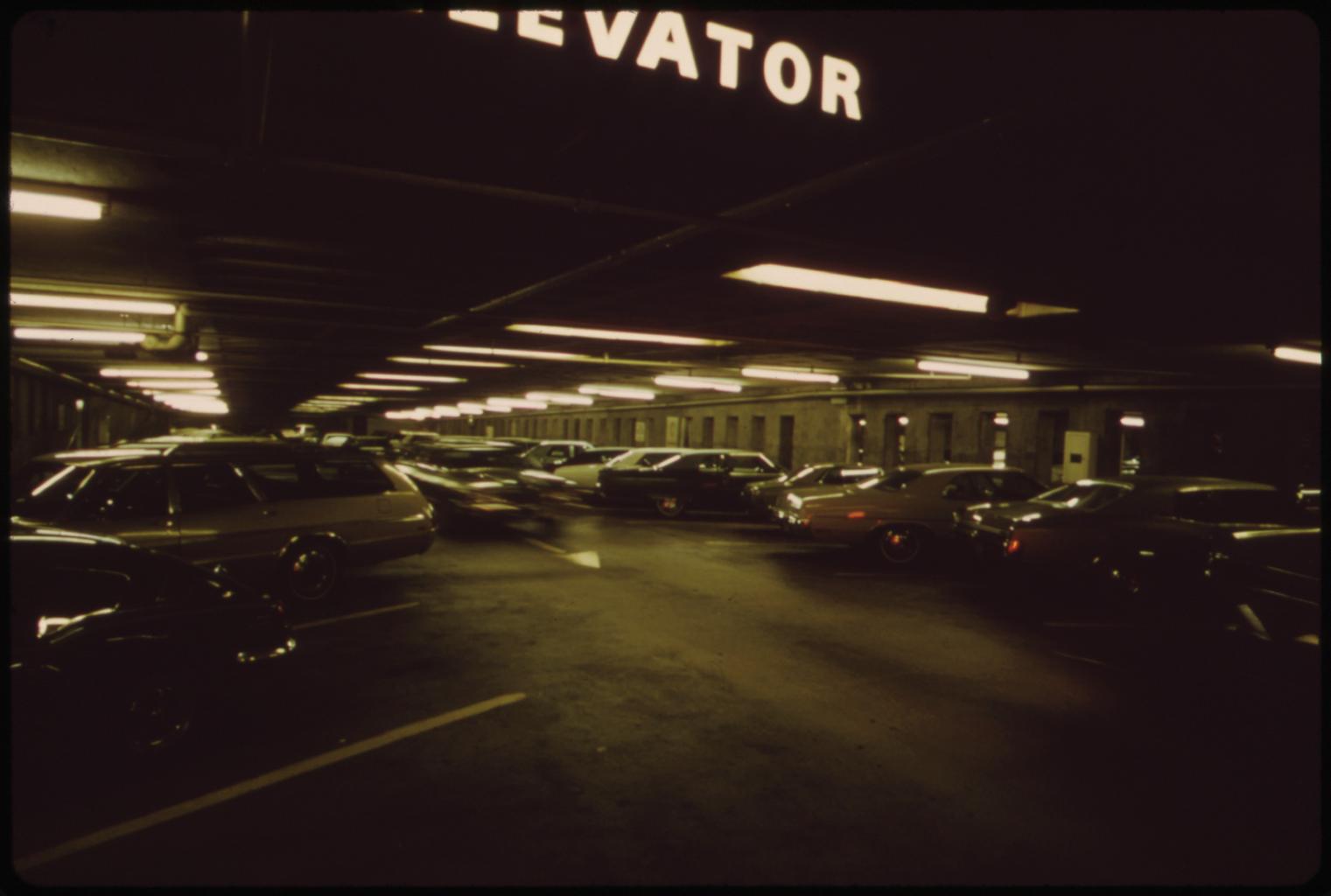
A pet peeve of many (and not just in NYC) when your car is returned scratched or dented and a major headache if it was not returned but stolen. Of course, General Obligations Law 325 provides:
"1. No person who conducts or maintains for hire or other consideration a garage, parking lot or other similar place which has the capacity for the housing, storage, parking, repair or servicing of four or more motor vehicles, as defined by the vehicle and traffic law, may exempt himself from liability for damages for injury to person or property resulting from the negligence of such person, his agents or employees, in the operation of any such vehicle, or in its housing, storage, parking, repair or servicing, or in the conduct or maintenance of such garage, parking lot or other similar place, and, except as hereinafter provided, any agreement so exempting such person shall be void.
2. Damages for loss or injury to property may be limited by a provision in the storage agreement limiting the liability in case of loss or damage by theft, fire or explosion and setting forth a specific liability per vehicle, which shall in no event be less than twenty-five thousand dollars, beyond which the person owning or operating such garage or lot shall not be liable; provided, however, that such liability may on request of the person delivering such vehicle be increased, in which event increased rates may be charged based on such increased liability."
In the following case, the garage was exempt from liability because it did not agree to garage the plaintiff's car, rather plaintiff's agent left the car at the lot but the garage did not agree to take it. ONYISHI v. MADI, 2018 NY Slip Op 50907 - NY: City Court, Civil Court 2018:
"Generally, a bailment is a relationship created when one person comes into lawful possession of another's property and rather than appropriate the same, agrees to account for the same (Martin v Briggs, 235 AD2d 192, 197 [1st Dept 1997]). Because a bailment is often not the result of "conscious promises of the parties made in a bargaining process but from what the law regards as a fair approximation of their expectations" (Ellish v Airport Parking Co. of Am., Inc., 42 AD2d 174, 176 [2d Dept 1973], affd, 34 NY2d 882 [1974]), a bailment may be created in the absence of a contractual agreement when the bailee comes into lawful possession of the bailor's property and agrees to care for it (Martin at 197; see Foulke v New York Consol. R. Co., 228 NY 269, 275 [1920] ["It is the element of lawful possession, however created, and duty to account for the thing as the property of another that creates the bailment, regardless of whether such possession is based on contract in the ordinary sense or not."]). The lynchpins of a bailment are "dominion and control by the bailee" (Motors Ins. Corp. v Am. Garages, Inc., 98 Misc 2d 887, 889 [App Term 1979]). A bailment relationship is continual, terminable at will upon the removal of the property by the bailor or notice to do so by the bailee (In re Courant, 142 AD3d 614, 616 [2d Dept 2016], lv to appeal dismissed, 29 NY3d 929 [2017]; Dupont v Joedon & Co., 107 AD2d 369, 372 [1st Dept 1985]).
In cases involving vehicles and in parking garages/lots, a bailment is created only when the parking garage agrees — by taking the owner's car and keys — to safeguard the car until the owner returns (Chubb & Son, Inc. v Edelweiss, Inc., 258 AD2d 345, 345-46 [1st Dept 1999] ["The motion court correctly found that the parking transaction constituted a bailment as a matter of law, since defendant's dominion and control of the car was established by undisputed evidence that its employee took the key to the car and employed a mandatory procedure to ensure the key's return." (Internal quotation marks omitted)]; Motors Ins. Corp. at 889-90 ["In the absence of contractual provisions to the contrary, the facts in this case would spell out that type of control by the defendant that points ineluctably to a bailee arrangement. The customer may park his own car or, if his spot was taken, the attendant would park it. He was required to give the garage keeper a set of his keys; his car is moved if required."]). Such relationship, however, is not created in cases where the parking garage does not knowingly agree to safeguard an owner's vehicle, such as when a car is self-parked in a garage by the owner and no keys are given to or left with the garage (id. at 889; Ellish at 653-654 [Court held that no bailment was created when plaintiff self-parked her car at defendant's garage, took her keys, and where defendant did not have employees actively checking cars into the garage.]; Gadsden v Allright Parking Mgt. Inc., 02-012, 2002 WL 1482542, at *1 [App Term June 25, 2002] ["The trial evidence shows, and it is not seriously disputed, that plaintiff was authorized to use defendant's garage as an incident of his employment; that plaintiff was advised through a memorandum circulated by his employer that defendant assumed no responsibility for damage to cars; and that on the night in question plaintiff entered defendant's multi-level, 2100-space garage facility through use of a pre-issued access key and parked and locked his car without assistance and while retaining his keys. No bailment was created by the impersonal parking arrangement depicted in the record." (Internal quotation marks omitted)]).
Thus, in the absence of negligence and/or a bailment a parking garage is not liable for the theft of an automobile (Ellish at 178), nor for property damage sustained by the vehicle while parked thereat (Gadsen at 1)."
Thursday, March 25, 2021
DIVORCE & MOTIONS & EVIDENCE: CONCLUSORY ALLEGATIONS DON'T WORK
We all know that the matrimonial disputes can get very emotional but if litigants are going to be make motions, whether pre-judgment or post, the rules of evidence still apply.
Battinelli v Battinelli, 2021 NY Slip Op 01741, Decided on March 24, 2021, Appellate Division, Second Department (emphasis supplied):
"....Here, contrary to the plaintiff's contention that it could reasonably be concluded that the defendant was obligated to pay monthly child support in the amount of $7,083.33 rather than the agreed-upon amount, there was no ambiguity in the stipulation of settlement as to the defendant's child support obligation, which the parties agreed was to be $3,000 per month while the plaintiff was receiving maintenance, and $4,000 per month thereafter until the emancipation of the child. The plaintiff did not allege, and she failed to submit any evidence demonstrating, that the defendant was not current with respect to this agreed-upon amount."
"Further, the plaintiff failed to demonstrate a substantial change in circumstances warranting the modification of child support or the parental access schedule (see Casler v Casler, 131 AD3d 664, 665; Whitehead v Whitehead, 122 AD3d 921, 921-922; Matter of Mazzola v Lee, 76 AD3d 531, 532). In addition, her conclusory, nonspecific, and unsubstantiated arguments did not rise to the level of warranting a hearing on either claim (see Isichenko v Isichenko, 161 AD3d 833, 834-835; Matter of Feliciano v King, 160 AD3d 854, 855)."
"Here, the defendant's contentions that the plaintiff disobeyed the stipulation of settlement were generalized and unsubstantiated. Consequently, he failed to meet his burden of proving them by clear and convincing evidence. Accordingly, the Supreme Court properly denied those branches of the cross motion which were to find the plaintiff in civil contempt and to direct her to comply with the parental access schedule."
Wednesday, March 24, 2021
THE STANDARD MODEL RELEASE IN ISSUE

A standard model release, with respect to stock images, etc., may provide: "For valuable consideration, I hereby irrevocably consent to and authorize the use and reproduction by you, or anyone authorized by you, of any and all photographs which you have this day taken of me, negative or positive, proofs of which are hereto attached, for any purpose whatsoever, without further compensation to me. All negatives, together with the prints shall constitute your property, solely and completely.
Does "for any purpose whatsoever" mean "for any purpose"? Does "anyone authorized by you" mean "anyone"? Some well known models signed standard model/image releases to a third-party. Several New York strip clubs purchased the rights to use the photographs from the third-party for their strip clubs ads. The models brought an action against the strip clubs for misusing their images claiming that their images utilized for the adult entertainment industry damages their careers.
ELECTRA v. 59 MURRAY ENTERPRS., INC., Court of Appeals, 2nd Circuit February 9, 2021 (in part):
"Relying on the release agreements in the record, the district court concluded that Appellants had executed agreements releasing all their proprietary rights to the photographs and authorizing releasees to allow third parties to use the photographs for any purpose. The district court held that the release agreements disclaimed Appellants' rights to challenge the use of the photographs, barring Appellants' Section 51 claims. In a footnote, the district court suggested that though it did not need to address the question of whether the releases constituted "written consent" for purposes of Section 51, it was "inconsistent" with the statute "for plaintiffs that have signed unlimited releases to rely on the absence of written consent in pursuing damages under that statute." Toth, 2019 WL 95564 at *11 n.14.
Appellants contend that this was an error of law, arguing that Appellees lacked written consent from Appellants, the releasees, or anyone else to use the images; that Appellees were not third-party beneficiaries of the release agreements; and that the release agreements did not constitute written consent for purposes of Section 51. We agree.
Under New York law, "the terms of a contract may be enforced only by contracting parties or intended third-party beneficiaries of the contract . . . ." Rajamin v. Deutsche Bank Nat. Tr. Co., 757 F.3d 79, 86 (2d Cir. 2014). Here, both parties agree that the Club Companies and their contractors—including Brown, IMC, and Melange—were not parties to the releases, and that there are no other agreements between Appellants and the Club Companies or their contractors authorizing the use of the photographs. In addition, Appellees conceded during oral argument that the contractors secured no legal rights to use the photographs, such as through an assignment or license. Appellees and their contractors are plainly not third-party beneficiaries of the release agreements. See State of Cal. Pub. Emps.' Ret. Sys. v. Shearman & Sterling, 95 N.Y.2d 427, 434 (2000) (explaining that a "party asserting rights as a third-party beneficiary must establish," inter alia, "that the contract was intended for his benefit"). Appellees therefore had no legal rights under the releases or any subsequent agreement to use the images and cannot rely on the releases to bar Appellants' claims.
We further conclude that the releases are not written consent for purposes of Section 51. The text of the statute requires a party to have "written consent" to use the image, though it allows "sale or transfer" of the image "for use in a manner lawful under" Section 51. N.Y. Civ. Rights Law § 51. As case law demonstrates, written consent in favor of one party does not allow others to use an image for trade or advertising. See, e.g., Chambers v. Time Warner, No. 00-cv-2839, 2003 WL 749422, at *4 (S.D.N.Y. Mar. 5, 2003). This is true no matter how broadly an agreement releases proprietary rights to the releasee. In Rosemont Enterprises, Inc. v. Urban Systems, Inc., for example, the New York Supreme Court held—in an action under Section 51 brought by Howard Hughes against the maker of "The Howard Hughes Game"— that Hughes's "exclusive assignment of the right to exploit the Hughes name and personality" to another party did not defeat the claim. 340 N.Y.S.2d 144, 144, 147 (Sup. Ct. 1973), aff'd as modified, 345 N.Y.S.2d 17 (App. Div. 1st Dep't 1973). The court explained that Hughes was "free to protect himself from the exploitation of his name and likeness against all the world except [the assignee]. It is only between them will that assignment constitute a defense to a similar law suit." Id. at 147.
A cause of action under Section 51 does not depend on the proprietary rights a plaintiff has in a particular image. In Gautier v. Pro-Football, Inc., the Appellate Division explained that Section 51 provides "primarily a recovery for injury to the person, not to his property or business." 106 N.Y.S.2d 553, 560 (App. Div. 1st Dep't 1951), aff'd, 304 N.Y. 354. Gautier continued,
True, where an individual's right of privacy has been invaded there are certain other elements which may be taken into consideration in assessing the damages. Thus, where a cause of action under the Civil Rights statute has been established, damages may include recovery for a so-called `property' interest inherent and inextricably interwoven in the individual's personality, but it is the injury to the person not to the property which establishes the cause of action. That is the focal point of the statute.
Id. (citation omitted).[6] The district court's conclusion that the release agreements defeated Appellants' claims would construe Section 51 claims as coextensive with claims for breach of contract: only the releasees, who retained proprietary interest in the image, could sue. But this is wrong, even in this "modern era" of the internet. Cf. Gautier, 304 N.Y. at 360. "Section 51 of the Civil Rights Law was not enacted . . . to supplement causes of action based on contracts . . . ." Gautier, 106 N.Y.S.2d at 560-61.
Thus, Lee's and Mayes' releases in favor of Dreamgirl, Koren's release in favor of Gianatsis Design Associates, and Golden's release in favor of Leg Avenue do not constitute written consent for all others to use their images for purposes of advertising or trade. That their releases conveyed their proprietary rights to the photographs does not defeat their claims, because their cause of action under Section 51 is based on their statutory rights, not their proprietary rights in the photographs. And while the releases could provide a defense in an action against the releasees or those who could assert lawful use by reason of assignment or license, Appellees concede that they had no legal rights to the images. Appellants therefore have established that Appellees used their images without written consent, and they are entitled to summary judgment as to Appellees' liability under Section 51."
In the following article, NYLJ March 24, 2021, Release Did Not Grant Consent To Use Likeness Under Civil Rights Law, Tal S. Benschar, the author suggests:
"A release of an image intended for exploitation in commercial pro-motion must do more than license proprietary rights. Rather, it should specifically state that the model consents to the use of her image for the purposes of advertisement or trade by any party licensing the photograph. It should also recite that the model has received compensation for this right, and that the agreement is for the benefit of not only the photographer, but also any third party to whom the image is licensed. Of course, in some cases, this might require additional compensation to the model, either on a flat-fee basis or a per-use basis.
Businesses involved in use of images of models and other individuals should thus beware that they have rights that may be asserted, and that those rights are distinct from the photographers’ rights. Ensuring that both are covered before the advertisement is used can go a long way to insulating the business from expensive litigation."
Tuesday, March 23, 2021
USURY AND THE FUNERAL CONTRACT
In this case, although a note existed which on its face was usurious, it was not a loan but part of a contract for services.
MATTER OF THOMPSON, 2021 NY Slip Op 50205 - NY: Surrogate's Court, Erie March 11 2021:
"....
The Note to the funeral home signed by Tarcia provides that a charge of 2% interest per month will be added after March 1, 2014 to any outstanding balance of the unpaid funeral expenses. Annualized at 2%, the interest rate being charged would be 24%. GOL §5-501 and NY Banking Law §14-a provide that it is illegal to "charge, take or receive any money, goods or things in action as interest on the loan or forbearance of any money, goods or things in action at a rate exceeding" 16% per year.
Where usury is claimed, "a loan or forbearance of money at the prohibited rate of interest must be shown if the defense is to prevail" (Morris Plan Industrial Bank v. Faulds, 269 App Div 238, 240 [1945]; see also Orvis v. Curtiss, 157 NY 657, 660 [1899]). In determining whether a transaction is usurious, a Court must examine several factors:
"`The rudimentary element of usury is the existence of a loan or forbearance of money' (Matter of City of Binghamton [Ritter], 133 AD2d 988, 989, lv dismissed 70 NY2d 1002; see, General Obligations Law § 5-501; see also, 72 NY Jur 2d, Interest and Usury, § 62, at 84). `[Where] there is no loan, there can be no usury' ( Oxhandler Structural Enters. v Billard, 104 Misc 2d 38, 39). When a transaction is challenged as usurious, courts traditionally look beyond the standard form of the transaction and attempt to ascertain its true nature (see, Kuklis v Treister, 83 AD2d 545). In other words, `[a] transaction must be considered in its totality and judged by its real character, rather than by the name, color, or form which the parties have seen fit to give it' (Lester v Levick, 50 AD2d 860, 862-863 [Christ, J., dissenting], revd on dissenting mem below 41 NY2d 940; see, 72 NY Jur 2d, Interest and Usury, § 56, at 76). Significantly, there is a strong presumption against a finding of usury ( see, Giventer v Arnow, 37 NY2d 305, 309; Lehman v Roseanne Investors Corp., 106 AD2d 617, 618), and this defense must be established by clear and convincing evidence as to all its elements (Giventer v Arnow, supra, at 309; Matter of City of Binghamton [Ritter], supra, at 989)" (Feinberg v. Old Vestal Rd. Assoc., 157 AD2d 1002, 1003-1005 [1990], emphasis added).
Furthermore, as the Court in Sogeti USA, LLC v. Whirlwind Bldg. Sys., 496 F. Supp. 2d 380, 382 [2007], pointed out:
"[T]he law of usury is not even applicable to agreements for the provision of goods and services as they are not considered to constitute loan agreements. In re Renshaw, 229 B.R. 552, 557 (2d Cir. BAP 1999) ('[t]he sale of goods and services are exempt from the usury law [because] [u]nlike an entity which lends money, it is not illegal for an entity providing goods and services to charge one price for cash and another price (original price plus a Service Charge) for a sale on credit.'). Feinberg v. Old Vestal Rd. Assocs., 157 AD2d 1002 (NY App. Div. 1990))" (emphasis added).
(ii)
Tarcia contends that the language and terms employed in the Note require this Court to construe it as a loan. Specifically, Tarcia refers to the title of the contract as a "Promissory Note", and to the use of the terms "lender" and "borrower", as evidence that the document is intended to have the same force and effect as a loan or forbearance agreement. The specific verbiage in the Note is not disputed, but the funeral home disagrees that such language turns the transaction into "a loan or forbearance" agreement.
The funeral agreement is a one page document that lists the merchandise selected for the decedent's funeral arrangements, including the purchase of a casket, death certificates, and use of the funeral home facilities and staff. Its terms are simple and itemized. There is no language in this agreement which would render it a loan or forbearance agreement. Rather, the terminology employed demonstrates that the purpose and intent of the agreement is for a sale of merchandise and services to be provided by the funeral home in connection with decedent's memorial service and burial.
The Note mirrors language that is included in the funeral agreement and, in essence, clarifies and expands those terms. While the terms "Lender" and "Borrower" employed in the Note are consistent with verbiage often used in loan or forbearance agreements, it is clear that the Note in this case was not intended to represent a loan agreement. The Note simply reinforced the terms of the funeral agreement, making clear what was required if the bill for decedent's funeral and associated services were not paid by March 1, 2014. So viewed, this was simply an agreement for the possible payment of those goods and services over time; and, if that extended period were to occur, the price would be higher by the addition of interest.
As our Court of Appeals pointed out in Mandelino v. Fribourg, 25 NY2d 145, 151 [1968]:
"`A contract which provides for a rate of interest greater than the legal rate upon a deferred payment, which constitutes consideration for a sale, is not usurious.' This principle seems to have been regularly followed at the Appellate Division. `There is no usury in the normal purchase-money transaction where a seller demands a higher price because the consideration is not all in cash'" (emphasis added, quoting McAnsh v. Blauner, 222 AD 381, 382 [1928]; and Butts v Samuel, 5 AD2d 1008 [1958]).[2]
Accordingly, I find that the funeral agreement is not a loan, but a contract for the purchase of goods and services, and therefore is not governed by the usury laws. The inclusion of the language describing the charge of an additional 2% interest rate per month subsequently is also not deemed usurious, as rates higher than the legal rate of interest may be applied to contracts for the sale of goods on credit. I make the same findings with respect to the Note."
Monday, March 22, 2021

Friday, March 19, 2021
PET DEEMED TO BE PROPERTY FOR MALPRACTICE CLAIM

Plaintiffs commenced this action alleging that the Defendants breached the appropriate standards of veterinary care in the treatment of their cat and sought to recover compensatory damages incurred for the treatment in the sum of $15, 262.22 plus $10,000.00 for the time and lost wages suffered by the plaintiffs, plus, $10,000.00 for conscious pain and suffering experienced by the cat, along with $5,000.00 representing the fair market value of the cat and punitive damages in the amount of $250,000.00.
Ritter v. BLUEPEARL OPERATIONS LLC, 2021 NY Slip Op 30341 - NY: Supreme Court February 5, 2021:
"Defendants' motion is granted in its entirety. Specifically, Plaintiff's Sixth Cause of Action for intentional infliction of emotional distress is dismissed because in New York there is no cause of action for emotional distress damages as result of negligent care and treatment rendered to one's animal, which is considered to be property. Jason v Parks, 224 AD2d 494 (2d Dept 1996)".
Thursday, March 18, 2021
ANY REMEDY WHEN CONDO BOARD REFUSES TO APPROVE SALE?

Tumayeva v. Ocean Condo. No. Two, NYLJ March 18, 2021, Date filed: 2021-02-05, Court: Supreme Court, Kings, Judge: Justice Debra Silber, Case Number: 515695/2020:
"In this action, commenced by a prospective purchaser of a condominium unit who was not able to purchase, defendants (the condominium association’s board of managers and the individuals who are board members) move, pre-answer, to dismiss the complaint for lack of standing, failing to state a cause of action, and founded on documentary evidence (CPLR 3211 [a] [1], [3], [7]). The four causes of action in the complaint are tortious interference with contract, breach of contract, breach of the By-Laws and/or breach of plaintiff’s third-party beneficiary status under the By-Laws, and breach of fiduciary duty.
....Here, the court finds that the plaintiff lacks standing to raise the claims in her third cause of action, breach of the condominium’s by-laws, because the by-laws did not apply to her directly or as a third-party beneficiary, as she was solely a prospective unit purchaser. The fourth cause of action, breach of fiduciary duty, fails to state a viable cause of action for the same reason. Plaintiff alleges no facts that would establish a fiduciary relationship between her and any of the defendants.
Plaintiff’s second cause of action, for breach of contract — alleging a “contractual relationship” between herself and the defendants on the basis of a processing fee she paid to the condominium to review her request to purchase the unit — also fails to state a viable cause of action. Looking at it in the light most favorable to plaintiff, there are insufficient facts to demonstrate that she and the condominium board entered any contract. There was no offer, no acceptance, and no privity. The selling unit owner was the party who asked the board to review the application, and instead of paying the fee, asked the buyer to pay it. That does not create a contract between the board of managers and the prospective purchaser.
Thus, the second, third, and fourth causes of action are dismissed.
The only claim that plaintiff does have standing to maintain, in this court’s opinion, is plaintiff’s cause of action for tortious interference with her contract. She claims, perhaps not artfully enough, that the President of the Board of Managers owns and lives in the unit directly below the subject unit, that he did not want children living above him and plaintiff has young children, and he did not want a sale for the price plaintiff had negotiated with the seller. The contract was subject to short sale approval by the bank holding the first lien on the unit, a short sale which had been approved by the seller’s bank. Plaintiff claims the board was troubled that it would appear in the public record and lower the value of the units in the development, so the condominium’s Board interfered with her contract with the selling unit owner, so she was not able to purchase the unit. The condo board did not choose to exercise their right of first refusal, plaintiff alleges, but they would not provide the document which this development ordinarily provides, stating that they were not exercising their right of first refusal. Apparently, without this document, Chase Bank, which had provided a mortgage commitment to plaintiff, refused to close. While this document is not required by the Bylaws of the condominium, it is apparently the custom and practice in this development, which has hundreds of units in different “phases” of the development, each with a different board of managers. As a result of the delay, the holder of the second lien on the unit foreclosed on it, preventing plaintiff from closing. The auction was held about two months after plaintiff was supposed to close, and the unit was sold to an investor subject to the lien of the first mortgage.
Additionally, plaintiff’s claims against the individual defendants must be dismissed. Each of the individual defendants is named a party in their individual capacity, not in their capacity as officers or directors of the Board of Managers. An action against an unincorporated association (which is what a condominium is in New York) must be maintained against its president or treasurer (see NY Gen Assn Law §13; Safe Haven Props. LLC v. Madison Green Condominium, 183 AD3d 460 [1st Dept 2020]; Caines v. Prudential Ins. Co., 8 Misc 2d 789, 168 NYS2d 813 [Sup Ct, NY County 1957]). This error is amendable, however, and is not fatal to the action. Therefore, the entire complaint is dismissed as asserted against the individual defendants."
Wednesday, March 17, 2021
MORE NOISY NEIGHBORS
The court's suggestion at the end of the opinion is most noteworthy and I have highlighted it.
CID ASSOC., LLC v. ALMAAS, 2021 NY Slip Op 30669 - NY: Supreme Court March 5, 2021:
"This action, which was commenced by plaintiff-landlord via summons with notice, seeks wide-ranging relief from injunctions to ejectment. Plaintiff owns the building located at 101 St. Marks Place, New York, New York (the "Building"). Defendant is a long-term tenant of Apartment 19 at the building pursuant to a rent stabilized lease.
At its core, the landlord seeks to alleviate the complaints of other tenants at the building stemming from defendant's alleged disruptive behavior, including: [1] playing loud music and allowing loud noises to emanate from the apartment and causing a disturbance to other tenants in the Building at all hours of the evening and early morning; [2] banging furniture and other objects on the apartment floor and walls; [3] causing other tenants to wake up in the middle of the evening and not be able to properly sleep; [4] harassing Building residents; and [5] engaging in other unspecified "dangerous, menacing and erratic [b]ehavior." Plaintiff further complains that the defendant has failed to timely pay rent due under the lease. As conceded by plaintiff's counsel at oral argument held on the record on 3/2/21, this action has been brought in Supreme Court because plaintiff is unable to obtain relief in housing court associated with defendant's alleged conduct at this juncture due to Covid-19-related measures designed to protect tenants impacted by the pandemic.
In support of the motion, plaintiff has provided sworn affidavits from its manager, its superintendent, as well as four current tenants and/or occupants of the Building, and two former tenants thereof. The superintendent, Pllumb Cekaj, states in relevant part:
Defendant causes music to blare at extremely high levels at all hours of the night and early morning, and will scream at the top of her lungs. Defendant will also allow objects to bang on the floor and walls, while also slamming her door. Defendant's conduct is clearly done to intimidate, harass and disturb the other tenants in the Building.
The tenants in the Building often contact me in the middle of the night due to noise complaints being made against Defendant.
The tenants state the Defendant is making too much noise that it interrupts their sleep and causes them to lose the peaceful enjoyment of their apartments.
Maria Teresa Cacho Estefania, the current tenant of Apartment 14, states in relevant part:
Defendant deliberately allows loud noises, consisting of: (a) extremely loud music; (b) screaming; and (c) banging on the floors and doors to emanate from Apartment 20 and cause a disturbance to the other tenants in the Building. The conduct always occurs late in the evening and continues into the early morning hours.
Defendant causes myself and my husband to wake up in the middle of the night at least two to three each week.
I do not keep a log of the nights that my sleep is disturbed and interrupted by Defendant because the conduct is constant and occurs every week.
Robert Miller, who is married to Estefania and is also current tenant of Apartment 14 confirms his wife's account in another sworn affidavit. Plaintiff has also submitted the sworn affidavit of Bridget Cushing, a current tenant of Apartment 20 who moved into the building in August 2020. Cushing explains that her apartment faces the defendant's apartment. She further states in relevant part as follows:
On the first night I took occupancy of Apartment 20, Defendant blasted music at an excessive level from 8:00 p.m. to 5:00 a.m. Defendant's conduct was deliberate and meant to send a message to me that she can do whatever she wants and does not care what her behavior costs her neighbors.
Since taking occupancy, Defendant has continued to blast loud music, scream loudly in her Apartment, constantly bang and slam her door, and cause a nuisance at least two to three times every week.
Defendant's conduct has only gotten worse in recent months.
Defendant's conduct forces me to get no sleep on multiple evenings and has greatly diminished by ability to use of Apartment 20 for the purpose I rented it for, specifically to sleep, rest and have a place to live.
Due to Defendant's conduct, I am forced to walk quietly in Apartment 20 so that Defendant does not realize that I am home. If Defendant is not aware that I am home, then she does not create loud, objectionable noises.
When Defendant is aware that I am in Apartment 20 she will constantly slam her door loudly as a threat. These acts cause me to fear for my safety as I do not know if Defendant intends to come to my apartment.
Defendant has also been observed by myself videotaping Apartment 20's entry door. It appears that Defendant is trying to goad me into an altercation where she will videotape only the part of the incident where I am wrong. I have avoided her during these moments and have made multiple calls to 3-1-1 and the NYPD. Even when the NYPD arrives, I do not feel safe, as Defendant will try to seek retribution by making loud noises and screaming at me once they leave the Building.
I have also refrained from having friends and family visit me at Apartment 20. On one occasion, in October 2020, I had a friend visit and Defendant constantly was banging on my door and scaring me and my friend. When my friend left, we noticed the offensive sign on Defendant's door telling my friend to "Get the F---K Away". I took the photograph of the sign and sent it to Plaintiff.
On at least two or three evenings each month, the objectionable conduct becomes more violent and loud. On these nights there is no way that I can sleep and I fear that the anxiety induced on these evenings will cause more sleepless nights.
Defendant is a danger to this Building and to everyone who lives here
Plaintiff has provided a sworn affidavit from Alexandra Papadopolulos, the current occupant of Apartment 25, who has lived in the Building as a roommate of Sheila O'Neal, the tenant of Apartment 25. Apartment 25 is located directly above the defendant's apartment. Papadopolulos states in relevant part:
Since the first day that I have lived in the Building, I have had the displeasure of having to deal with Defendant. Residing in the apartment above Defendant is a living hell, as I never know whether she will have a violent episode on any given night.
...
As Apartment 25 is directly above Apartment 19, I often feel my floors start to shake from the insanely loud music played by Defendant.
Defendant's conduct is deliberate and intended to cause unease and harm to the other tenants in the Building. Defendant will purposefully play extremely loud music for twenty to thirty second sessions and then go completely silent for five to ten minutes. This conduct will go on from 10:00 p.m. to 3:00 a.m. multiple times every week.
...
Defendant has also caused me to avoid having any guests in Apartment 25. In July 2020, 1 had a friend visit me at Apartment 25. Defendant immediately began to blast last music when she knew I had company. When my guest asked Defendant to lower her music, Defendant responded by harassing my guest and throwing garbage outside my door. When cleaning up the garbage I saw shards of glass that had broken off a bottle and were all over the floor, creating a dangerous condition
...
Due to Defendant's constant loud noise and harassment, I have contacted 3-1-1 on at least eight occasions.
On two of the eight occasions, the NYPD appeared in the Building.
Upon the police leaving the Building, Defendant's conduct always gets worse and she always gets extremely angry. These are the times that I am most concerned for my own safety.
Plaintiff has provided affidavits from two former tenants, Jesse Schwartz and Sarah Story, who claim that they vacated the apartment due in whole or in part to the defendant and her conduct.
Meanwhile, in her affidavit submitted in opposition to the motion, defendant admits that she "love[s] music, especially reggae." She further states:
I have a vinyl collection and play it on a turntable because I find that has better sound than any other way of listening to music. Some times I invite my friends to my home to celebrate special occasions and we sing along to the music. In 2020 we did not have much to celebrate except my birthday on September 15 and when Joe Biden won the presidency.
Most of the times when I play music or watch a movie my neighbors do not have any problem with it. I have no way of knowing if they are annoyed or even home to hear it unless they ask me to turn it down. Generally whenever my neighbors have knocked on my door to ask me to turn down the music, I feel bad for disturbing them and turn it off or down.
Otherwise, defendant claims she does not recognize the names of some of the people who submitted affidavits in support of plaintiff's application, points out that the tenant who lives in Apartment 25 did not submit an affidavit and wonders "why the noise bothers Ms. O'Neil's roommate but not her." Defendant further states:
I like to get to know my neighbors, so I wish that the other tenants who submitted affidavits, Mr. Schwarz, Ms. Cushing, Ms. Story, and Mr. Miller, had just talked to me civilly instead of calling the police, 311, and the landlord. I would have happily participated in mediation if they had calmly requested that so that we could find a solution that works for everyone without the threat of a judgment aimed at me.
Discussion
A preliminary injunction is a drastic remedy and should not be granted unless plaintiff can demonstrate "a clear right" to such relief (City of New York v. 330 Continental, LLC, 60 AD3d 226 [1st Dept 2009]). On a motion for preliminary injunctive relief, plaintiff must demonstrate a likelihood of success on the merits, irreparable injury absent the granting of the preliminary injunction, and a balancing of the equities in its favor (see Aetna Ins. Co. v. Capasso, 75 NY2d 860 [1990]; see also 1234 Broadway LLC v. West Side SRO Law Project, 86 AD3d 18 [1st Dept 2011]).
A cause of action for private nuisance requires a showing that the defendant's conduct "is a legal cause of the invasion of the interest in the private use and enjoyment of land and such invasion is (1) intentional and unreasonable, (2) negligent or reckless, or (3) actionable under the rules governing liability for abnormally dangerous conditions or activities (Copart Industries, Inc. v. Consolidated Edison Co. of New York, Inc., 41 NY2d 564 [1977]; see Hutcherson v. Hill, 161 AD3d 495 [1st Dept 2018]; Domen Holding Co. v. Aranovich, 1 NY3d 117 [2003]).
A landlord may terminate a rent stabilized tenancy due to a nuisance condition. The Rent Stabilization Code, 9 NYCRR § 2524.3, provides as follows:
Without the approval of the DHCR, an action or proceeding to recover possession of any housing accommodation may only be commenced after service of the notice required by section 2524.2 of this Part, upon one or more of the following grounds, wherein wrongful acts of the tenant are established as follows:
(b) The tenant is committing or permitting a nuisance in such housing accommodation or the building containing such housing accommodation; or is maliciously, or by reason of gross negligence, substantially damaging the housing accommodation; or the tenant engages in a persistent and continuing course of conduct evidencing an unwarrantable, unreasonable or unlawful use of the property to the annoyance, inconvenience, discomfort or damage of others, the primary purpose of which is intended to harass the owner or other tenants or occupants of the same or an adjacent building or structure by interfering substantially with their comfort or safety.
While a finding of a violation of the New York City Noise Control Code is not necessary to demonstrate a prima facie cause of action for private nuisance (see 61 West 62 Owners Corp. v. CGM EMP LLC, 77 AD3d 330 [1st Dept 2010]), its provisions are instructive. NYC Administrative Code § 24-218 provides in relevant part as follows:
(a) No person shall make, continue or cause or permit to be made or continued any unreasonable noise.
(a-1) No person shall make, continue or cause to permit or be made or continued any unreasonable noise:
(1) for any commercial purpose or during the course of conducting any commercial activity; or
(2) through the use of a device, other than a device used within the interior living space of an individual residential unit, installed within or upon a multiple dwelling or a building used in part or in whole for non-residential purposes.
(b) Unreasonable noise shall include but shall not be limited to sound, attributable to any device, that exceeds the following prohibited noise levels:
(1) Sound, other than impulsive sound, attributable to the source, measured at a level of 7 dB(A) or more above the ambient sound level at or after 10:00 p.m. and before 7:00 a.m., as measured at any point within a receiving property or as measured at a distance of 15 feet or more from the source on a public right-of-way.
(2) Sound, other than impulsive sound, attributable to the source, measured at a level of 10 dB(A) or more above the ambient sound level at or after 7:00 a.m. and before 10:00 p.m., as measured at any point within a receiving property or as measured at a distance of 15 feet or more from the source on a public right-of-way.
(3) Impulsive sound, attributable to the source, measured at a level of 15 dB(A) or more above the ambient sound level, as measured at any point within a receiving property or as measured at a distance of 15 feet or more from the source on a public right-of-way. Impulsive sound levels shall be measured in the A-weighting network with the sound level meter set to fast response. The ambient sound level shall be taken in the A-weighting network with the sound level meter set to slow response.
This action has been commenced by summons with notice, and there is no complaint at this juncture. Thus, it is unclear what precise legal theories plaintiff will assert and what remedies plaintiff will seek in this action. The court finds that plaintiff is attempting to assert a cause of action for ejectment based upon nuisance against the defendant.
On this record, there are six affidavits from current and former tenants of the building who live in close proximity to the defendant attesting to her objectionable and disruptive conduct spanning a significant period of time and particularly occurring late at night. These affidavits are consistent in their descriptions of defendant's conduct. Plaintiff's own employees state based upon their personal knowledge that they have received numerous complaints about defendant's behavior. Numerous 311 complaints have been made, and the NYPD has been involved on multiple occasions.
For her part, defendant does not deny listening to music. Indeed, she implicitly admits that sometimes, when she plays music or watches a movie, her neighbors do have a problem with it. The court is troubled by defendant's further admission that "[g]enerally whenever my neighbors have knocked on my door to ask me to turn down the music, I feel bad for disturbing them and turn it off or down." This statement concedes that defendant has been repeatedly asked to turn her music down. Defendant's use of the word "generally" is cause for concern because it may imply that there are times when she does not feel bad for disturbing her neighbors or doesn't turn down her music. Nonetheless, the fact that defendant admits she has been repeatedly asked by her neighbors to turn down her music highlights an ongoing problem and a potential nuisance.
Defendant further admits to having knowledge that tenants have contacted 311 and the NYPD to complain of noise she has caused. Contrary to defendant's contention, there is no legal requirement that plaintiff or its tenants talk to her "civilly" nor mandate that the parties proceed to mediation which defendant claims she "would have happily participated in [] if they had calmly requested that..." While mediation may be fruitful at this juncture, a topic which was explored by the court on the record during oral argument, it is defendant who is obligated by law not to cause or maintain a private nuisance in the first instance.
However, as defense counsel points out, plaintiff has failed to serve a predicate notice on defendant. Indeed, no such notice is annexed to plaintiff's moving papers. Part of plaintiff's prima facie case in this action seeking ejectment is that the defendant has been served with a valid notice required by 9 NYCRR § 2524.2. That provision states in relevant part:
Every notice to a tenant to vacate or surrender possession of a housing accommodation shall state the ground under section 2524.3 or 2524.4 of this Part, upon which the owner relies for removal or eviction of the tenant, the facts necessary to establish the existence of such ground, and the date when the tenant is required to surrender possession.
A landlord's failure to serve this predicate notice or otherwise comply with 9 NYCRR § 2524.2 mandates dismissal of an action seeking possession (see i.e. Hirsch v. Stewart, 63 AD3d 74 [1st Dept 2009]; see also Prana Growth Fund I, L.P. v Lazala, 8 Misc 3d 667 [Sup Ct NY 2005]). Since plaintiff has failed to serve the requisite notice on defendant in compliance with the rent stabilization code, it has necessarily failed to demonstrate a likelihood of success on the merits at this juncture.
Accordingly, the motion for injunctive relief must be denied. This result gives the court pause, because as the court has laid out in this decision, defendant's conduct if proven could very well result in her ejectment from the apartment. The court is optimistic that defendant, a long-term rent stabilized tenant, can reach an amicable resolution of this action. That may involve concessions on defendant's part as simple as lowering the volume of the audio devices she is using or wearing headphones at night, options which defendant may want to consider to avoid further litigation. Apartment dwelling in New York City does not come without compromises such as hearing reasonable noise from one's neighbors, among other sources. However, defendant cannot engage in behavior that constitutes a private nuisance without impunity.
The balance of the motion seeking relief for defendant's alleged nonpayment constitutes an impermissible end-run around the moratorium on evictions due to non-payment and is therefore denied."
Subscribe to:
Posts (Atom)



 Posts
Posts


