Showing posts with label Taxes. Show all posts

Friday, February 25, 2022

DIVORCE AND TAX DEBT


C.C. v. R.C., Date filed: 2022-01-10, Court: Supreme Court, Richmond, Judge: Justice Ralph Porzio, Case Number: 55103/2020:

"...During most of the marriage, the Defendant was the sole income earner. The Plaintiff and Defendant filed joint taxes throughout the marriage; however, they failed to report and pay state and federal taxes for a number of years. This failure has resulted in hundreds of thousands of dollars being owed, fees and interest being assessed, and liens being placed on the marital residence. At the time of trial, the balance due on federal and state taxes is approximately $700,000 per the parties’ testimony.

The Plaintiff alleges that this tax debt is a wasteful dissipation of marital assets. The Plaintiff testified that during the marriage the parties filed joint taxes, that she signed the joint tax returns, and that she acknowledged that the tax liabilities owed to the IRS and the State of NY are owed by her and the Defendant. Notably, despite this crippling debt held by the parties, the Plaintiff never filed for innocent spouse status with the IRS and neither party has filed for bankruptcy. The Defendant acknowledged the debt but as he stated, the parties were “encouraged just to keep spending money, sometimes not even care about the credit card bills.” See Transcript dated 8/30/2021, page 38. During the trial, both parties admitted to being convicted of falsifying business records in order to obtain Medicare coverage during the marriage. The Court finds this information persuasive regarding their combined financial history.

As the Plaintiff has shared in the benefits derived from the parties’ failure to pay their taxes, she must also share in the financial liability arising out of tax liability. See Conway v. Conway, 29 AD3d 725, [2d Dept. 2006]. Based upon the foregoing, considering the equitable distribution factors, wasteful dissipation, the credibility of the parties, and the testimony of the Plaintiff’s expert, Richard Gabor, the Court finds that the IRS federal tax debt and the New York State tax debt is the responsibility of both parties, jointly and severally, and this Court will not apportion liability to one party over the other."


Monday, March 30, 2015

PROPOSALS BY CONGRESS RE: TAX DEDUCTIONS AND CREDITS

The Republican budget proposal in Congress would eliminate the tax deduction for spousal maintenance, among other deductions, credits, etc.

See http://waysandmeans.house.gov/uploadedfiles/ways_and_means_section_by_section_summary_final_022614.pdf

Thursday, March 13, 2014

TAX TIP - HOME OFFICE DEDUCTIONS

I am one of those attorneys who is office home based and this article comes from COHEN GREVE & COMPANY CPA, P.C., Certified Public Accountants:

"Electing Safe Harbor Method for Home Office Deduction

Many small business owners take a deduction for the qualified business use of their home under IRS Section 280(A). Before 2013, eligible taxpayers determined the deduction by calculating, allocating and substantiating actual home expenses related to a qualified business use. For many, the administration, record-keeping and compliance was a burden.

Beginning in 2013, comes a new Safe Harbor method for determining the home office deduction. This new provision simplified the calculation, but it does not change the need to satisfy all of the eligibility requirements. It may also reduce the audit risk, since the deduction has a maximum deduction amount of $1,500.

Most taxpayers eligible for home expense deductions for a qualified business use under IRS Section280 are eligible for the optional Safe Harbor method. This allows individual taxpayers who use their homes for qualified business use, storage of inventory or day care services, subject to other limitations under the tax code. We advise taxpayers to review the provisions under IRS Section 280A as well as subsections 280A,(c)(1),(2),(3),(4),(5), as well as Rev. Proc 2013-13 for the Safe Harbor election.

The use of the Safe Harbor method does have drawbacks. Since it is an alternative to calculating actual expenses, some costs relating to qualified business use will no longer be deductible on Schedule C in the tax year elected. In addition, any carryover deductions from prior years are deferred into a year when the election is not made.

We advise taxpayers to evaluate the restrictions before making the decision to elect the Safe Harbor method. Since the safe harbor is an irreversible election for that tax year, be sure of your decision. An amended return cannot be filed to change your determination.

If you have any questions about the Safe Harbor method, please call our office at 516-877-1900. We look forward to hearing from you."

Friday, February 7, 2014

2013/2014 TAX UPDATE

From the firm of Nawrocki Smith LLP Tax Department:

2013/2014 Tax Update

Tuesday, May 7, 2013

REAL ESTATE CLOSING - NEW TAX FORM

The NYS Department of Taxation and Finance put a revised TP-584 into effect on April 15, 2013 and I am advised that the old form will be good in most New York counties until various dates in June  2013.

The changes from the current form to the revised TP-584 are as follows:

1. DTF has added new check boxes on Page 1, Schedule A for grantors or grantees, which are single member LLCs. If the grantor or the grantee is a single member LLC, then the member's name and Tax Identification or Social Security Number must be entered on the form.

2. DTF now requires the entry of the six digit Statewide Information System Code number (SWIS Code) on the property description. The SWIS Code number should appear on the property's tax bill. If not, your examiner or searcher can obtain it from the County Assessor's Office.

3. A conveyance pursuant to a divorce or separation must be indicated on the new form be checking box "r" under "Condition of Conveyance".

4. In all counties where documents are recorded in the County Clerk's Office, including Richmond County, checks in payment of the transfer tax must be made payable to the County Clerk. In the counties OF NYC, checks must be made payable to the NYC Department of Finance.

A copy of the new form is at this link:

http://www.tax.ny.gov/pdf/current_forms/property/tp584_fill_in.pdf

The instructions are at this link:

http://www.tax.ny.gov/pdf/current_forms/property/tp584i.pdf.

Friday, December 7, 2012

NEW YORK MATRIMONIAL - SAME SEX COUPLES

Due to recent court decisions, it is now suggested that same-sex couples should consult with their tax attorney to see if they may qualify to file a “Protective Claim for Refund.”

More information can be found at this link:

JD SUPRA: Same-sex married couples: Consider filing a Protective Claim for Tax Refund NOW

Monday, February 8, 2010

UNEMPLOYMENT INSURANCE - TAXES

A common question: do I report it? A common answer: yes and file. Here is some information the the Department of Labor website:

"Q: Is there tax relief available for UI claimants?

A:  Yes. Under current legislation, the first $2400 of UI benefits paid in the year 2009 will be exempt from federal and state taxes.

Q: Will any benefits be withheld for taxes?

A:  The withholding of benefits for Federal income tax or State income tax is voluntary. If you elect to have Federal tax withheld, an amount equal to 10% of your gross benefit payment will be withheld after mandatory deductions, such as child support payments, are made. If you elect to have State tax withheld, an amount equal to 2.5% of your gross benefit payment will be withheld. You can change this option any time by calling the Telephone Claims Center toll-free number, selecting the option to ask a question about a claim you already filed, entering your SSN and PIN, and then selecting the option to begin or cancel the withholding of federal or state income tax.

Q: Can I change my tax withholding option?

A:  You may start or stop the federal or state tax withholding at any time by contacting the Telephone Claims Center and:
• Selecting option to "Ask a question about a claim you already filed," and
• Entering your Social Security number and PIN, and
• Selecting the option to begin or cancel the withholding of federal or state income tax.

If you elect the tax withholding option, you must have 10% withheld; you cannot have any less or any more than 10% withheld. If you elect the state tax withholding option, you must have 2.5% withheld; you cannot have any less or any more than 2.5% withheld.

Q: Can I have my tax withholding returned to me?

A:   Any benefits withheld cannot be returned to you by the Department of Labor; benefits withheld can only be returned to you by the Federal or State government as part of your income tax refund.

Q: Will I receive a year-end statement?

A:   Yes. During January, the Department of Labor sends out a Form 1099-G (Statement for Recipients of Certain Government Payments) to claimants who received unemployment insurance benefits during the previous calendar year. Because of this, it is important that you notify the Telephone Claims Center of your current address.

Please keep the Form 1099-G for your records. The information on your benefit statement is also sent to the Internal Revenue Service and the New York State Department of Taxation and Finance. Unemployment compensation includes: unemployment insurance payments; extended benefits and Federal Supplemental Compensation payments; Trade Adjustment Act (TAA) basic, retroactive, and additional for training payments; and Disaster Unemployment Assistance (DUA) payments. If you did not receive any unemployment compensation during the previous calendar year, but repaid an overpayment of benefits, the Form 1099-G is sent to you as the information may be helpful to you in filing your return.

If you received unemployment insurance benefits during the prior calendar year, and do not receive your Form 1099-G by February of this year, please contact the Department of Labor – Payment Unit at 518-485-7071, or you can request the 1099-G by mail. For a complete record of your UI payments, login on the Benefits Online Page and click on 'View Payment History'.

In addition to federal and state income tax, you are also responsible for New York City and Yonkers City income tax, if you are subject to them.

It may be necessary for you to make estimated tax payments to avoid a penalty for underpayment when you file your return next year. For more information on when you should make estimated federal tax payments, see IRS Publication 505, Tax Withholding and Estimated Tax, or the instructions for Form 1040-ES. For estimated state tax, use Form IT - 2105, Estimated Tax Payment Voucher. If you have any questions about estimated state tax payments, contact the NYS Department of Taxation and Finance at 1-800-225-5829. The withholding of 2.5% of your benefit amount for State income tax is voluntary.

The Internal Revenue Service is responsible for interpreting and applying the provisions of income tax laws. Any questions on federal taxes should be directed to the nearest Internal Revenue Service office. The New York State Department of Tax and Finance is responsible for interpreting and applying the provision of state income tax laws. Questions on state taxes should be referred to the NYS Department of Taxation and Finance.

Q: If I repaid an overpayment will it appear on my form 1099-G?

A: Yes, provided the repayment was received by the Department of Labor during that tax year. If you did not receive any unemployment compensation during the previous calendar year, but repaid an overpayment of benefits, the Form 1099-G is sent to you as the information may be helpful to you in filing your return. Please note that only cash repayments are reported on Form 1099-G. Benefits taken from your claim to repay an overpayment are not cash repayments and are not included in the form. "
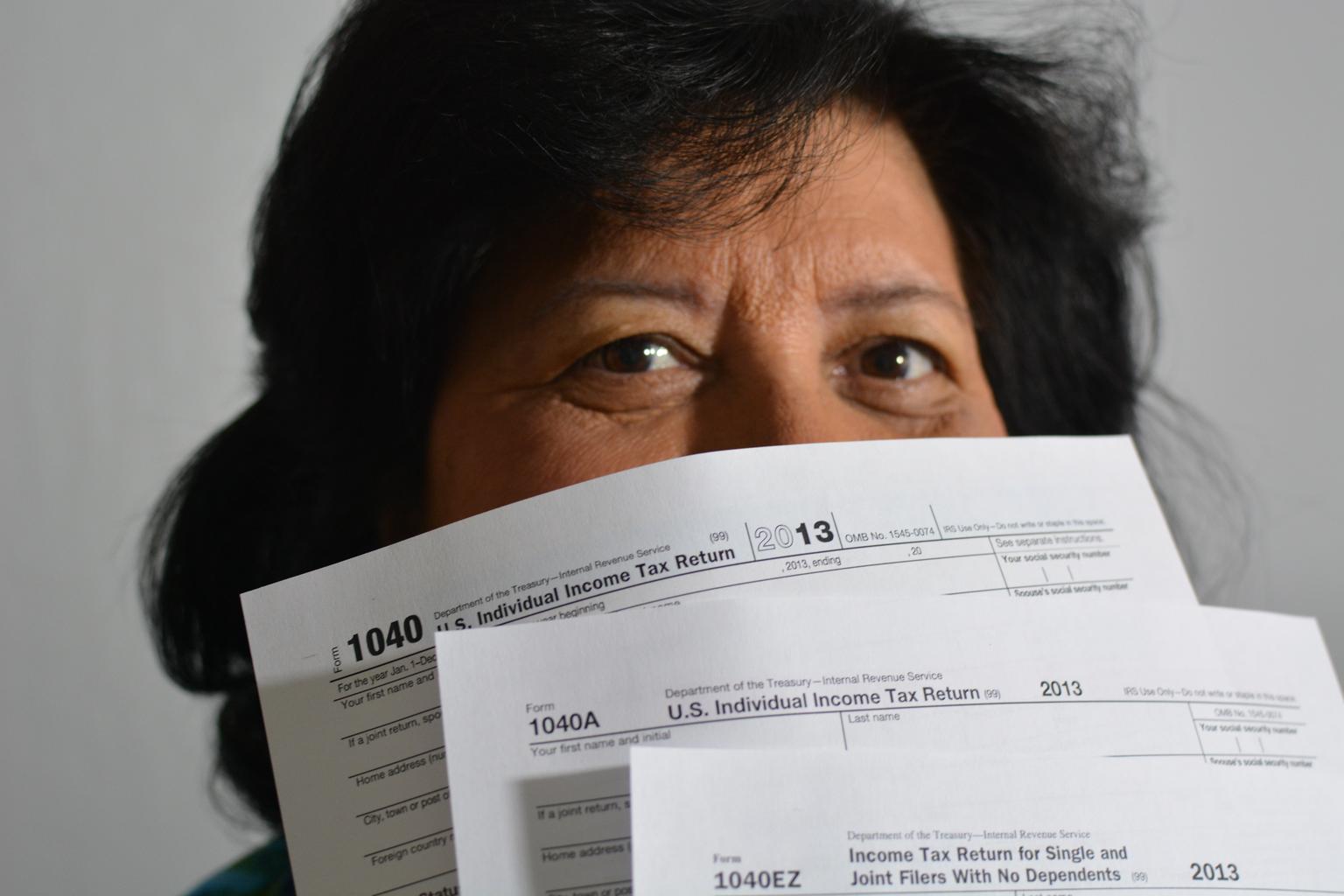
Thursday, December 10, 2009

UNEMPLOYMENT INSURANCE - TAX WITHOLDING

The NY State Department of Labor (DOL) has announced that claimants who are receiving NYS Unemployment Insurance (UI) Benefits can now voluntarily elect to have NY State Income Tax withheld from their UI benefit checks. Previously, only Federal Income Taxes could voluntarily be withheld.

Here are answers to FAQs from the NY State Department of Labor:

Are unemployment insurance benefits taxable?
Yes. Any unemployment compensation you receive is subject to Federal, New York State and Local income taxes provided you are required to file a tax return.

Is there tax relief available for UI claimants?
Yes. Under current legislation, the first $2400 of UI benefits paid in the year 2009 will be exempt from federal and state taxes.

Will any benefits be withheld for taxes? The withholding of benefits for Federal income tax or State income tax is voluntary. If you elect to have Federal tax withheld, an amount equal to 10% of your gross benefit payment will be withheld after mandatory deductions (such as child support payments), are made. If you elect to have State tax withheld, an amount equal to 2.5% of your gross benefit payment will be withheld. You can change this option any time by calling the Telephone Claims Center.

Can I change my tax withholding option?
You may start or stop the federal or state tax withholding at any time by contacting the Telephone Claims Center. If you are a new claimant, you can have opt for state income tax deductions at the time that you file online or by phone. If you have an open claim, then you would have to change your withholding options by calling the Telephone Claims Center.

Note: If you elect the Federal tax withholding option, you must have 10% withheld; you cannot have any less or any more than 10% withheld. If you elect the state tax withholding option, you must have 2.5% withheld; you cannot have any less or any more than 2.5% withheld.

Sunday, August 2, 2009

MORE ON "THE LIVING TRUST"

This is from attorney Daniel P. Evans, from Pennsylvania, but I believe his statements regarding taxes applies to us in New York as he is talking about federal taxes: "Myth # 1: Living trusts save taxes. This is absolutely wrong. All of the assets in a living trust are subject to both state inheritance taxes and the federal estate tax, just like assets that pass through a probate estate. A living trust also saves no income taxes during lifetime and may actually increase income taxes after death, because some of the income tax rules for trusts are not as favorable as the income tax rules for estates (although an option now exists to elect to treat a revocable trust as part of the probate estate for federal income tax purposes). A trust that is created at death might save taxes in the future in a number of different ways, because a trust can provide income or other benefits to a person without adding those assets to the person’s taxable estate, but that kind of trust can be created by will and a revocable trust is not needed."