
IN RE ADOPTION OF PATTY, Mass: Supreme Judicial Court 2022:
"WENDLANDT, J.
Given the special circumstances presented by the COVID-19 pandemic and its related restrictions on the ability of the Juvenile Court to conduct in-person proceedings, and in light of the unique and often time-sensitive interests involved in proceedings concerning the care and protection of children, we conclude that the use of an Internet-based video conferencing platform to conduct a trial on the issue whether to terminate a party's parental rights does not present a per se violation of due process provided that adequate safeguards are employed. Lamentably, the first day of the two-day virtual bench trial conducted in this case was plagued by technological issues and inadequate safeguards, resulting in the self-represented mother's inability to participate either by video or by telephone, interrupting the testimony of the witnesses presented by the Department of Children and Families (department) during its case-in-chief, causing the mother to miss all but a few minutes of the department's evidence against her, and leading the judge to acknowledge that plowing ahead in the mother's absence may be creating an "appealable issue." When the virtual trial resumed two days later, the mother was provided an opportunity to cross-examine the witnesses whose testimonies she had missed; however, the damage was done. The judge, who eventually determined to take an adverse inference in light of the mother's "absence" on the first day of trial, issued a decree terminating the mother's parental rights to the child.[2] See G. L. c. 119, § 26. He also denied her request for a new trial. We acknowledge that the mother's conduct on the second trial day was not above reproach; however, because the conduct of the trial violated the mother's right to due process under the Fourteenth Amendment to the United States Constitution and art. 10 of the Massachusetts Declaration of Rights, we are required to vacate the decree insofar as it concerns the mother, and remand for a new trial.[3]
1. Background.
The subject child has been in the custody of the department since 2014, when she was four years old and the underlying petition was filed pursuant to G. L. c. 119, § 24, alleging that she was a child in need of care and protection. In 2015, the department was granted permanent custody of the child, with the stipulation of the mother and the father; the goal, at that time, was working toward reunification.[4] In 2016, the goal changed to adoption, and in 2018, the child was placed with a preadoptive family, with whom she remains to this day.
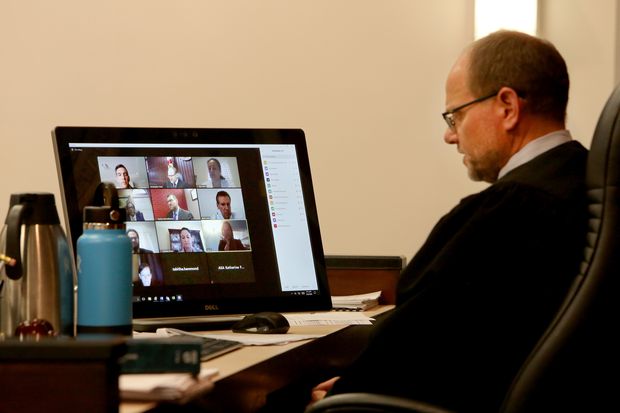
On September 9, 2020, a bench trial commenced to determine whether it was in the best interest of the child to terminate the mother's and the father's parental rights. See G. L. c. 119, § 26(b)(4).[5] At the time, the Commonwealth was operating under a state of emergency declared by the Governor in response to the outbreak of COVID-19. See Governor's Declaration of Emergency (Mar. 10, 2020). Also, in an effort to stem transmission of the highly contagious respiratory disease, the Massachusetts court system was operating under one of a series of orders issued by this court that restricted in-person proceedings and required "most court business" to be conducted "virtually." See Third Updated Order Regarding Court Operations Under the Exigent Circumstances Created by the COVID-19 (Coronavirus) Pandemic, No. OE-144 (June 24, 2020). In addition, the trial courts had issued COVID-19-related orders to address procedures in their respective courts. Relevant to the present case, the Juvenile Court's order covering the relevant time period allowed termination trials to proceed at the discretion of the trial judge, but only virtually. See Juvenile Court Standing Order 8-20(IV)(B) (2020). As a result, the trial in the present case proceeded via a video conferencing platform provided by Zoom Video Communications, Inc. (Zoom).
When the trial commenced, the judge, the clerk, the department's attorney, the child's attorney, and the mother's stand-by counsel[6] were each connected to the virtual hearing room by video. The mother, who was self-represented, was not connected, and it quickly became apparent that she had not been provided with instructions on how to join the proceedings. Stand-by counsel informed the judge that she had been in communication with the mother and understood that the mother wanted to participate, but did "not have video capacity." Noting that there was a telephone number that could be used to connect to the Zoom proceedings by telephone, the judge recessed the proceedings for thirty minutes, while stand-by counsel provided the telephone number to the mother.
When the trial resumed, the mother was connected by telephone, permitting her to hear but not to see the proceedings. She informed the judge that she was currently living outside Massachusetts in a home she had rented for the summer due to the pandemic; and she moved to conduct the trial in person. No inquiry was conducted regarding her access to technology that might allow her to participate in the Zoom hearing via video, so as to be on equal footing with the other participants. Instead, the judge denied the mother's motion, stating "we're not doing in-person hearings at this point," and asked the department to call its first witness.
The first witness, who appeared by video, was a department social worker who had been assigned to the case. Shortly after the direct examination began, the technological problems that were to plague the first day of the virtual trial ensued. Specifically, the clerk realized that the mother had been disconnected from the virtual hearing room, but had attempted to rejoin and was in the Zoom "waiting room."[7] With the judge's permission, the clerk readmitted her to the virtual hearing room, and the trial resumed. The record of the first day of the trial does not reflect how much of the first witness's testimony the mother missed before the clerk noticed her absence.
After the department finished its direct examination of the first witness and the child's attorney conducted a short cross-examination, the judge asked the mother if she had any questions. The mother did not respond, although her telephone number still appeared on the screen, suggesting she might still be connected.[8] The judge had the clerk place a telephone call to the mother's telephone number, which apparently was connected to the Zoom hearing; however, the mother did not answer, and the clerk left a message. The judge directed the clerk to move the mother to the waiting room, hoping that would prompt her to ask to be readmitted. Nothing in the record suggests that the mother understood either that she was being moved to the waiting room or how to ask to be readmitted.
When this attempt at troubleshooting did not have the desired effect, the judge directed the clerk to readmit the mother to the virtual hearing room, and the judge stated: "I'm assuming there's some technical reason that you cannot join us. If there is a legitimate reason then you can hang up and try to call back in, reestablish the connection. So I'm hoping you can hear me. We really would like to have you participate in the hearing." The mother did not respond. After further suggesting that the mother call stand-by counsel to "[l]et us know what's going on," the judge had the clerk disconnect the mother from the hearing altogether. It is not clear that the mother could hear the judge's statements.
The department, meanwhile, asked the judge to draw an adverse inference against the mother for failing to participate, but he declined to do so because he could not determine whether her lack of participation was purposeful. He then excused the first witness, subject to being recalled if the mother had a "legitimate reason" for her absence, and recessed the trial for one-half hour.
Following the recess, the mother still was absent and had not contacted the clerk or stand-by counsel. The judge concluded, "I don't think we have any choice but to continue. It's possible that this could create an appealable issue, but we have tried just about everything we can to get mother engaged. I don't know if this is purposeful on her part, or not."
The department called its second witness, another social worker assigned to the child's case, who appeared by video. As soon as the direct examination commenced, the technological issues continued; the judge had difficulty hearing the witness. In an attempt to improve the connection, the witness disconnected from Zoom and rejoined. The technological issues persisted, and the judge told the witness "to pretend" she was "yelling" at the department's attorney, so as to be heard. After the examination resumed, it was interrupted again due to the witness's connection "breaking up." Eventually, the department completed its direct examination, and the child's attorney conducted a brief cross-examination.
The department called its third witness, one of the child's current social workers, who also appeared by video. Within minutes, however, the technological issues resurfaced; this time the witness's connection froze. As a result, the clerk had to "knock her out" of the virtual hearing, hopeful that she would "come right back." The witness tried to reconnect by video, without success. Instead, she reconnected and continued her testimony by telephone.
During a lunch break, stand-by counsel attempted to contact the mother by sending a text message to her cellular telephone. When the break ended, the mother had not rejoined the trial. The judge decided to continue with the trial nevertheless, and the department completed its examination of the third witness.
The department indicated that it had intended to call the mother as its fourth and final witness and repeated its request for the judge to draw an adverse inference from her absence. The judge again refused: "I'm not going to do that. Not unless I know what the reason for her absence is." Instead, the judge suspended the trial for two days and issued a summons to be served on the mother at her last known address.
The trial resumed two days later, again via Zoom. Following some initial difficulty, the mother managed to connect by telephone. Once she was admitted from the waiting room, she informed the judge that her cellular telephone service had been "really bad" on the first day of trial; she could hear, but not be heard. The judge did not inquire as to the extent of the first witness's testimony she had managed to hear on the first day prior to being disconnected. Instead, the judge asked if she was ready to question that witness. After again objecting to the denial of her request for an in-person trial, the mother responded affirmatively. The department's attorney contacted the first witness and asked her to rejoin the proceedings.
As that was happening, the mother declared, "I'm done. I'm so fucking done with this." She then "hung up." The judge determined to draw an adverse inference against the mother. He dismissed the first witness and directed the department to begin closing argument.
Shortly after the closing argument commenced, the mother reconnected to the trial, again by telephone. The first witness rejoined the virtual hearing, and the judge allowed the mother to proceed with cross-examination. When one of her first questions drew an objection, however, the mother declared, "This is a mock trial because of COVID. I have plenty of paperwork here. There's no way I can produce my evidence." After confirming that the mother had no further questions for the first witness and did not "want to question anybody," the judge had the parties complete closing arguments. The mother's closing argument was brief and consisted of a request for a "fair trial." The judge took the matter under advisement.
Three days later, the judge issued his decision, declaring the mother and the father unfit and terminating their rights to receive notice of or to consent to the child's adoption. Nine months later, he issued extensive findings of fact and conclusions of law in support of the decision. In the meantime, the mother moved for a new trial on the ground that the virtual trial violated due process. In a supporting affidavit, she asserted that she heard only six or seven minutes of the first witness's testimony on the first day of trial due to poor cellular telephone service, despite driving around in a car in search of a better signal. She further asserted that she had tried to dial back in, without success, and that she had called the clerk's office, but could not be reconnected to the virtual trial. The judge denied the motion without a hearing.
The mother appealed from the termination of her parental rights[9] and the denial of her motion for a new trial. The appeals were consolidated in the Appeals Court, and we transferred the case to this court sua sponte.
2. Discussion.
a. Standard of review.
"In deciding whether to terminate a parent's rights, a judge must determine whether there is clear and convincing evidence that the parent is unfit and, if the parent is unfit, whether the child's best interests will be served by terminating the legal relation between parent and child." Adoption of Ilona, 459 Mass. 53, 59 (2011). A finding of unfitness must be supported by clear and convincing evidence, based on subsidiary findings proved by at least a fair preponderance of evidence. See Adoption of Elena, 446 Mass. 24, 30-31 (2006). "We give substantial deference to a judge's decision that termination of a parent's rights is in the best interest of the child, and reverse only where the findings of fact are clearly erroneous or where there is a clear error of law or abuse of discretion." Adoption of Ilona, supra.
The mother's constitutional claim presents a question of law, which we review de novo. See Commonwealth v. McGhee, 472 Mass. 405, 412-413 (2015) (due process challenge to statute "present[s] questions of law that we review de novo"). Where a judgment is void for failure to conform to the requirements of due process of law, we must vacate it. See Gianareles v. Zegarowski, 467 Mass. 1012, 1014 (2014) (general principle that rulings on motions pursuant to Mass. R. Civ. P. 60 [b], 365 Mass. 828 (1974), are reviewed only for abuse of discretion is subject to "important exception" where judgment is void as result of failure to conform to requirements of due process of law). See also Mass. R. Civ. P. 60(b) (upon motion, court may relieve party from final judgment if judgment is void).
b. Due process.
Previously, we have been asked to address the constitutional propriety of conducting specific types of criminal proceedings virtually during the COVID-19 pandemic. In Vazquez Diaz v. Commonwealth, 487 Mass. 336 (2021), the court held, among other things, that in the then-prevailing circumstances of the pandemic, conducting a suppression hearing via an Internet-based video conferencing platform was not a per se violation of due process "so long as the video conferencing technology provides adequate safeguards." Id. at 339-343. Subsequently, in Commonwealth v. Curran, 488 Mass. 792 (2021), we "provide[d] guidance to trial courts that offer [criminal] defendants the opportunity to receive virtual or partly virtual bench trials during the COVID-19 pandemic." Id. at 799-800. Now, we consider first whether a virtual bench trial, conducted in the midst of the COVID-19 pandemic, to determine whether to terminate parental rights, a civil proceeding, presents a per se violation of a parent's right to due process; we conclude that it does not. We next consider whether the virtual bench trial conducted in this case violated the mother's due process rights; we conclude that it did.
i. Per se violation.
"Due process is not a technical conception with a fixed content, but varies with context, and therefore is a flexible concept that calls for such procedural protections as the particular situation demands" (citation omitted). Vazquez Diaz, 487 Mass. at 341. In assessing whether the right to due process was satisfied, we consider the private interest that will be affected, the risk of an erroneous deprivation of such interest through the procedures used, the probable value of additional or substitute procedural safeguards, and the government's interest involved. See Mathews v. Eldridge, 424 U.S. 319, 335 (1976). See also Care & Protection of Rashida, 489 Mass. 128, 132 (2022); Vazquez Diaz, supra.
A. Private interests.
In considering the private interests affected, consideration must be given both to the parents' interests and the child's interests. With regard to the former, there can be no doubt that the "loss of a child may be as onerous a penalty [to the parents] as the deprivation of the parents' [own] freedom" (citation omitted). Care & Protection of Robert, 408 Mass. 52, 58 (1990). Parents' interest in the care, custody, and control of their children "is perhaps the oldest of the fundamental liberty interests recognized by [the United States Supreme] Court." Care & Protection of M.C., 479 Mass. 246, 256 (2018), S.C., 483 Mass. 444 (2019), quoting Troxel v. Granville, 530 U.S. 57, 65 (2000). Before parents can be deprived of custody of their child, therefore, the requirements of due process must be satisfied. See Santosky v. Kramer, 455 U.S. 745, 752-754 (1982); Care & Protection of M.C., supra. At a minimum, due process requires that parents be provided with "an opportunity to be heard at a meaningful time and in a meaningful manner" (citation and quotation omitted). Brantley v. Hampden Div. of the Probate & Family Court Dep't, 457 Mass. 172, 187 (2010). They must "have an opportunity effectively to rebut adverse allegations concerning child-rearing capabilities." Adoption of Mary, 414 Mass. 705, 710 (1993).
We also are mindful that "[termination] proceedings are not criminal in nature. As parens patriae, the State does not act to punish misbehaving parents but to protect children . . ." (citations and quotations omitted). Adoption of Don, 435 Mass. 158, 168 (2001). Accordingly, "the full panoply of constitutional rights afforded criminal defendants does not apply in these cases." Custody of Two Minors, 396 Mass. 610, 616 (1986). After a parent has received notice of proceedings affecting parental rights in the child, we require further that the parent be represented by counsel and that the Commonwealth prove the parent unfit by clear and convincing evidence. See, e.g., Custody of a Minor (No. 2), 392 Mass. 719, 725 (1984) (requiring proof by clear and convincing evidence); Department of Pub. Welfare v. J.K.B., 379 Mass. 1, 4-5 (1979) (affording indigent parents court-appointed counsel in contested termination proceedings). However, because the proceedings are civil in nature, certain constitutional rights attaching to criminal proceedings simply do not apply. See, e.g., Adoption of Don, supra at 169 (children allowed to testify in manner that does not force them into face-to-face confrontation with their parents); Custody of Two Minors, supra at 617 ("the privilege against self-incrimination applicable in criminal proceedings, which prevents the drawing of a negative inference from a defendant's failure to testify, is not applicable in a child custody case"); Petition of the Dep't of Social Servs. to Dispense with Consent to Adoption, 384 Mass. 707, 711 (1981) (exclusionary rule does not apply); Custody of a Minor, 375 Mass. 733, 746 (1978) (double jeopardy principles not applicable); Adoption of John, 53 Mass. App. Ct. 431, 435-436 (2001) (colloquy similar to that required for plea agreements in criminal cases is not required when parent enters into agreement for judgment).
Significantly, termination proceedings also affect the private interest of the child. Accordingly, we have recognized that "[t]he right of parents to be free from intrusion by the State in matters of childrearing . . . is not absolute. In custody proceedings, the rights of the children to a stable and safe environment assume an importance at least equal to the interest of the parents in a fair proceeding" (citations and quotation omitted). Custody of Two Minors, 396 Mass. at 617. See J.K.B., 379 Mass. at 5 (balance to be struck in termination proceedings is complex and involves consideration of not only rights of parents and interests of society, but also rights and needs of child). A child also has an interest in timely adjudication in a termination proceeding. "Unless proceedings involving the custody of a minor are expedited, they fail to accomplish their purpose. Circumstances may change rapidly, and the harm sought to be avoided may worsen with the passage of time." Custody of a Minor, 389 Mass. 755, 764 (1983).
B. Risk of erroneous deprivation.
As we have already concluded in Vasquez Diaz, 487 Mass. at 341, the risk of erroneous deprivation of these interests because a hearing is conducted via an Internet-based video conferencing platform like Zoom can be "minimal," even in certain criminal proceedings such as hearings on motions to suppress, if proper safeguards are provided and the judge carefully monitors the technology to ensure it is functioning as intended. As we noted, "Although generally not preferable, with today's video conferencing technology, a virtual hearing can approximate a live physical hearing in ways that it could not previously." Id. at 342. We relied on several features of the Zoom platform, in particular, to buttress that conclusion, including, inter alia, the "breakout room" function, which allowed a party to privately consult with the party's attorney during the Zoom hearing, and the "share screen" function, which permitted participants to show electronic documents to other participants. Id. at 339.
Zoom, however, is not the only choice available to trial judges in termination proceedings. Even before the COVID-19 pandemic, judges in such proceedings were "given some flexibility, consistent with the facts of each case, in determining among several of the currently available options, including but not limited to video or telephonic conferencing during the proceedings, how best to assure that a parent has a meaningful opportunity to respond to the evidence presented at trial" (citation omitted). Adoption of Edmund, 50 Mass. App. Ct. 526, 530 (2000). In Edmund, for example, the Appeals Court held "that an incarcerated parent does not have an absolute right to attend a hearing [in person] that could result in the termination of parental rights, particularly if the parent is represented at trial by a lawyer." Id. at 529. The ruling was in accord with those from a large number of other States. See id. at 529 n.4 (collecting cases from other jurisdictions).
Regardless of the technology employed, whether it be an Internet-based video conferencing platform like Zoom or the telephonic participation of an incarcerated parent represented by counsel, the judge must ensure, preferably in advance of the hearing, that the participants understand the procedures to be used when the technology does not work as intended. Thus, in Vasquez Diaz, we looked favorably on the fact that the hearing judge
"outlined the steps that would be taken in the event any technological difficulties arose. She stated that the court would suspend the hearing at the request of counsel and resume the hearing after the issue was resolved. We emphasize[d] that this [was] an important protection and urge[d] judges to pay careful attention to the technology. If the technology does not function as described, it is crucial that the court suspend the hearing, rather than risk sacrificing certain of the defendant's constitutional rights."
Vazquez Diaz, 487 Mass. at 342.
While never ideal, given the unique restrictions placed on in-person proceedings required by health and safety considerations presented by the COVID-19 pandemic, and assuming the safeguards outlined above are provided and monitored by the judge, a parental rights hearing conducted via an Internet-based video conferencing platform may be conducted so as not to pose an undue risk of erroneous deprivation to a parent's right to participate, even where the parent is self-represented and only able to participate by telephone.
C. Government's interest.
As we concluded in Vazquez Diaz, 487 Mass. at 343, the government had a "significant" interest in protecting the public health during the COVID-19 pandemic by holding virtual rather than in-person court proceedings. Certainly, this was true at the point in the pandemic when the trial in this case took place. The government also has a significant interest in reaching a prompt resolution in termination cases given the benefits of permanency and stability to children. See Adoption of Nancy, 443 Mass. 512, 517 (2005) ("Stability in the lives of children is important, particularly in a case that has continued for a long period of time in the hope that [a parent] could and would successfully rehabilitate . . ."). See also Adoption of Don, 435 Mass. at 170 (harm of delay in case "is unfortunately suffered principally by the children"). This interest was particularly acute here, given that the subject child's case was approaching six years old at the time of trial. At the same time, the government also has an interest in making sure that parental rights decisions are the product of fair proceedings.
D. Balancing the factors.
The government's significant interest in protecting the public health during the COVID-19 pandemic, combined with the interest in timely providing permanency and stability for children, would, in many instances, outweigh a self-represented parent's interest in appearing in person at a termination hearing so long as safeguards are in place and monitored by the judge to minimize the risk of an erroneous deprivation. Accordingly, we conclude that, assuming the safeguards outlined above are provided and monitored, a termination trial conducted via an Internet-based video conferencing platform when, because of the COVID-19 pandemic, in-person proceedings are not possible without jeopardizing the health and safety of the public, is not a per se violation of a parent's right to meaningfully participate, even where the parent is self-represented and only able to participate by telephone.[10]
ii. As applied challenge in this case.
Our determination regarding the mother's due process challenge to the proceedings in this case is informed by our review of her objection to certain findings made by the judge as clearly erroneous and his decision to draw an adverse inference against her. Accordingly, we review those factual findings before turning to assess the mother's due process challenge.
A. Adverse inference.
The judge supported his decision to terminate the mother's parental rights by, among other things, drawing an adverse inference against her for what he termed her "refusal to testify" and participate in the trial. The drawing of an adverse inference is permissible in a parental rights proceeding. See Custody of Two Minors, 396 Mass. at 616 ("unique characteristics of child custody proceedings do not require alteration or modification of the rule permitting inferences from a party's failure to testify in a civil case"); Adoption of Talik, 92 Mass. App. Ct. 367, 372 (2017) (judge has discretion to draw adverse inference from parent's failure to attend termination proceedings). In exercising his discretion to draw the adverse inference in this case, the judge relied on the following findings:
"The [termination] trial occurred on September 9 and 11, 2020. Mother initially joined the virtual trial via telephone on September 9, 2020. However, mother hung up on the proceeding. The court took a negative inference that mother could not conform her behavior to the trial standard. Mother did rejoin the trial shortly thereafter. On September 11, 2020, the trial continued. This time mother hung up stating `I'm done — I'm so fucking done'. The court drew a negative inference from mother's refusal/inability to attend the trial. Again mother rejoined the trial some time later, and she was given the opportunity to question any witnesses and present her own case. She chose not to."
The judge also found that the "mother disconnected from the hearing without cause instead of cross-examining witnesses" and "terminated her participation in trial after the third witness began her testimony," and that the "[m]other refused to participate in trial, disconnecting from the call both days."
The record does not support the finding either that the mother "hung up" from the trial during the first day of trial or that she did so after the third witness. Instead, the record shows that the mother did not respond when the judge asked her if she had any questions for the first witness, although her telephone still seemed to be connected to the Zoom hearing. As a result, the judge directed the clerk to move her to the Zoom waiting room; when that did not have the desired effect, the judge instructed the clerk to disconnect her from the trial altogether. Nor did the mother rejoin the trial "shortly thereafter"; instead, she missed the testimony of the second and third witnesses.
Moreover, contrary to his findings, the judge did not draw an adverse inference against the mother on the first day of trial; instead, he expressly refused to do so because he did not "know . . . the reason for her absence" and whether it was "legitimate." When the mother connected to the trial on the second day, she explained her inability to participate, stating that her cellular telephone service had been "really bad" on the first day. While the judge need not credit the mother's explanation, the mother's assertion was not challenged; as discussed supra, she was not the only participant to encounter technological problems during the first trial day. Yet, the mother was not asked any questions to explore further her efforts to reconnect. Nor was an evidentiary hearing held on the mother's motion for a new trial, which might have provided some basis for a finding that the mother's absence on the first day was purposeful.
All told, the record does not support the findings undergirding the judge's decision to draw an adverse inference against the mother and the evidence in its entirety leaves us "with the definite and firm conviction that a mistake has been committed" (citation omitted). Adoption of Larry, 434 Mass. 456, 462 (2001). The findings were clearly erroneous, and thus the decision to draw the adverse inference is unsupported. Adoption of Talik, 92 Mass. App. Ct. at 375, quoting L.L. v. Commonwealth, 470 Mass. 169, 185 n.27 (2014) ("A decision is an abuse of discretion if it amounts to a `clear error of judgment' . . .").
B. Inadequacy of safeguards.
In light of the foregoing, we turn to consider the mother's due process challenge to the termination proceedings in this case, which unfortunately went forward with little adherence to the safeguards we have delineated supra. In particular, it appears that no steps were taken in advance to determine whether the mother possessed the technology necessary to connect to Zoom, by video or otherwise. Then, when it was determined on the first day of trial that she did "not have video capacity," the judge immediately defaulted to having her participate by telephone. At the very least, the judge should have determined what technology she might have available to her that would allow her to connect by video and, if she did not have any, whether it was possible to assist her in obtaining access to such technology.[11] While a court's ability to assist in this regard may be limited, it should at least have been explored before requiring a self-represented parent to participate by telephone in a trial where such important rights were at issue, and where all other participants participated by video.
Moreover, it is not clear whether the Zoom video conferencing platform utilized in this trial had a private "breakout room" function that would have allowed the mother to consult with stand-by counsel at any time during the hearing. If that feature was available, the record does not reflect that the judge made the mother aware of it on the record. An explanation of what a breakout room is and how it can be requested and used during a trial should be part of the instructions provided before the commencement of a virtual trial.[12]
Further, the record does not reflect any consideration as to how documents and exhibits would be shared with the mother. The use of documents and exhibits can be difficult when participating in a remote hearing by telephone, especially for a self-represented litigant. When participating by video, the platform typically has a "share screen" function, "which permits participants to show electronic documents to the other participants. If a participant does not wish to use this function, or cannot use this function, he or she simply can hold a physical document in front of the camera to display it to the other participants." Vazquez Diaz, 487 Mass. at 339. A telephone participant can do neither.
The challenge, however, is not insurmountable. Documents and other exhibits could have been exchanged in advance, so that everyone had a copy and could follow when a particular document or exhibit was used to question a witness. This is not an uncommon requirement in advance of a trial. It becomes particularly important when participants are connected to a remote hearing by telephone. The record here does not reflect whether such an exchange took place in this case, but the department ultimately submitted at least thirty-five exhibits.[13] Indeed, it appears the mother had wanted to use some "paperwork" in connection with mounting her defense, but lacked the understanding of how to do so.
"Our discussion so far would be academic if the telephone solution allowed [the mother] to meaningfully participate in the termination-of-parental-rights proceedings" (emphasis in original). In re the Termination of Parental Rights to Idella W., 2005 WI App 266, ¶ 8 (incarcerated father not able to meaningfully participate in parental rights termination hearing where his "ability to hear the proceedings faded in and out, and, at least at one point, was temporarily interrupted by static"). It did not.
Almost as soon as the first witness started to testify on direct examination, the mother was disconnected and had to be readmitted from the waiting room by the clerk. Then, as detailed above, she was disconnected from the trial altogether at the direction of the judge when it was her turn to question the first witness and she was unresponsive. Her explanation that her cellular telephone service on the first day was "really bad" stands unchallenged. It is unclear how much of the first witness's testimony she heard. It is undisputed, however, that she then missed the entire testimony of the next two witnesses.
The mother was not the only one to experience technological problems on the first day. The second witness was disconnected at one point and had to be reconnected. Technological issues persisted, and the witness was advised to yell, so as to be heard. Technological issues also affected the department's final witness; indeed, the clerk then had to "knock [the third witness] out" of the Zoom hearing when her connection froze. When she tried to reconnect by video, she could not. Instead, she had to complete her testimony by telephone. "[L]ike all other technology, video conferencing is prone to both technological issues and user errors. . . . The communication problems . . . can be exacerbated by a dropped connection, a frozen or lagged video display of a witness, or a pause in the proceedings to deal with a technological delay on the part of one or all participants." Vasquez Diaz, 487 Mass. at 366-367 (Kafker, J., concurring).
To be sure, in-person trials are often riddled with obstacles, as well. See Curran, 488 Mass. at 797 n.5 ("minor technological disruptions" during course of remote bench trial were "comparable to irregularities that routinely occur during in-person proceedings"). Whether it is a remote or in-person hearing, therefore, the integrity of the trial often will be measured by how the obstacle is overcome, if at all. Here, a recess of one-half hour was taken after the judge had the mother disconnected. The clerk also attempted to contact her and left a message on her telephone. When the recess was over and the mother had neither reconnected nor responded to the outreach, the judge concluded that he did not "have any choice but to continue" without her. No doubt, the judge was dealt a difficult hand. If discussions had occurred in advance of the hearing, the parties and court might have been better prepared to enact a troubleshooting plan to try to overcome the technological issues that presented. Given the lack of safeguards in place, however, the proper course when it became apparent that the mother could not participate on the first day was to suspend the trial until the cause of the mother's absence could be determined. See Vazquez Diaz, 487 Mass. at 342 (it is "crucial" to suspend trial when technological difficulties arise).
The mother's conduct, in failing to contact the court, be it through the clerk, stand-by counsel, or someone else, is not above suspicion. The problem, however, is that the court did not outline in advance the steps that would be taken if someone were to be disconnected and have difficulty rejoining the trial. See Vazquez Diaz, 487 Mass. at 342. If it had, it may have been reasonable to infer from the mother's failure to comply with those instructions that her absence was purposeful. Instead, the judge pressed forward with the trial while acknowledging that he had no idea whether the mother's absence was purposeful or not.
In his decision, the judge stated that he gave the "mother ample opportunity to resume participation in the case," but she refused. It is clear that on the second day of trial, immediately after the mother informed the judge of the significant difficulties she had experienced with her cellular telephone service during the first day, he offered her the chance to cross-examine the witnesses from the first day. The mother, however, had only heard a portion of the testimony of one of those witnesses, if that. Thus, it was unreasonable to expect her to be in a position to conduct meaningful cross-examination. Again, other alternatives likely existed and, at the very least, should have been explored. For example, the trial could have been suspended for a short time to allow the mother to review the testimony of the three witnesses, and then reconvened to allow her to conduct cross-examination.
Under the circumstances, the trial in this case was conducted in violation of the mother's right to due process.
3. Conclusion.
For the foregoing reasons, the decree terminating the mother's parental rights is vacated and the matter is remanded for a new trial.[14]
So ordered.
[1] A pseudonym.
[2] The judge also terminated the parental rights of the father, who did not participate in the trial and has not appealed.
[3] We acknowledge the amicus letter submitted by Mental Health Legal Advisor's Committee and the amicus brief submitted by Committee for Public Counsel Services, Boston Bar Association, Citizens for Juvenile Justice, Children's Law Center of Massachusetts, Disability Law Center, Juvenile Rights Advocacy Program at Boston College Law School, Massachusetts Appleseed Center for Law and Justice, Massachusetts Association of Criminal Defense Lawyers, Massachusetts Bar Association, and Massachusetts Law Reform Institute.
[4] Effectively, the father has been uninvolved in the child's life since she was permanently placed in the department's custody.
[5] A trial was held in person in January 2020 before a different Juvenile Court judge and resulted in the issuance of a decree terminating the mother's and the father's parental rights to the child. The decree was vacated, however, for reasons that are not apparent from the appellate record.
[6] During the course of the child's case, the mother was represented by eight different attorneys, six of whom were allowed to withdraw due to breakdowns in communication with her. When the eighth attorney moved to withdraw shortly before trial, the judge, who was concerned that the mother was using it as "a delaying tactic," denied the request. He allowed the mother to proceed pro se, however, with the eighth attorney acting as stand-by counsel.
[7] According to Zoom, the host can control when participants join the hearing or meeting by admitting them, one by one or all at once, from the "waiting room," and can return participants to the "waiting room." Zoom, Using Waiting Room (updated Mar. 22, 2022), https://support.zoom.us/hc/en-us/articles/115000332726-Using-Waiting-Room [https://perma.cc/QLJ6-W3PF].
[8] According to the clerk, Zoom "highlighted" the trial participant who was speaking the loudest at any given moment. Every time the other participants were quiet, it would highlight the mother's connection, "which means there's noise happening where she is."
[9] The mother's notice of appeal was filed five days late, but the judge, over the department's and the child's objections, allowed the late filing after finding that it was the product of excusable neglect. See Mass. R. A. P. 4(c), as appearing in 481 Mass. 1606 (2019) (upon showing of excusable neglect, court may extend time for filing notice of appeal for period not to exceed thirty days from original deadline). The child cross-appealed from that ruling. The department did not appeal and concedes that the judge did not abuse his discretion in allowing the late filing. See Care & Protection of Minor, 478 Mass. 1015, 1015 (2017) (ruling on motion for leave to file late notice of appeal reviewed for abuse of discretion). Because, on this record, we cannot "conclude the judge made a clear error of judgment in weighing the factors relevant to the decision such that the decision falls outside the range of reasonable alternatives" (citation and quotation omitted), L.L. v. Commonwealth, 470 Mass. 169, 185 n.27 (2014), we agree with the department.
[10] Other jurisdictions have also held that, during the COVID-19 pandemic, a termination trial on a virtual video conferencing platform is not a per se due process violation so long as there are sufficient safeguards. See, e.g., Amira N. vs. Department of Health & Social Servs., Office of Children's Servs., No. S-18085 (Alaska Mar. 9, 2022) (mother, who was represented by counsel, was able to speak to counsel during video conference trial, and participated by telephone from her place of incarceration, was not deprived of due process); In re K.C., 2021 IL App (1st) 210305-U, ¶¶ 79-80 (mother, who was represented by counsel in virtual hearing, was not denied due process where she was able to communicate with counsel, and participated by telephone, testified by video conference, and additional video technology was made available to her); In re P.S., 2021 IL App (5th) 210027, ¶¶ 59-64, 76 (no due process violation when father was able to communicate with counsel in breakout rooms, was able to assist in cross-examination, and himself participated in termination hearing); Interest of C.T., 61 Kan. App. 2d 218, 233 (2021) (termination proceedings conducted by video conferencing not per se violation of due process where there are adequate safeguards, including adequate audio quality, ability of participants to observe witnesses, ability of parties to access exhibits, and ability to confer with counsel privately); In re O.C. Smith, Nos. 355077, 355677 (Mich. Ct. App. July 1, 2021) (no due process violation in termination trial conducted by video conferencing where father was incarcerated, was able to consult with his counsel in breakout rooms, and had opportunity to present witnesses and evidence); E.N. vs. Texas Dep't of Family & Protective Servs., No. 03-21-00014-CV (Tex. Ct. App. June 17, 2021) (due process not violated given extensive procedural safeguards set forth in connection with video conference trial to determine parental rights); Matter of the Dependency of J.D.E.C., 18 Wash. App. 2d 414, 422-424 (2021) (no due process violation where father, who was represented by counsel, chose to participate telephonically in video conference hearing to terminate his rights, was able to and did communicate with counsel using breakout room technology, provided information to his counsel for cross-examination, and directed whom counsel should call in his defense). Cf. People in the Interest of E.B., 2022 COA 8, ¶¶ 15-17 (due process violated where father, who was represented by counsel, was denied continuance to obtain wireless connection to participate in virtual hearing to terminate his parental rights where father tried multiple times to secure connectivity and court failed to facilitate father's efforts to participate).
[11] The COVID-19 court operations order that was issued by this court and in effect at the time of trial required as follows:
"In cases with one or more self-represented litigants (SRLs) where a court is scheduling a videoconference, courts will recognize the possibility that SRLs may have limited access to the technology needed to conduct videoconferences or limited experience with it, and will either assist the SRL in being able to conduct a videoconference or offer an alternative to videoconferencing for the virtual hearing."
Third Updated Order Regarding Court Operations Under the Exigent Circumstances Created by the COVID-19 (Coronavirus) Pandemic, No. OE-144, § 2 (June 24, 2020).
[12] According to Zoom, a participant connected by telephone can be added to a breakout room just like a participant connected by video. See Zoom, Participating in Breakout Rooms (updated Feb. 28, 2022), https://support.zoom.us/hc/en-us /articles/115005769646-Participating-in-breakout-rooms [https://perma.cc/7UUL-J8CP].
[13] The trial judge's findings suggest that there were thirty-five exhibits. The joint appendix of exhibits submitted by the mother and the child contains thirty-six.
[14] Having already vacated the termination decree on other grounds, we need not reach the mother's claim that it should be vacated due to the department's failure to make reasonable efforts to reunify her with the child."






 Posts
Posts


